

Most CX and product teams still sample tickets and watch score trends. The Importance of 100% Coverage in Customer Support Analysis is simple: you get truth only when every conversation is measured and traceable. With full coverage, you stop arguing about representativeness and start deciding what to fix, by segment, product area, and timeframe.
It’s usually not a tooling problem. It’s a habits problem. Leaders lean on anecdotes, quick reads, and dashboards that don’t explain why something moved. Same thing with sentiment curves. They point to a problem but not the driver. Full coverage, plus evidence you can click into, is the standard now.
Key Takeaways:
- Full coverage ends sampling bias and guesswork, so priorities stop drifting with anecdotes.
- Scores aren’t strategy; drivers and quotes are what win the room.
- Traceability is non-negotiable if you want decisions that stick across CX and product.
- Standardize language with hybrid tagging, then roll it up with drivers for clear reporting.
- Make analysis clickable, not static, so you can validate every number in seconds.
- Don’t rip and replace tools; add an intelligence layer on top of your helpdesk.
- Start with one high-impact area to prove value, then expand to 100% coverage.
Why 100% Coverage Beats Sampling in Customer Support Analysis
Sampling fails in customer support analysis because it introduces bias and hides critical patterns that drive churn and cost. When every conversation is measured, you can pivot by cohort and driver and move from anecdote to evidence. It turns “we think” into “we know,” which changes roadmaps.
Sampling Feels Efficient, But It Fails At Scale
Sampling looks fast until volume spikes. Then you’re pulling five or ten tickets and calling it good. The problem is simple, nobody’s checking whether those picks represent your enterprise segment, your onboarding flow, or your newest feature. Let’s pretend you do check. You still miss the long tail where the real product friction lives.
At 1,000 tickets a month, even a 10 percent sample takes hours and produces a partial view. That partial view invites debate. People defend pet theories. You burn time arguing about whether the sample is good instead of fixing the actual issue. Full coverage removes the debate and forces clarity.
With 100 percent coverage, you can answer narrow questions quickly. Which billing issues spiked for annual plans last week. Which onboarding steps frustrated first-time admins in EMEA. The work shifts from hunting for anecdotes to slicing data and validating quotes. That’s the difference between motion and progress.
Evidence Wins In The Room
Executives ask two things. What’s the driver. Where’s the proof. If you can’t click from a chart to real tickets and quotes, you’re stuck in story land. Stories sway people for a minute, then fade. Evidence sticks.
When every metric links to source conversations, objections disappear. You can show negative sentiment driven by “account access resets” for high-value customers this month, then open three representative transcripts on the spot. The room gets quiet. Priorities get set. That’s the job.
It’s usually not that the team lacks data. It’s that the data isn’t structured, defensible, or fast to validate. Evidence-backed metrics with traceability fix that. You go from “trust me” to “see for yourself” without losing momentum.
What 100% Coverage Actually Changes
Full coverage changes three things immediately. You stop wasting hours on sampling. You stop guessing at root causes. You start making decisions that stand up in cross-functional reviews. Sounds basic. It’s not. It’s discipline.
Across cohorts, you see who is affected, not just that someone is unhappy. Across drivers, you see why sentiment dipped, not just that it did. Across time windows, you see whether the fix reduced effort for the right customers. That is the loop you need to run, week after week.
The Real Problem: Missing Drivers and Evidence Behind Scores
Scores alone obscure the root cause because they don’t explain drivers or impacted segments. Without drivers and evidence, teams prioritize the loudest issue instead of the biggest one. The fix is a structured layer that maps raw text into drivers with clickable traceability.
Scores Without Drivers Mislead Priorities
A negative sentiment trend tells you something is wrong. It doesn’t say why. Is it refunds, billing address validation, or unclear onboarding emails. Without drivers, you pick a culprit and hope. That’s a risky bet.
Most dashboards escalate motion, not learning. You see red, you escalate, and you still can’t point to the exact steps to fix. With drivers, you can say “Negative sentiment rose 12 percent for onboarding, driven by ‘account creation stalled’ raw tags for first-time admins.” Now you have a plan, not a hunch.
Drivers also cool the temperature in the room. They give names to problems and group them cleanly. You get alignment faster because the language is shared and the evidence is visible. That’s the difference between status updates and decisions.
Anecdotes Create Risky Decisions
Anecdotes are seductive. That one painful VIP ticket. That one angry thread. They stick in memory and hijack planning. The risk is you over-rotate to the story you remember and miss the pattern that actually costs you.
With coverage, you can put anecdotes in context. Was that VIP case a one-off or part of a 9 percent spike for “invoice miscalculation” last week. You can answer in a minute instead of opening ten tabs and guessing. Less noise, fewer detours, better outcomes.
If you still love a good story, great. Pair it with data. Pull a quote that represents the driver you know is spiking. Now the story stands for a real problem, not a random one. That’s how you win hearts and minds without drifting off course.
Traceability Is The Trust Layer
Teams don’t fail because they lack charts. They fail because stakeholders don’t trust the charts. Traceability is what flips that. Every rollup should click into the tickets and quotes that produced it. No black box. No “just believe us.”
When people can inspect the source in seconds, the debate shifts from “is this true” to “what will we do.” That’s the shift you want. In my experience, trust is the real bottleneck. Fix trust, and you fix speed.
You’ll still have pushback. That’s healthy. But it will be about tradeoffs and sequencing, not whether the data is real. Traceability earns you that.
The Cost of Sampling: Time, Bias, and Missed Churn Signals
Sampling wastes hours, bakes in bias, and hides churn risk that shows up as throwaway lines in transcripts. The time cost compounds each month, and the blind spots are expensive. Full coverage trades that waste for repeatable analysis and faster fixes.
Time Math That Breaks Your Week
Let’s do the math. At 1,000 tickets, a 10 percent sample at three minutes per read is five hours for a partial view. Add coordination, note-taking, and the follow-ups to find “better examples,” and you just lost a day. For a maybe.
Multiply that by monthly spikes and you’ve lost weeks each quarter. The worst part is you still don’t know the driver mix by segment. Your gut might be right. It’s often wrong. That uncertainty delays product fixes and extends the window where customers struggle.
Full coverage brings the time cost down by front-loading structure. Instead of reading at random, you filter, group, and click into the exact subset that matters. You validate three tickets, not thirty. You get your day back.
Bias You Can’t See, But You Pay For
Human selection bias is sneaky. We pick what’s easy to read, what’s top of mind, or what confirms a hunch. It’s not intentional. It’s how memory works. The cost is decisions that lean toward the loud, not the large.
Bias is hardest to spot in good-faith reviews. Smart people sample carefully and still miss quiet drivers like subtle onboarding friction. Those quiet issues don’t trend on Slack, but they compound churn risk. You feel the cost later.
Coverage isn’t about perfection. It’s about removing easy failure modes. When everything is analyzed and traceable, you rely less on recall and more on the actual distribution of problems. That’s safer for the business.
Hidden Churn Signals You Miss
Churn risk rarely screams. It whispers. “Thinking of switching.” “Hard to justify this cost.” “I’ll cancel if this happens again.” Those lines hide inside long threads. If you sample, you miss them.
With coverage, churn mentions surface as a metric you can filter by driver and cohort. You see that renewal-stage accounts with “billing confusion” have elevated churn risk this month. You pull three quotes and take action right away. No drama. Just work.
Industry research backs the shift to deeper text analytics over score-watching. See Zendesk’s CX Trends 2024 and Gartner’s 2024 customer service trends. Teams that move past sampling and toward evidence see faster, more defensible decisions.
What It Feels Like When You’re Guessing From Samples
Working from samples feels like running with fogged glasses. You move, but you’re not sure where. People second-guess your reads. You spend evenings pulling extra tickets to prove a point. It’s exhausting and, worse, it’s avoidable.
The Fire Drill That Never Ends
The cycle goes like this. A spike hits. Slack lights up. Someone asks for examples. You pull five tickets, then ten, then still feel unsure. You add a slide with quotes and hope it lands. Next week, same drill.
This isn’t a talent problem. It’s a system problem. Without coverage and structure, even great teams thrash. The result is slower fixes, frustrated agents, and leaders who lose confidence in the signal. You feel it in your roadmap meetings.
When the system changes, the feeling changes. You open a view, sort by driver, click into three tickets, and share a link. The fire drill quiets down. People start solving. That relief is real.
Stakeholder Ping-Pong And Second-Guessing
Without traceable evidence, you invite ping-pong. Product says the examples are edge cases. CX says it’s bigger. Execs want proof. You promise to “dig deeper” and lose another week. Sound familiar.
Traceability cuts the loops. You show the distribution and the quotes. You answer who’s affected and by how much. People stop batting the problem around and assign owners. Meetings get shorter. Weeks get calmer.
We might be wrong about a detail now and then. That’s fine. With evidence, you find out fast and adjust. The point is momentum with minimal regret.
How To Run 100% Coverage And Get Evidence-Backed Metrics
The new approach measures every conversation, standardizes language with hybrid tagging and drivers, and makes analysis clickable. You validate findings by jumping straight to source tickets. You don’t need a new helpdesk, you need a metrics layer on top of it.

Start With Full Coverage, Not Sampling
Coverage first, always. Without it, you’re skating on guesses and anecdotes. In practice, that means ingesting all tickets and letting AI produce first-pass structure across tags and core metrics like sentiment and churn risk. Then you slice, not sample.
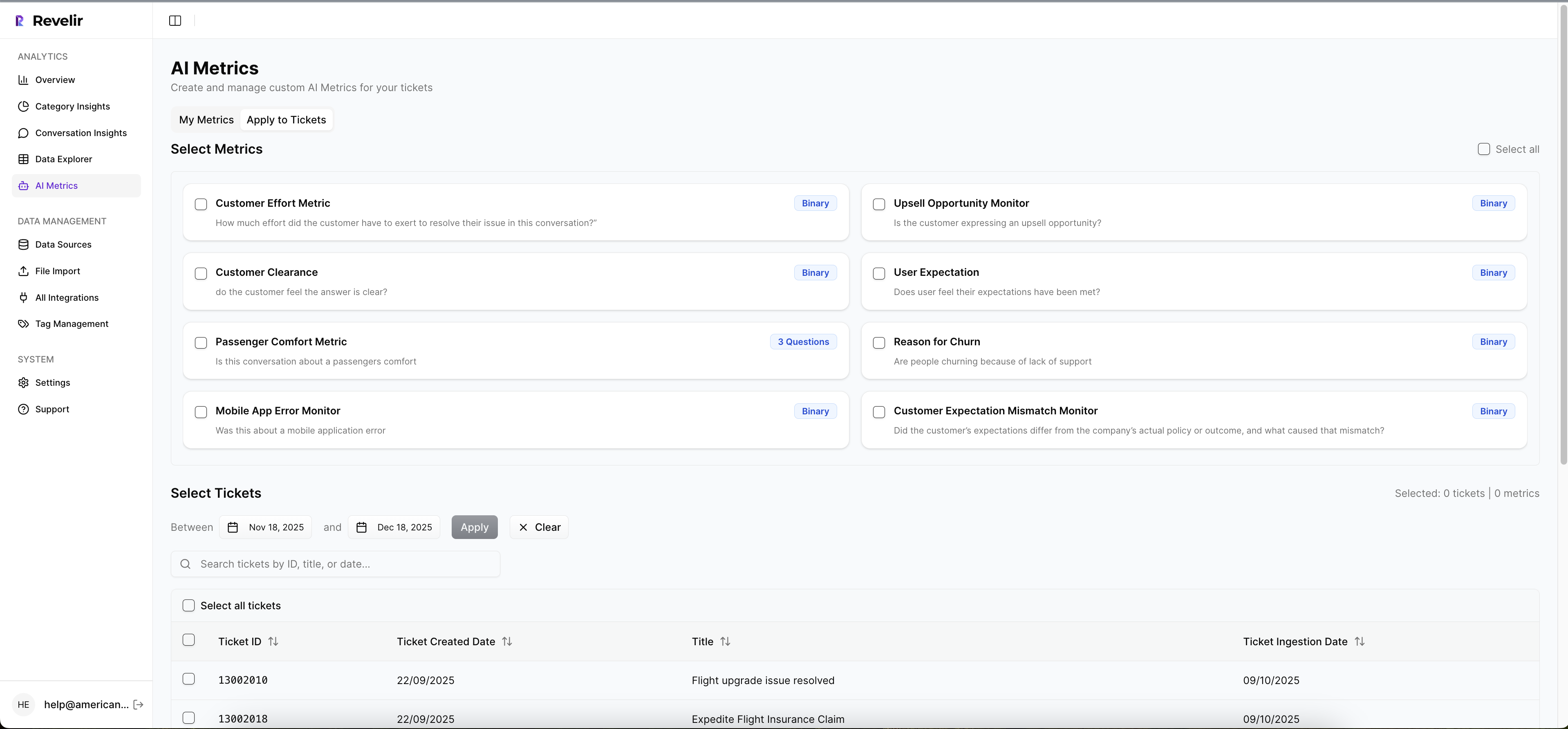
If you’re worried about noise, don’t be. Coverage isn’t about reading everything. It’s about ensuring everything can be filtered and inspected. Big difference. You save time because you only read the few tickets that represent the pattern you already measured.
Start with one area where you feel the most pain, like billing or onboarding. Prove the loop. Then roll out to all drivers. Momentum matters more than perfection on day one.
Standardize Language With Tags And Drivers
Raw tags catch the messy reality, the long tail like “refund_request” and “billing_fee_confusion.” Canonical tags clean it up for reporting. Drivers roll everything into leadership-ready themes like Billing or Account Access. That stack gives you discovery and clarity at the same time.
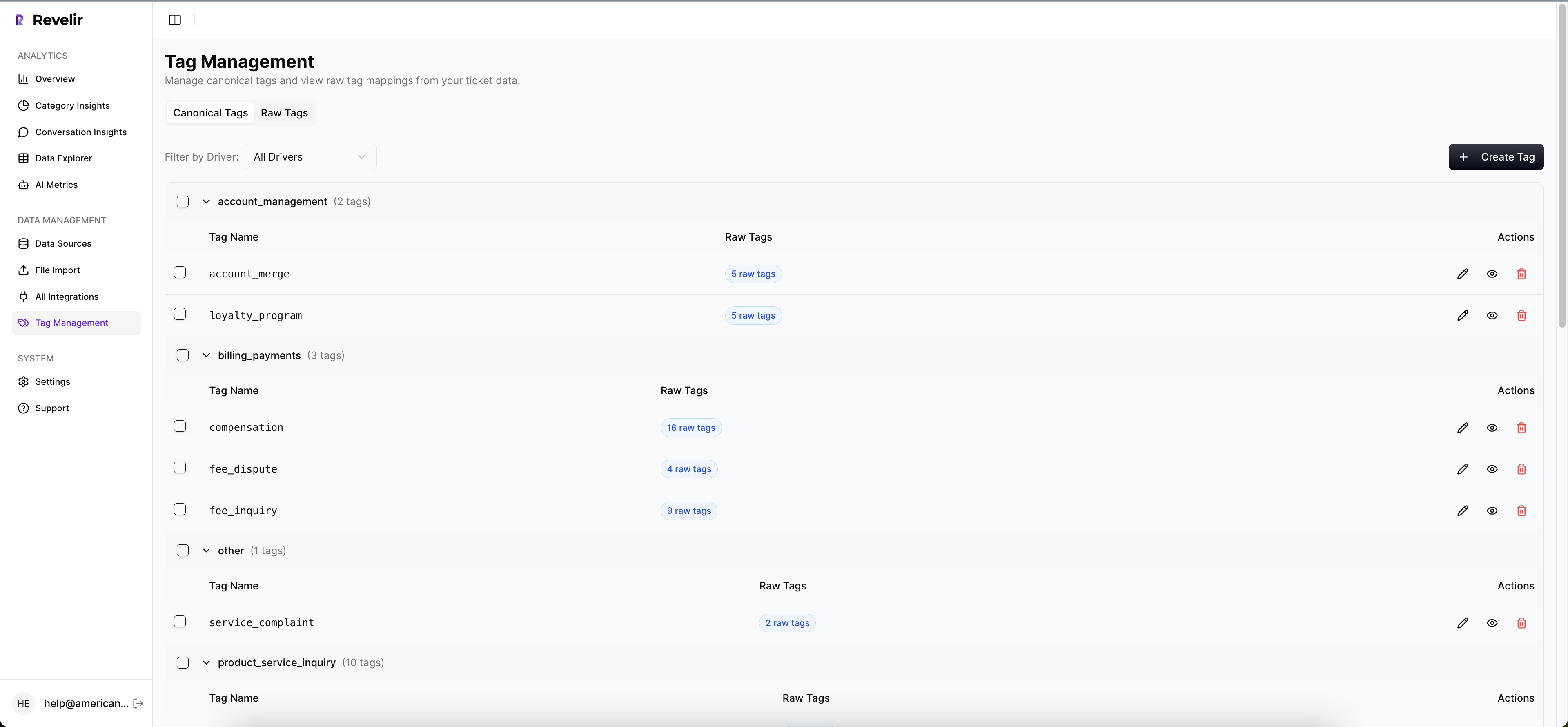
The mapping is where your business language lives. Align “setup friction” to your onboarding taxonomy. Merge duplicates. Refine over time as patterns shift. The key is that the system remembers, so future tickets land in the right buckets without manual triage.
That’s why standardized language reduces rework. You spend less time arguing about what to call a thing and more time fixing the thing. Simple, but powerful.
Make Analysis Clickable, Not Static
Static slides die on contact with questions. You need views you can pivot live. Filter by segment. Group by driver. Sort by churn risk. Click into tickets. Then bounce back to the table. That click, validate, and decide loop is the whole game.
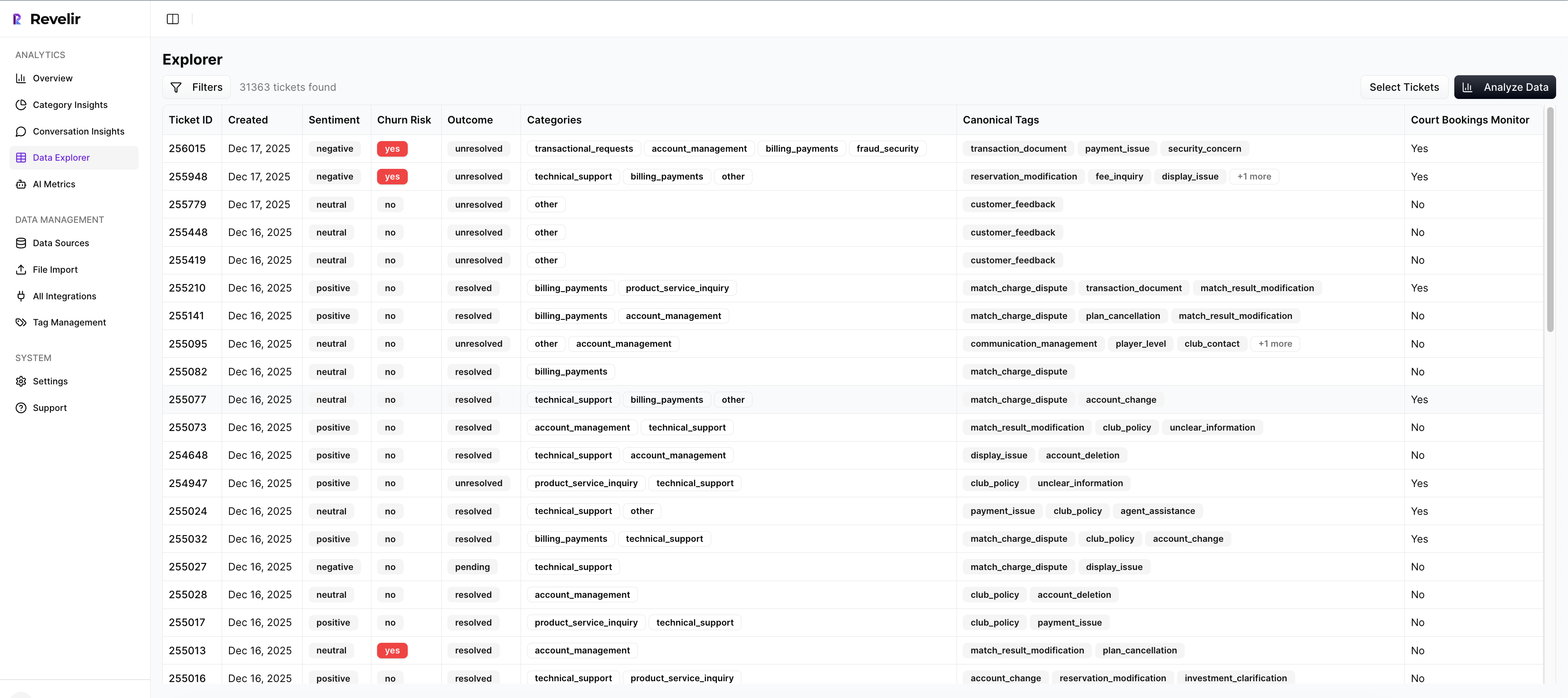
You’ll still share slides, sure. But they’ll be snapshots of a living system, not stitched evidence. That difference shows up in how fast decisions stick.
To get there today:
- Ingest all conversations and compute core metrics for every ticket.
- Maintain a hybrid tagging taxonomy that maps raw tags to canonical tags and drivers.
- Use an interactive workspace to group, filter, and validate patterns by clicking into source tickets.
Ready to make 100% coverage real without retooling your helpdesk. See how Revelir AI works
How Revelir Turns Conversations Into Metrics You Can Defend
Revelir enables the approach above by processing 100 percent of your tickets, computing AI metrics, and making every rollup traceable to exact quotes. You filter, group, and inspect tickets in a pivot-table-like workspace, then click into transcripts to validate patterns. It’s coverage, structure, and proof in one place.

Full-Coverage Processing And AI Metrics Engine
Revelir processes 100 percent of ingested tickets with no upfront manual tagging. The AI Metrics Engine computes core signals like Sentiment, Churn Risk, Customer Effort, and Conversation Outcome as structured fields. That means you can filter for “high effort” onboarding tickets or “churn risk: yes” by driver in seconds.
You trade the waste of sampling for repeatable analysis. Instead of reading at random, you start with the metric, then jump straight to the transcripts that matter. The transformation is concrete. Hours of manual review become minutes of targeted validation.
When leaders ask for proof, you click into Conversation Insights and show the exact quotes behind the spike. Debate ends. Decisions move.
From Tags To Drivers You Can Explain
Revelir’s hybrid tagging system pairs AI-generated Raw Tags with human-aligned Canonical Tags. You refine mappings once, and Revelir learns them for future tickets. Drivers roll patterns into leadership-friendly themes, so you can explain the why behind score changes without translating on the fly.
This closes the “scores aren’t strategy” gap. You go from “sentiment dropped” to “Billing driver increased negative sentiment 12 percent, driven by ‘invoice mismatch’ and ‘refund delay’ tags for annual plans.” It’s specific, it’s traceable, and it earns trust.
With evidence-backed traceability, every aggregate links to source conversations. That’s what holds up in leadership reviews and roadmap meetings.
Data Explorer And Analyze Data For Fast Answers
Revelir’s Data Explorer gives you a pivot-table-like workspace to filter, group, sort, and inspect every ticket with columns for sentiment, churn risk, effort, tags, drivers, and custom metrics. Analyze Data summarizes metrics by Driver, Canonical Tag, or Raw Tag and links each result to the underlying tickets for fast validation.
You can move from “What changed this week” to “Which segment felt it and why” without opening ten tools. The loop is tight. Less time building one-off reports, more time fixing the thing customers actually struggle with.
Teams that need to plug insights into existing reporting can use API Export after analysis. No rip and replace. Just bring structured metrics into the BI workflow you already use.
Revelir’s capabilities at a glance:
- Bold coverage, no sampling, so blind spots disappear and bias drops.
- AI Metrics Engine computes sentiment, churn risk, effort, and outcomes for every ticket.
- Hybrid tagging and drivers create a shared language you can take to leadership.
- Data Explorer and Analyze Data turn ad-hoc questions into fast, validated answers.
- Evidence-backed traceability links every chart to exact tickets and quotes.
Want to see these workflows on your own data. Learn More
Before, each manual sample review cost hours and missed quiet churn signals. With Revelir, full coverage and clickable validation cut that waste and surface the drivers you can act on now. Fewer fire drills. Faster fixes. Better retention.
Stop sampling and hoping. Start making evidence-backed calls that hold up in product and exec rooms. Get started with Revelir AI (Webflow)
Conclusion
Full coverage is not a luxury, it’s the baseline for modern CX and product. When you measure every conversation, standardize language, and make analysis clickable, you replace debate with decisions. The Importance of 100% Coverage in Customer Support Analysis comes down to one thing, trust you can show on screen, in seconds. Pair that trust with fast validation and you fix the right problems first.
If you need a sanity check, start small. Pick one high-impact area, run full coverage, and show the drivers and quotes next week. You’ll feel the difference. And so will your customers.
For broader context on where the industry is heading, see McKinsey on AI-enabled customer care and Gartner’s latest guidance on customer service trends. The shift is clear. Coverage, drivers, and traceable evidence are the new standard.
Frequently Asked Questions
How do I start using Revelir AI for full coverage?
To get started with Revelir AI for full coverage, first, connect it to your existing helpdesk system, like Zendesk. This allows Revelir to ingest all support tickets automatically. Next, ensure that all conversations are processed without manual tagging, which eliminates bias and blind spots. Finally, use the Data Explorer feature to filter and analyze the data, making it easy to identify key issues and trends across your customer support tickets.
What if I want to analyze specific customer segments?
If you want to analyze specific customer segments, you can use the Data Explorer in Revelir AI. Start by filtering your ticket data based on the segment you're interested in, such as new users or high-value customers. Then, apply the relevant tags and drivers to group the data meaningfully. This allows you to quickly identify patterns and issues affecting that particular segment, helping you make informed decisions.
Can I customize metrics in Revelir AI?
Yes, you can customize metrics in Revelir AI using the Custom AI Metrics feature. This allows you to define specific classifiers relevant to your business needs, such as identifying upsell opportunities or reasons for churn. Once defined, these metrics can be stored and used across various analyses, giving you tailored insights that align with your strategic goals.
When should I use the Analyze Data feature?
You should use the Analyze Data feature in Revelir AI when you need to summarize and visualize key metrics from your support tickets. This tool is particularly useful for generating grouped analyses based on dimensions like sentiment, churn risk, or canonical tags. It provides interactive tables and charts that link back to the underlying tickets, allowing you to validate findings quickly and make data-driven decisions.
Why does traceability matter in customer support analysis?
Traceability is crucial in customer support analysis because it builds trust in your data. With Revelir AI, every aggregate metric links back to the original conversations and quotes, enabling stakeholders to verify the insights easily. This transparency shifts discussions from questioning the validity of data to focusing on actionable solutions, ensuring that decisions are based on solid evidence rather than assumptions.