

Blanket discounts feel easy. They also hide the real problem. Your support tickets already tell you who is frustrated, why they are struggling, and where churn risk is creeping in. When you design segmented retention offers from those signals, you stop giving money away and start solving the right problem for the right customer.
Let’s keep this practical. You define clear, auditable segments from canonical tags, churn risk, Customer Effort Metric, and basic business fields like plan and tenure. You validate each rule against real tickets. Then you push only the customers who fit that rule into CRM or billing with an offer you can defend in a finance meeting. Precision beats spray-and-pray. Every time.
Key Takeaways:
- Build deterministic segments from ticket signals you can trace back to quotes
- Start with canonical tags, drivers, churn risk, and CEM, then layer plan and tenure
- Validate each rule on real conversations before you ship automations
- Orchestrate through a queue with idempotency, budgets, and audit logs to prevent waste
- Measure saves, costs, and downstream behavior, then iterate in small steps
- Use 100 percent coverage and traceability so leadership trusts the numbers
Why Segmented Retention Offers From Ticket Signals Beat Blanket Discounts
Segmented offers from ticket signals work because they target the real cause of churn, not a guess about price sensitivity. Support conversations expose intent to cancel, hidden friction, and effort spikes well before renewal. When you act on those signals, you reduce waste, protect margin, and earn trust across CX, product, and finance.

Most teams learn this the hard way. Blanket discounts mask broken experiences and train customers to wait for a coupon. The cost is bigger than lost revenue. You also lose learning. When every save looks like a credit, nobody asks why effort was high or which workflow failed. The problem lingers.
The Overlooked Truth About Ticket Signals
Support tickets carry unsolicited feedback and frustration cues you will never see in a survey. They show where customers get stuck, which policies feel unfair, and what risks renewals. That signal shows up early. If you wait for CSAT or NPS to dip, you miss the window. Worse, you debate anecdotes instead of acting on evidence.
The fix is simple to describe. Measure every conversation, then group those signals in ways leadership recognizes. Drivers like Billing or Onboarding. Canonical tags that don’t drift week to week. And binary churn risk so CSMs know who needs help. You can pivot that view across plan, region, or tenure and decide with confidence.
What Is A Deterministic Segment And Why It Matters?
A deterministic segment is a rule an operator can read and audit. Think “Churn Risk equals Yes, Canonical Tag equals Billing and Payments, Plan equals Pro, Tenure less than 90 days.” No gray area. No guesswork. You can click into examples and see why each customer qualified.
That clarity speeds approvals and reduces mistakes. It also shortens the debate cycle. When someone asks “why did this offer go out,” you open the exact tickets that matched the rule. The evidence is sitting there. Nobody is guessing.
Blanket Offers Create Waste And Resentment
Generic giveaways feel unfair to customers who never complained. They also fail to fix root issues for those who did. The cost compounds. Finance cannot verify ROI when eligibility is fuzzy. Product cannot see if fixes changed behavior. You miss both the save and the learning.
Deterministic segments prevent that spiral. Every offer ties back to a slice of tickets and a reason the team can verify. You cap exposure, measure response, and iterate without arguing anecdotes. That is the path out of blanket-discount purgatory. For a broader view on segment-led retention, see these summaries on retention segmentation strategies and customer retention analytics.
Define Segmented Retention Offers From Canonical Tags, Churn Risk, And CEM
You define segments by combining AI-derived signals with simple business fields. Start with what you can trust and audit. Canonical tags and drivers give structure, churn risk flags urgency, and CEM highlights friction. Then add plan, tenure, and channel to sharpen precision without overfitting.

Rules live where your team already works. If the field exists in your analysis workspace, it should be eligible for rules. That keeps definitions simple and avoids brittle logic that only one analyst understands. You want rules ops can maintain without a PhD.
Canonicalize Your Tags And Drivers
Raw tags are noisy by design. Useful for discovery, not for rules. Map them into canonical tags your leaders recognize, then associate those with higher-level drivers like Billing, Onboarding, or Performance. This stabilizes categories so segments don’t drift each week as new raw tags appear.
Lock the mappings after review. Then validate with Conversation Insights. Read a few tickets in each category and ask a plain question. Does the canonical tag match what a human would say? If the answer is no, fix the mapping now, not after an offer misfires.
Write Rule Syntax Ops Can Maintain
Keep the syntax boring. Field, operator, value. Chain with AND. Avoid clever nesting that nobody wants to touch later. Use fields you can filter on directly: Canonical Tag, Driver, Churn Risk, Sentiment, CEM, Plan, Tenure, Channel, Region, and any custom AI Metric you have defined.
Document examples and counterexamples. Two or three of each is plenty. Store the sample ticket links next to the rule. Reviewers then sanity check eligibility without re-running an analysis. Less back-and-forth. Fewer delays.
How Do Plan, Tenure, And Channel Shape Eligibility?
Context matters. A new SMB user with high effort often needs guided onboarding, not a credit. A long-tenured customer with billing pain might respond to fee forgiveness. Channel signals urgency. Live chat plus high effort suggests a time-sensitive save. Email with low effort and price talk may point to a different play.
Set thresholds you can defend. Tenure under 30 days for onboarding help. Specific plan tiers for expedited support. Clear channel lists for urgent outreach. Then verify two or three representative tickets per rule before you flip anything live. It takes minutes. It prevents the wrong offer.
The Cost Of Slow, Generic Saves
Slow, generic saves waste budget and miss the moment where a customer is still open to change. The math is simple. Targeted interventions from ticket signals convert more, at the same or lower spend, because they match the cause. You reduce credits, reduce rework, and stop the churn loop before it hardens.
You also protect trust. When offers are explained by evidence, finance signs off faster. Product learns what to fix. CX spends less time sampling and more time deciding. The opposite is a familiar spiral. Guessing, rework, and late outreach that feels desperate.
Let’s Pretend You Run A Save Desk For 1,000 Accounts
Assume 1,000 renewing accounts this quarter, with 12 percent at risk. If generic offers convert 20 percent, you keep 24 accounts. If targeted offers from ticket signals convert 35 percent at the same spend, you keep 42. That delta pays for the program. Then it compounds as fewer issues recur.
The hidden cost is in time-to-issue. A rule-driven pipeline can decide in near real time. Manual review cannot. Every day you wait, intent hardens. People switch. You lose the save and the learning that would have prevented the next one. That is the real waste.
Time Cost Of Manual Review And Slow Responses
Manual reviews burn hours and introduce bias. If analysts spend five hours a week sampling tickets, they still see a partial view. Worse, they argue about whether the sample is representative. Meanwhile, the customer moves on. The window closes.
Deterministic rules change the tempo. You define eligibility once, then apply it to 100 percent of conversations. You move from digging to deciding. If you want a wider context on this pattern across retention teams, these playbooks on workflows and retention signals and retention churn metrics outline similar findings.
Offer Leakage And Fraud Risk Without Guardrails
Uncapped credits leak. Duplicate saves stack. Agents over-apply codes. These are preventable. Set per-segment budgets, per-customer caps, and time-bound eligibility. Enforce idempotent issuance and store the evidence link back to the ticket slice.
When finance audits, you want the full trail. Rule version, evaluation inputs, offer payload, and downstream outcome. If anything looks off, you can prove what happened and adjust without blame. That is how you reduce risk without freezing action.
Measure, Iterate, And Report On Segmented Retention Offers From Ticket Signals
Measurement proves lift and keeps everyone honest. Define the scoreboard before you launch. Track eligibility volume, issuance rate, acceptance rate, save rate, and saved revenue. Then tie every chart to rule versions so you can compare changes cleanly and avoid confused debates.
Make the loop visible. When stakeholders can see from ticket slice to offer to outcome, iteration becomes routine, not political. You ship smaller changes faster. You catch drift early. You avoid the costly mistake of scaling a broken rule.
Define The Dashboard Before You Launch
Decide what success looks like in plain language. Align on a few core metrics and operational checks. Then publish them where finance, CX, and product can see the same view. It reduces confusion and sets a higher bar for changes.
Track, at minimum:
- Eligibility volume and issuance rate by segment
- Acceptance rate and save rate by segment and plan
- Time to issue after ticket close
- Cost per save and saved revenue
Cohort Curves, A B Tests, And Before After Checks
Run cohort retention curves by segment and plan. When you have enough traffic, use A B or holdout tests. When you do not, run before after checks with matched cohorts and call out confidence limits. The point is not perfect science. It is avoiding the wrong conclusion.
Always tie results to rule_version. That way you can compare policy changes side by side without contamination. We learned this the hard way. Without versioning, your charts lie. With it, iteration gets easier every month. For broader context, see this overview on customer retention analytics.
Diagnose Segment Drift And Adjust Rules
Segments drift as products change. Watch eligibility counts, acceptance rates, and negative sentiment after issuance. If a segment surges, re-check the underlying tickets. Did the cause shift? Are raw tags evolving? Update canonical mappings and retire rules that no longer predict risk.
Build a visible change log. Small edits, one at a time. Each with examples and the reason you changed it. That discipline prevents silent regressions and keeps trust high across teams.
Orchestration Blueprint For Segmented Retention Offers From Data Explorer To CRM
Operationalization is where teams often stumble. The pattern is straightforward. Save the filtered view that defines eligibility. Export the IDs and metrics. Pass a small, deterministic payload to a queue. Update CRM first, then billing. Wrap everything in budgets, idempotency, and audit logs.
This is not about fancy plumbing. It is about reducing risk. You want repeatable steps anyone on the team can follow. Less magic, more receipts.
From Data Explorer Filter To Webhook Payload
Start with the segment you validated in analysis. Save the view or filter configuration. Export the resulting customer or ticket IDs and the relevant metrics. Your automation layer posts a webhook to a durable queue with a minimal payload. Customer_id, segment_id, rule_version, evidence_url, and proposed_offer.
Keep payloads referenceable and boring. The more deterministic they are, the easier reviews become. When someone needs to investigate, they start from a single record and follow the trail.
Queue Triggers, Retries, And Idempotency
Use a queue to trigger downstream workers for CRM and billing. Assign a stable idempotency key, for example customer_id plus rule_version, so a retry cannot double-issue an offer. Set retry policies for transient errors. Route failures to an exception log with the same key.
Operators should not have to guess. One record, one trail. That is how you debug fast without introducing new risk.
Safe CRM And Billing Updates
Stage CRM updates first. Write issued_offer_id, expiration, and conditions on the account. Then commit to billing with transactional semantics where you can. Prefer credit objects with metadata that includes rule_version and evidence_url. Confirm both writes before you mark the event complete. If human outreach is needed, notify the owner.
Budgets and caps sit around this flow as guardrails. When budgets are exhausted, block issuance. Log the decision and why it was blocked. No surprises at month end.
Ready to stop guessing who to save and when? See how targeted, evidence-backed segments flow into real offers without the risk. See How Revelir AI Works
How Revelir AI Operationalizes Segmented Retention Offers From Support Tickets
Revelir AI processes 100 percent of your conversations and turns them into structured fields you can trust. Sentiment, Churn Risk, Customer Effort, raw tags, canonical tags, and drivers sit side by side in Data Explorer. You define eligibility as saved filters, validate with real tickets, then export the results to power downstream automations.
The difference is traceability. Every aggregate links to Conversation Insights, so you can prove why an offer triggered. That connection cuts debate, reduces risk, and speeds approvals across finance and product. You move faster, with fewer mistakes.
Automated Eligibility You Can Trust
Revelir analyzes every ticket, not a sample, and assigns metrics like Sentiment, Churn Risk, and CEM along with structured tags. You stabilize categories with canonical tags and drivers, then filter by plan, tenure, and channel right in Data Explorer. When a rule looks right, you click into representative tickets to confirm the pattern.
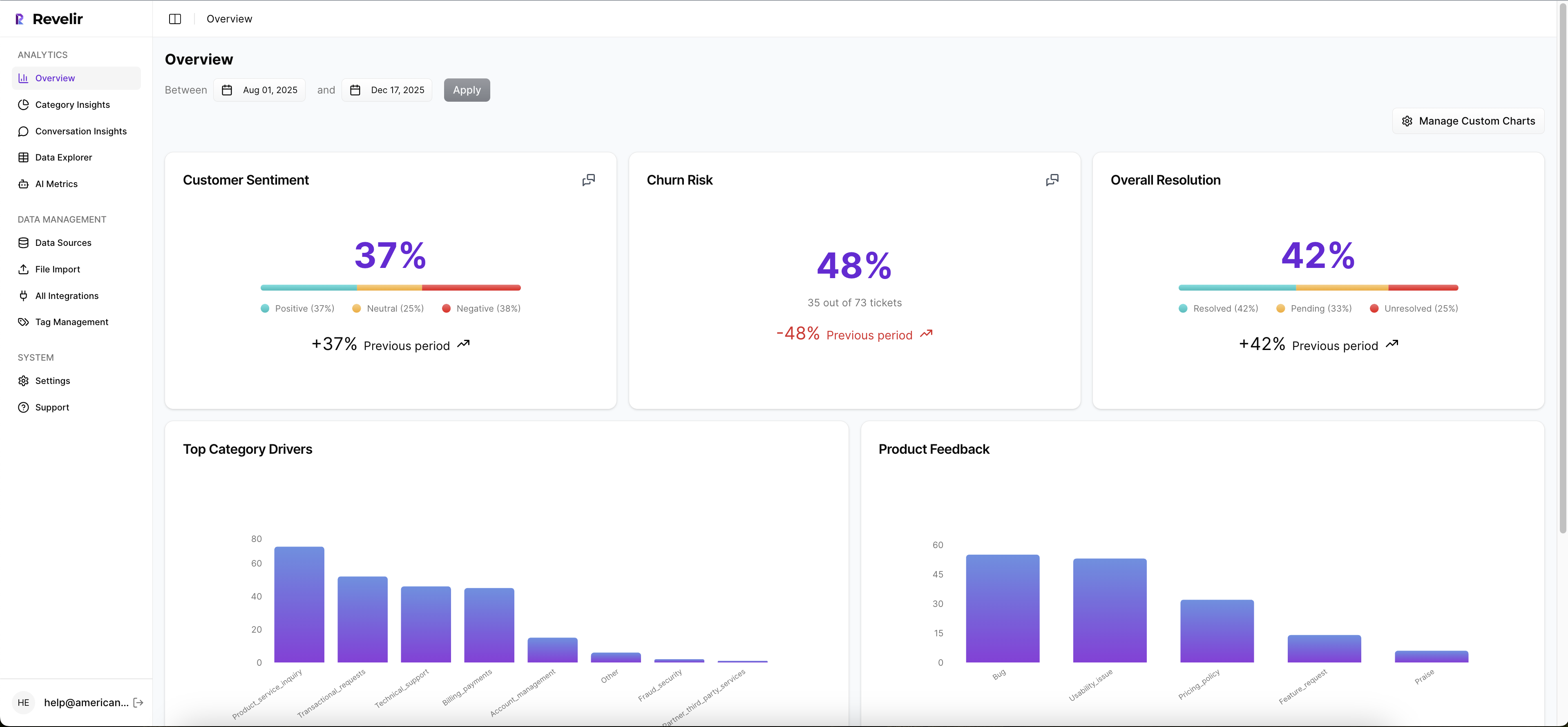
That coverage eliminates blind spots. It also kills the old sampling debate that slows teams down. The metric says what happened. The quote shows why. For a concise primer on why coverage and traceability matter, this perspective on evidence-backed metrics from support aligns with the approach.
Evidence-Backed Audits In One Click
Any slice you present in Revelir links directly to the underlying conversations. If someone asks “show me where this came from,” you open Conversation Insights. Full transcript. AI summary. Assigned tags and metrics. The evidence is one click away.
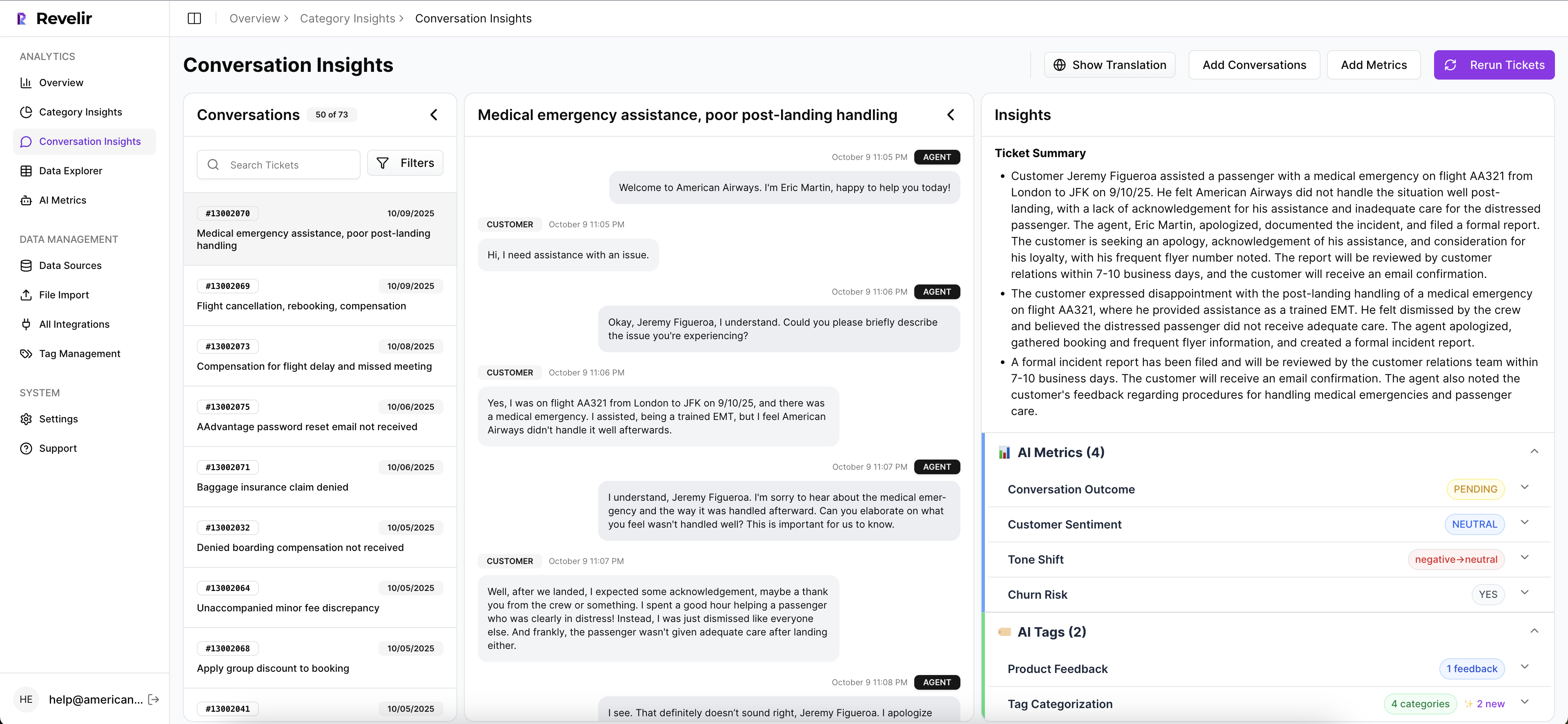
This is the antidote to black-box fear. Stakeholders can audit the reasoning and stay aligned, even when findings are uncomfortable. That builds trust, and trust accelerates decisions.
API Export That Powers Your Downstream Automations
Revelir supports analytics in-product and export via API. Your automation layer reads the exported metrics and emits webhooks to CRM and billing. Include rule_version and evidence_url on every write to keep updates traceable. This shortens time to issue and replaces slow, manual sampling with repeatable, audited segments.
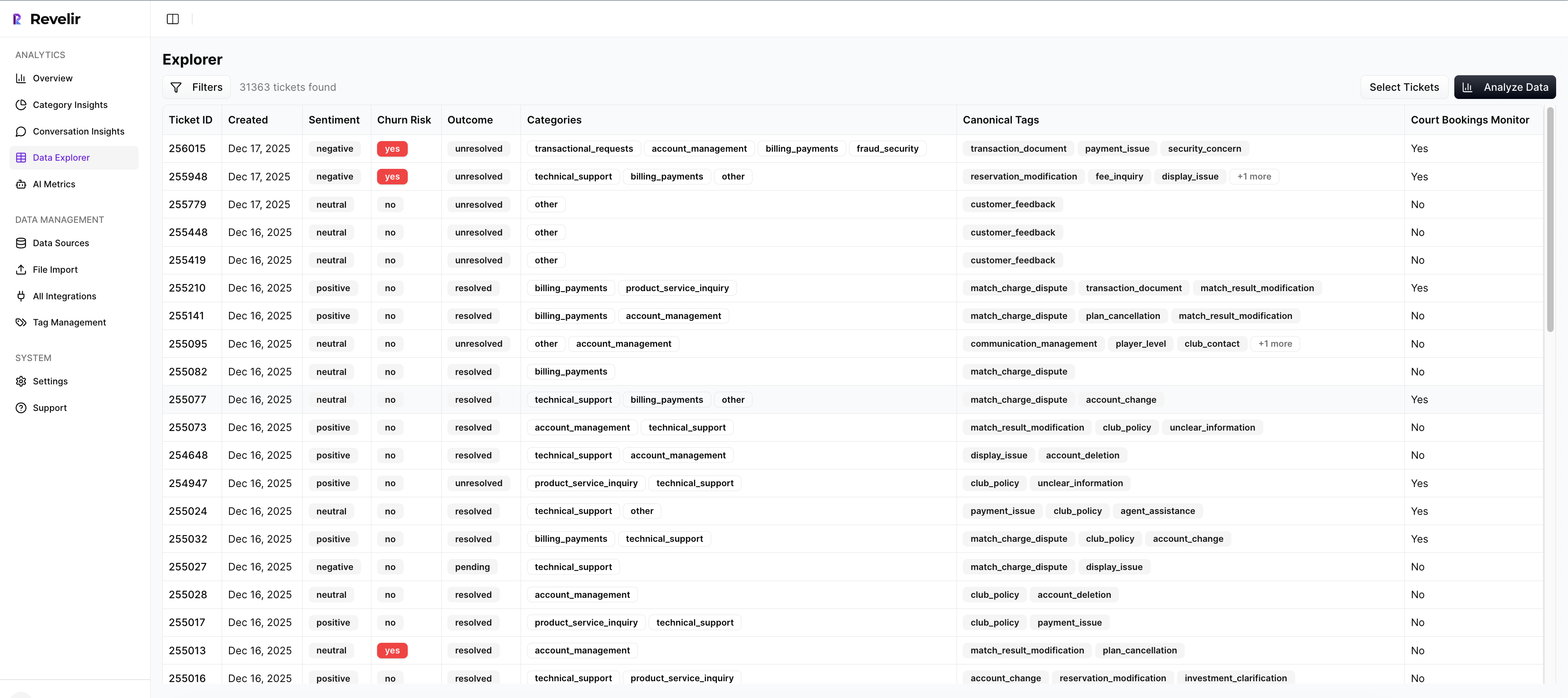
Outcome-first, here is what teams see in month one: less manual review, faster saves, and fewer wasted credits because offers match the root cause. That is the lift you can show upstairs. Want a walkthrough with your data? Get Started With Revelir AI
Conclusion
You do not need more surveys or bigger discounts. You need segments you can explain, evidence you can show, and a safe way to ship offers without leaks. Start with canonical tags, drivers, churn risk, and CEM. Add plan and tenure to sharpen eligibility. Validate on real tickets, then automate with guardrails.
If you pick one place to begin, pick coverage and traceability. Measure every conversation. Make evidence visible. The rest clicks into place. When your team stops guessing and starts proving, saves rise, costs fall, and the meetings get a lot shorter. Curious what that looks like against your own queue? Learn More
Frequently Asked Questions
How do I set up segmented retention offers using Revelir AI?
To set up segmented retention offers with Revelir AI, start by defining clear segments based on your support ticket data. Use canonical tags, churn risk indicators, and the Customer Effort Metric (CEM) to create these segments. Once defined, validate each segment against actual support conversations to ensure they accurately reflect customer needs. Finally, push the relevant customer segments into your CRM with tailored offers that address their specific pain points. This way, you can effectively target the right customers without resorting to blanket discounts.
What if I want to validate my retention offers?
If you want to validate your retention offers, use Revelir AI's Conversation Insights feature. This allows you to drill down into individual tickets that fall within your defined segments. By reviewing these conversations, you can confirm that the issues you're addressing are indeed the primary concerns of your customers. This validation process ensures that your retention strategies are not based on assumptions but on actual customer feedback, enhancing the likelihood of success.
Can I track the effectiveness of my segmented offers?
While Revelir AI does not provide traditional tracking or analytics dashboards, you can measure the effectiveness of your segmented offers by analyzing ticket trends and customer feedback post-implementation. Use the Data Explorer to filter tickets by sentiment and churn risk before and after your offers are sent out. This will help you see if there’s a reduction in negative sentiment or churn risk associated with the customers who received the offers, allowing you to iterate on your strategies effectively.
When should I create new segments for retention offers?
You should consider creating new segments for retention offers whenever you identify shifts in customer behavior or feedback trends. For example, if you notice an increase in churn risk signals related to a specific product feature or service, it’s a good time to create a targeted segment. Additionally, regularly reviewing your support tickets using Revelir AI can help you spot emerging issues that may require new segments, ensuring your retention strategies remain relevant and effective.
Why does my team need to validate retention offers with real tickets?
Validating retention offers with real tickets is crucial because it ensures that your strategies are based on actual customer experiences rather than assumptions. Revelir AI allows you to link insights directly back to the conversations that generated them, providing concrete evidence of customer sentiment and issues. This level of validation helps build trust with your leadership team and increases the chances of your retention efforts being successful.