

After an incident, the real work starts. Postincident sentiment recovery is the 30‑day, CX‑led push to repair trust, prove improvement, and cut churn risk. You segment fast, reach out with intent, and measure deltas you can defend. If you only chase root cause and MTTR, you miss the emotional cost and the revenue at risk.
We see teams fix the system and then move on. Customers do not. They remember how you owned the mistake, how clear your updates were, and whether the make‑good felt fair. It is usually not a massive program. It is a simple sequence with evidence behind every move and a cadence customers can feel.
Key Takeaways:
- Treat postincident sentiment recovery as a 30‑day, CX‑owned workflow with clear roles, timelines, and checkpoints
- Use 100% conversation coverage to extract drivers, frustration cues, and churn risk by cohort, then trace every chart to real quotes
- Segment outreach by severity and customer value to avoid random acts of apology and focus where risk is highest
- Measure 7, 14, and 30‑day sentiment and churn deltas, compare to controls, and escalate if recovery stalls
- Set public communication cadences, own impact plainly, and apply compensation rules customers perceive as fair
- Close the loop with a customer brief and a product handoff backed by quotes, not anecdotes
Why Postincident Sentiment Recovery Determines Retention, Not MTTR
Postincident sentiment recovery decides retention because it measures and repairs trust in the 30 days after a failure. MTTR restores systems, but customers judge the clarity of updates, the tone of ownership, and the fairness of remediation. If you do not measure recovery, you miss real costs and renewals at risk.

What Postincident Sentiment Recovery Actually Is
Postincident sentiment recovery is a focused, time‑bound effort to detect and reduce negative sentiment, customer effort, and churn risk in affected cohorts. You define a 30‑day window, assign CX ownership, and track deltas across 7, 14, and 30 days. The output is proof of recovery you can show to leadership and customers.
Most teams think their incident review ends when engineering closes the ticket. It does not. The support queue still records frustration cues, the sales team hears renewal anxiety, and CSMs get pulled into side conversations. Without a structured recovery plan, you burn time on reactive cleanup that does not move the needle. Worse, nobody is checking whether the people who matter feel better.
That is why you operationalize this like any production effort. Clear owner. Defined segments. Measurable targets. Evidence you can click and read. When the data and the examples line up, you can make calls on cadence, compensation, and product fixes without arguing anecdotes.
Why MTTR Alone Misses Revenue Risk
MTTR shows how fast you restore service. It does not tell you who lost trust, where effort spiked, or which cohorts now carry churn risk. Customers decide on the relationship, not the timestamp. Focusing only on time to restore ignores the emotional aftermath that bleeds into support, social, and QBRs.
We have all seen the pattern. Systems are back, but enterprise accounts are still angry about the silence during the outage. Or the make‑good felt random. The result is a steady drip of escalations and renewal risk that does not show up on the incident page. Treat recovery as a parallel workstream with owners, SLAs, and auditable checkpoints, or you will lose accounts you could have saved.
Want a reference on incident response building blocks you can adapt for the customer side too? Skim the incident response playbook elements. Then apply that same rigor to the trust layer.
Make Postincident Sentiment Recovery A CX‑Led, Evidence‑Backed Workflow
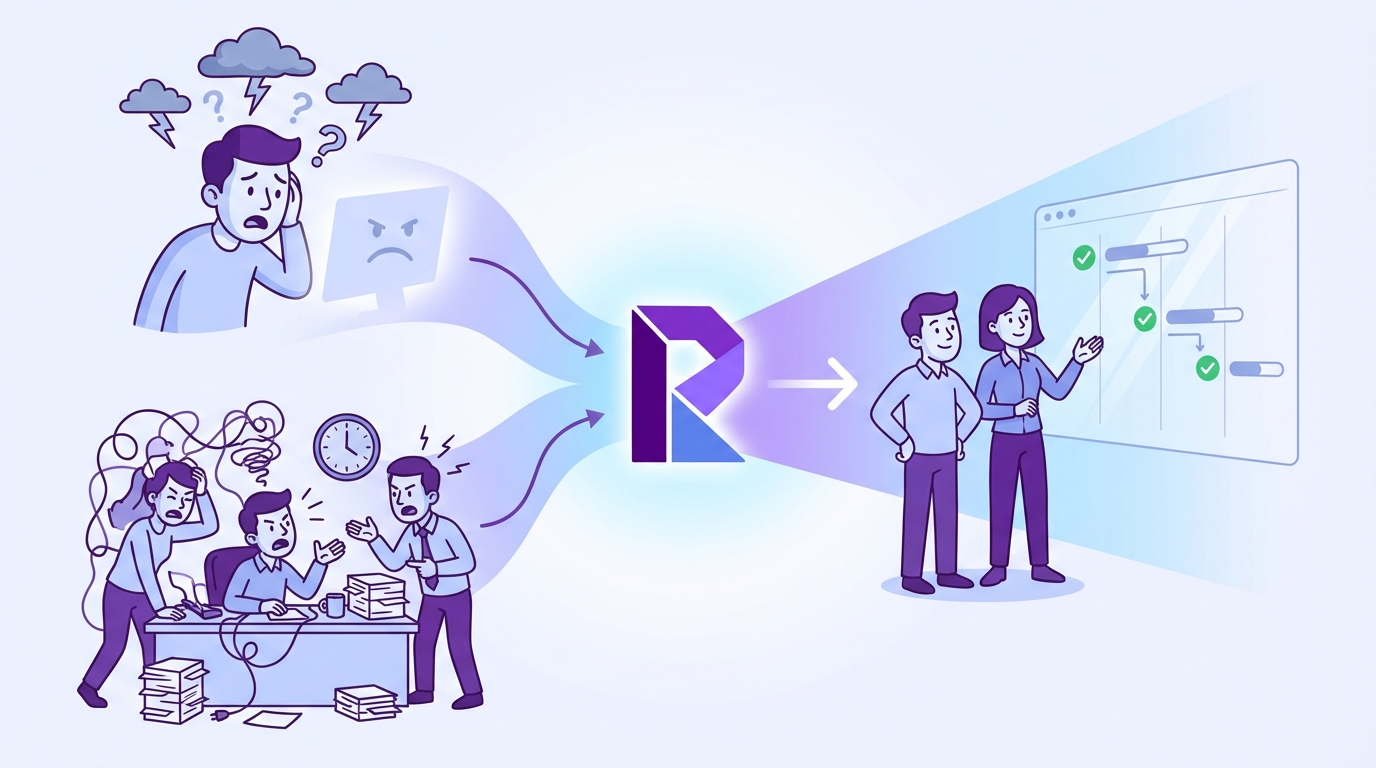
Postincident sentiment recovery should be owned by CX with defined partners across Support, CSM, and Product. The workflow starts when engineering stabilizes and continues through segmented outreach, fair compensation, and measurable deltas. Evidence, not scores, keeps everyone aligned and decisions defensible.
Ownership That Prevents Drift
Ownership removes the common failure mode where everyone cares and no one drives outcomes. A CX lead runs the playbook with authority to pull partners in, set cadences, and approve remediation within defined ranges. Engineering hands off after stabilization. CX takes the customer lane.
In practice, that means a single playbook link, not a dozen docs. The owner publishes the timeline, defines severity tiers, and sets rules for who gets personal outreach versus automated updates. CSMs work the top tier. Support handles the long tail with templates. Product shows up with credible status on the fix and the effect on effort.
Honestly, the hardest part is deciding what is fixed enough to start outreach. Set that bar early. Customers forgive imperfect if you are clear, fast, and fair. They do not forgive silence.
Shift From Scores To Evidence You Can Show
Scores alone are weak. You need 100% coverage across conversations to extract drivers, frustration cues, and churn risk by cohort, then back every chart with representative quotes. In tense meetings, evidence ends debate and moves approvals faster. If a chart cannot be traced to a ticket, expect pushback.
The practical flow looks like this. Filter the affected cohort by plan, region, or product. Group by drivers to see which themes carry the most negative sentiment or high effort. Click into a driver and pull three quotes that sound exactly like what your chart implies. Now you have a story leadership and Product can act on.
If you want a process backbone for playbooks generally, ServiceNow’s guidance on using a playbook is a decent scaffold to borrow for your recovery sequence. See use the playbook. The principle holds here too. Clarity beats improvisation.
The Cost Of Ignoring Postincident Sentiment Recovery In The First 30 Days
Ignoring postincident sentiment recovery for 30 days increases escalations, hides churn risk until QBRs, and wastes budget on reactive cleanup. You trade an auditable recovery cadence for guesswork. The cost is not rare. It is predictable when nobody measures cohort deltas and nobody owns fair remediation.
How Much Silence Costs
Let’s pretend you have 1,200 affected customers, 300 enterprise. If 20 percent of enterprise accounts show churn signals and you fail to engage, losing only five renewals at 60 thousand ARR costs 300 thousand. Add 80 hours of escalations and rework. That is two weeks of burned focus for senior people.
We are not even counting the drag on roadmap items that get hijacked by “urgent” but unproven fixes. Without segment‑level evidence, you will chase the wrong problem, then wonder why sentiment does not budge. The queue tells you where it hurts. You either read it systematically or you pay in surprises later.
If you need a general primer to align risk language with ops, this incident response playbook lays out a simple frame you can echo on the customer side. Keep it practical. Keep it measurable.
Three Mistakes That Make Recovery Slower
The most common mistakes are easy to spot and expensive to ignore. Generic apologies without specifics. Compensation that feels random, which customers read as unfair. No 7, 14, 30‑day checks, so leaders cannot see recovery.
Fix the pattern with three moves that do not require heroics. Use targeted templates that acknowledge the exact impact and what changed. Set compensation thresholds by severity and customer value so credits are predictable. Publish recovery checkpoints and show cohort deltas tied to quotes. If deltas stall, escalate outreach now, not next month.
The thread through all three mistakes is the same. Missing evidence forces debate. Debate slows action. Action without fairness drives repeat tickets. You can cut that loop by making proof visible from day one.
What Postincident Sentiment Recovery Feels Like For Your Customers And Team
Customers experience confusion first, then anger if updates stall or feel vague. Your team experiences scramble, late nights, and debate when nobody can prove progress. A simple, auditable sequence reduces effort on both sides and turns noise into measurable movement.
The First 72 Hours For Customers
The first 72 hours decide whether customers calm down or escalate. They want clarity, ownership, and a next step that lowers their effort. Acknowledge the problem, name what changed, and set a cadence they can count on. If they need to chase answers, you just created a new problem that overshadows the original failure.
We have all read the thread that starts reasonable and ends with a public post. That arc is not about the bug. It is about effort and fairness. Fast, specific updates earn patience even when the fix takes longer than you hoped. Vague, polished messages that dodge the truth do the opposite.
A quick rule that rarely steers you wrong. Be plain. Own the impact. Offer a direct path to make it right. Then keep your promises.
How The Team Feels Without A Playbook
Without a playbook, Support scrambles, CSMs overpromise, and Product leaders get peppered with anecdotes. People work late. Nobody can point to a chart and say, “We are trending in the right direction.” Morale dips because effort is high and proof is thin.
A basic, CX‑owned sequence flips that. You channel energy into actions that measurably reduce negative sentiment, effort, and churn risk in the affected cohorts. You stop firefighting and start closing loops. The work feels lighter because you can show progress, not just claim it.
The 7‑Step Customer Remediation Playbook That Restores Sentiment In 30 Days
A simple seven‑step playbook restores trust by pairing segmented outreach with fair remediation and measurement. It starts within hours, publishes a cadence, and proves recovery with quotes and cohort deltas. You do not need perfection. You need speed, specificity, and evidence.
Step 1‑2: Immediate Triage And Outbound Templates
Segment by severity, plan tier, and business impact, then assign owners and timelines. Ship proactive outreach within hours. Use email plus in‑app for most customers, and SMS for time‑critical services. Template structure is simple, and it works when it is specific.
Start with acknowledgement of the incident and the impact you recognize. Describe current status and the next clear milestone. Offer a direct reply path for those who need help now. Personalize for high‑value accounts. Include a promise to share remediation steps and timing. When outreach lands early, effort drops and sentiment stops sliding.
To keep teams from freelancing, publish your templates in one place. Nobody should be guessing tone or content while customers wait. Same thing with approval rules. Fast and consistent beats clever and late.
- Acknowledge the exact impact you caused
- State what changed and what will change next
- Provide a direct reply path for help now
- Commit to the next update time and channel
Step 3‑4: Compensation Rules And Workflow Handoffs
Create thresholds by severity and customer value. Examples include service credit percentages, fee reversals, or expedited access. Standardize ranges so frontline teams are not negotiating case by case. Fair and consistent compensation reads as respect. Random reads as unfair and risks more tickets.
Orchestrate cross‑functional handoffs deliberately. CSMs take top‑tier calls. Support manages ticket updates with fresh status. Finance applies credits within the rules you published. Product provides visibility on the fix so CX can speak with confidence. Log every decision with a rationale a customer would consider fair if they read it later.
This is where small misses turn into a second incident. Do not let approvals bottleneck the make‑goods. Decide the ranges once, write them down, and let teams act inside them. You can review exceptions later.
Step 5‑6: Cadence, Follow Through, And Measurement Checkpoints
Set a public cadence. Daily until stable, then twice weekly through day 30. If a cohort shows stagnant or worsening sentiment, escalate to personal outreach. Follow through on every promised update even if the news is “still in progress.” Silence erodes trust faster than a hard truth.
Measure 7, 14, and 30‑day deltas by driver and cohort. Pair those with a small, well‑timed CSAT follow‑up to verify the qualitative shifts you see in tickets. If deltas stall, expand compensation for the affected cohort or run a fix‑focused briefing to reset expectations. Recovery you can audit beats vague “we think it is better” every time.
To keep it simple, summarize each checkpoint in one page with quotes. Leadership does not need a novel. They need proof and a call to action.
Step 7: Postmortem To Product Loop With Evidence
Convert what worked into changes customers can feel. Write a short customer brief that explains what happened, what changed, and how you will prevent recurrence. Feed drivers and representative quotes into Product so roadmap work starts from evidence, not opinions.
Track the next 30 days for reductions in effort and churn risk among the affected cohorts. Compare to an unaffected control group. Close the loop publicly when the data shows recovery. Customers remember that you owned it and you proved it.
If you want more examples of incident playbook structures to adapt, see these accessible primers on incident response playbooks. Borrow the structure. Swap in customer‑facing checkpoints.
Ready to operationalize this for your team without reinventing the analysis layer? Learn More
How Revelir AI Proves And Accelerates Postincident Sentiment Recovery
Revelir AI turns 100 percent of your support conversations into structured, evidence‑backed metrics you can pivot by cohort. You filter, group, and drill down in minutes. Every chart links to quotes, so outreach, compensation, and product fixes are defensible. That is how you move from debate to action.
Evidence‑Backed Monitoring In One Place
Revelir processes every conversation and assigns metrics such as Sentiment, Churn Risk, and Customer Effort. In Data Explorer, you filter affected cohorts by plan, region, or product, then group by drivers to see where it still hurts. Conversation Insights gives you the quotes that match the pattern.
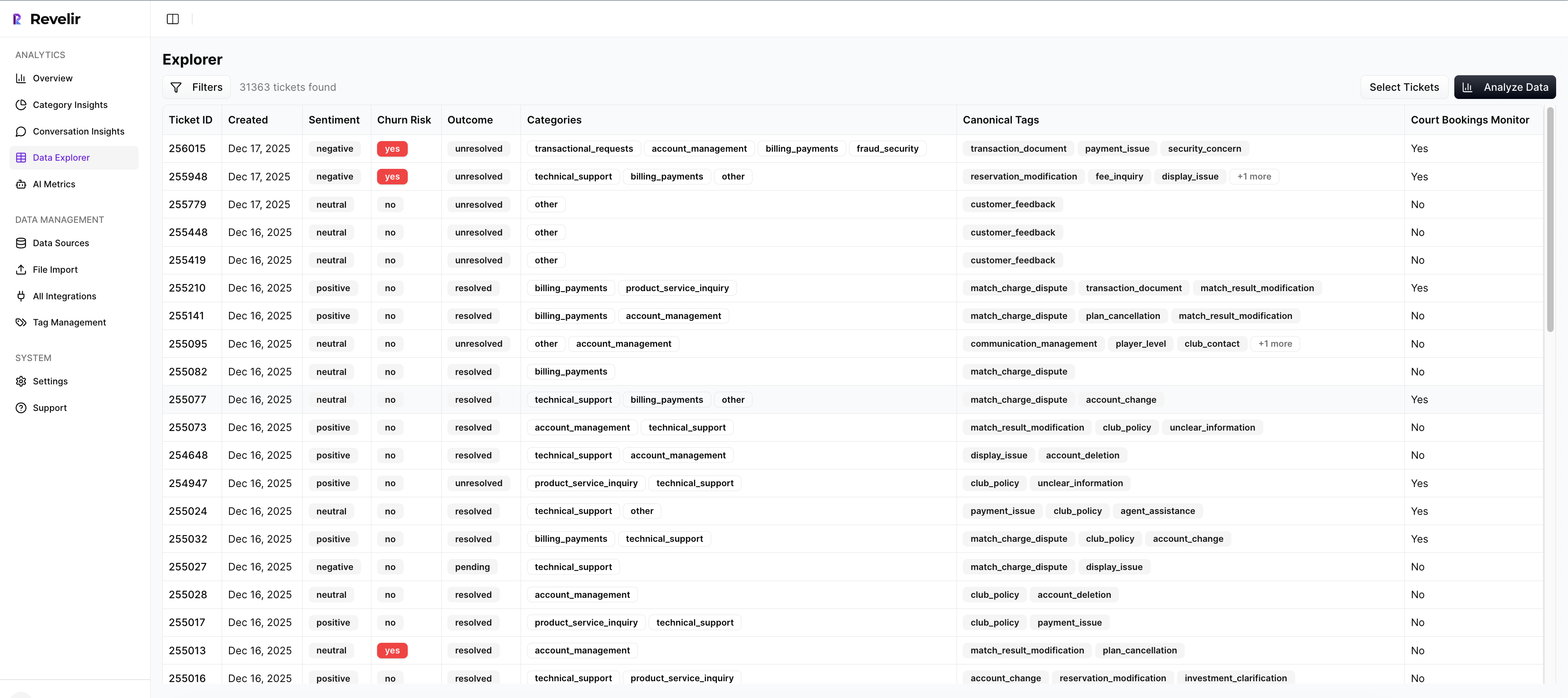
When a stakeholder asks, “Show me where this came from,” you can click the number and open the ticket. No black box. No stitched document of cherry‑picked examples. Just traceable evidence aligned to the metric they are questioning. That is the trust layer most teams miss.
Measure 7, 14, And 30‑Day Deltas By Cohort
Analyze Data quantifies sentiment and churn deltas by driver and cohort across 7, 14, and 30 days. You can save views for the incident cohort and compare against unaffected controls. If negative sentiment density remains high for a specific driver or tier, you raise cadence and compensation immediately instead of guessing.
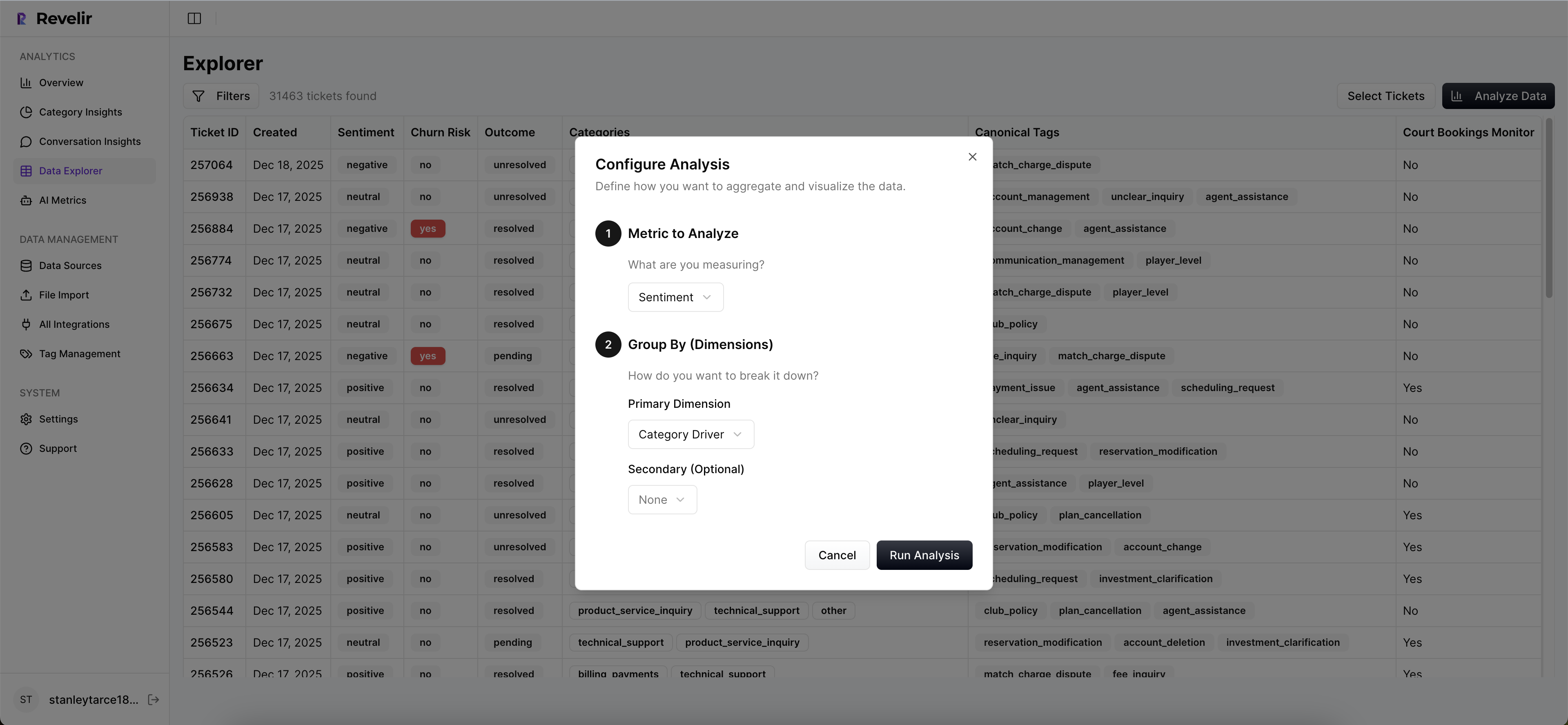
This closes a costly gap we called out earlier. Late detection inflates escalations and burns budget on reactive work. With Revelir, the deltas are in one place, tied to quotes, and refreshed as tickets come in. That is how you prove recovery or justify a new move.
Curious how this looks in practice on real datasets? See how Revelir AI works
Make Recovery Decisions With Verifiable Quotes
Open Conversation Insights and pull five representative quotes that match what your chart shows. Paste them into leadership updates and customer briefs. Your approval cycles speed up because the evidence is already on the page. Nobody is forced to take a leap of faith.
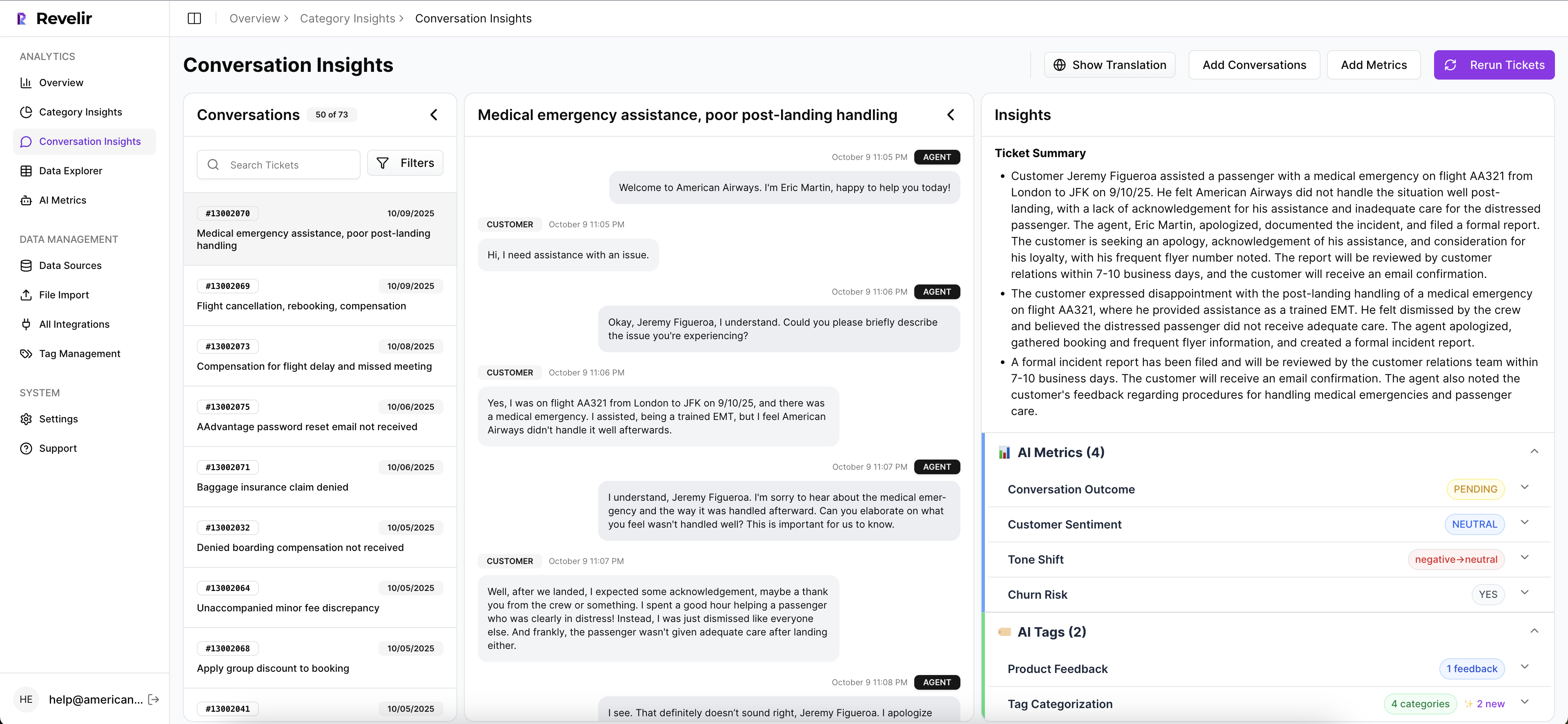
Revelir does not replace your judgment. It makes your calls faster and safer by grounding them in 100 percent coverage and traceable examples. You still decide the outreach and the make‑good. You just do it with proof, not hunches.
If you are ready to quantify recovery across cohorts and show improvement with examples leadership trusts, start with your own tickets. Learn More
Conclusion
Fixing the system ends the incident. Restoring trust protects the revenue. Postincident sentiment recovery is the bridge. When CX owns a 30‑day, evidence‑backed workflow, you stop debate, focus on high‑risk cohorts, and prove movement with quote‑level traceability. You do not need glitter. You need clarity, cadence, and fairness backed by data.
Frequently Asked Questions
How do I start using Revelir AI for sentiment recovery?
To get started with Revelir AI for sentiment recovery, first connect your helpdesk system, like Zendesk, to Revelir. This allows you to automatically ingest all your support tickets. Next, set up your canonical tags to categorize the issues that matter most to your business. Finally, use the Data Explorer feature to filter and analyze your conversations, focusing on sentiment and churn risk. This will help you identify the key drivers behind customer dissatisfaction and take action to improve their experience.
What if I need to validate insights from my data?
If you need to validate insights, you can use the Conversation Insights feature in Revelir AI. This allows you to drill down into specific tickets that contributed to your metrics. Start by running an analysis in the Data Explorer, then click on any metric to see the underlying conversations. Review the transcripts and AI-generated summaries to ensure that the insights align with the actual customer feedback. This process helps build trust in your data and supports informed decision-making.
Can I track customer sentiment over time with Revelir AI?
Yes, you can track customer sentiment over time using Revelir AI. The platform provides sentiment metrics for each conversation, labeling them as positive, neutral, or negative. You can use the Analyze Data feature to group sentiment by different dimensions, such as time periods or customer segments. This way, you can easily spot trends in customer sentiment and identify any areas that may need attention or improvement, allowing for proactive customer engagement.
When should I use the churn risk feature?
You should use the churn risk feature in Revelir AI when you notice an uptick in negative sentiment or high-effort tickets. This feature helps identify conversations that indicate potential churn, allowing you to prioritize follow-ups with at-risk customers. By filtering for churn risk in the Data Explorer, you can quickly assess which accounts need immediate attention and take proactive measures to address their concerns, ultimately improving retention rates.
Why does my team need evidence-backed metrics?
Your team needs evidence-backed metrics to make informed decisions based on actual customer feedback rather than assumptions. Revelir AI converts support conversations into structured metrics, ensuring that every insight is traceable back to specific customer quotes. This transparency helps build trust among stakeholders and allows for more effective prioritization of product improvements and customer experience initiatives.