

Manual multilingual ticket analysis usually looks more sophisticated than it is. You see translated snippets, a tidy dashboard, a few regional tags, and everybody sort of nods along. Nobody's checking whether the same issue is being tagged the same way in German, Spanish, and English.
That gap is where bad product decisions get made. Not because the team is careless. Because multilingual ticket analysis breaks quietly, then shows up later as a fake trend, a missed pattern, or a region that looks "healthy" only because your tagging logic drifted.
Key Takeaways:
- Multilingual ticket analysis only works if you validate tag alignment by language, not just overall model accuracy
- The real decision is usually translate-first versus multilingual models, based on volume, latency, and review capacity
- Canonical tags need cross-language governance or your regional reporting starts lying to you
- Low-volume languages need tighter sampling rules because drift hides there first
- Traceability matters more in multilingual support because leaders will question any chart they can't audit back to source tickets
Why Multilingual Ticket Analysis Breaks More Often Than Teams Expect
Multilingual ticket analysis breaks when teams assume language coverage equals insight quality. A model can process three languages and still produce inconsistent tags, uneven drivers, and misleading cross-region comparisons. That's why the problem isn't language support by itself. It's validation discipline.
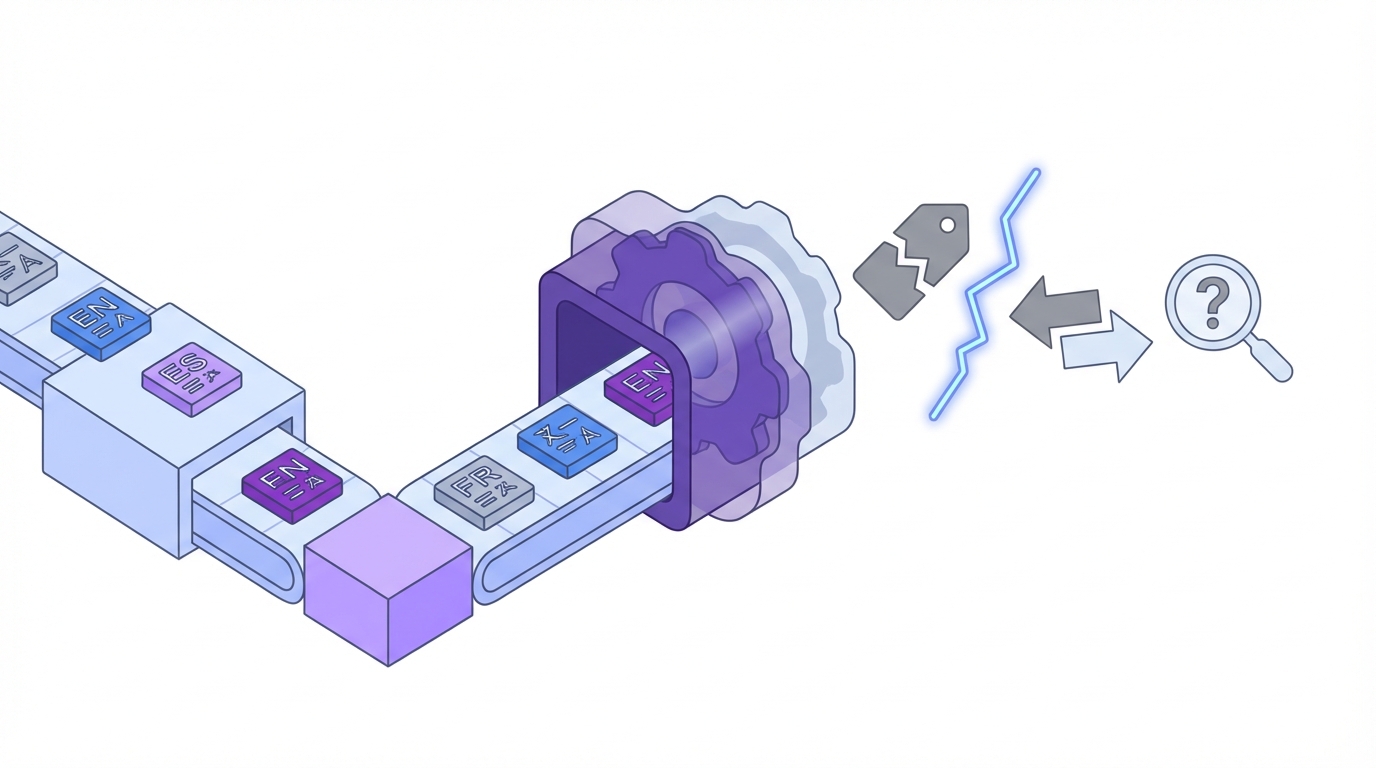
Most teams start with a pretty reasonable idea. Pick a multilingual model, or translate everything into one language first, then run one taxonomy across the dataset. On paper, that sounds clean. In practice, meaning shifts. A complaint about delays in one language gets tagged as shipping friction. The same complaint in another gets tagged as account confusion because the phrasing is more indirect. Same customer problem. Different reporting outcome.
The real issue isn't that multilingual support data is messy. Support data is always messy. The real issue is that teams treat multilingual ticket analysis like a model selection problem when it's actually a measurement problem. You're not just asking, "Can the system read this language?" You're asking whether the same business issue gets classified the same way across languages, week after week, under audit.
And that matters fast. If one region over-indexes on certain raw tags because of phrasing quirks, product teams will chase the wrong fix. If another region under-reports churn risk because the model reads softer language as neutral, leadership will miss an escalation pattern until it costs real accounts. It's exhausting, honestly, because the dashboard still looks coherent while the underlying logic is drifting.
The same ticket problem gets split into different categories
Cross-language inconsistency usually starts at the tag layer. Raw tags are supposed to surface what the customer is talking about. But wording habits vary by market, by support culture, even by how direct customers are in that language. So one issue becomes three issue labels.
That's where teams get fooled by aggregate numbers. They think they're seeing healthy variation by geography. Sometimes they are. A lot of the time they're seeing taxonomy drift. Same thing with drivers. If your high-level groupings depend on unstable lower-level tags, leadership reporting starts looking precise while saying the wrong thing.
A McKinsey piece on multilingual customer operations gets at the broader business problem: inconsistency in service understanding turns into inconsistency in action. Support analytics has the same failure mode. Just quieter.
Translation can clean data or flatten meaning
Translate-first pipelines give you control. They also introduce risk. If the translation layer normalizes local nuance too aggressively, you lose the phrasing that would have pointed to effort, urgency, or churn risk. So yes, translation can simplify multilingual ticket analysis. It can also wash out the signal you actually needed.
Multilingual models have the opposite problem. They preserve more native context, but only if you validate performance by language. Teams skip that part all the time because the vendor says the model supports 50 languages. Support is not alignment. That's the mistake.
I'd argue most teams should stop asking which path is theoretically better and start asking which path they can actually govern. If you don't have reviewers who can audit outputs in each language, your pipeline is already fragile. That's true whether you're translating first or not.
Low-volume languages hide the biggest risk
High-volume languages get attention because they move the chart. Low-volume languages get ignored because they don't. That's backwards. Drift usually hides first in lower-volume queues where nobody has enough repetition to spot weird tagging patterns.
Let's pretend you review 500 English tickets a week and 30 Dutch tickets a month. Which dataset will reveal a broken canonical mapping faster? The English one. The Dutch one can stay wrong for weeks and still look statistically harmless in the summary. Meanwhile you're training teams to trust a report that isn't stable.
The cost isn't only analytical. It's political. Once regional leads stop trusting cross-language reporting, every metric review turns into a debate about whose market is being represented fairly. Then nobody moves.
How to Build a Multilingual Ticket Analysis System You Can Trust
A trustworthy multilingual ticket analysis system is built on alignment rules, validation loops, and traceability back to source conversations. You need one shared measurement model, clear canonical tag governance, and regular per-language checks. Without that, the output might look structured but it won't be dependable.
The shift is pretty simple. Stop treating multilingual analysis as a one-time AI setup. Treat it like an operating system for support evidence. Same taxonomy logic. Same review standards. Same audit path. Different language inputs.
Choose the pipeline your team can actually validate
The first decision is architectural. Translate first, or classify natively with multilingual models. There isn't one universal winner. It depends on your support volume, latency tolerance, and internal review depth.
Translate-first is usually better when you need:
- A single downstream taxonomy workflow
- Faster setup across several languages
- Fewer reviewer profiles internally
- More consistency in reporting operations
Native multilingual classification is usually better when you need:
- More local nuance preserved
- Strong in-language QA coverage
- Better handling of culture-specific phrasing
- Lower dependence on translation quality
The wrong move is mixing both approaches casually. That creates analysis tiers with different failure modes, which makes multilingual ticket analysis harder to audit. Pick one primary path. Then validate around it.
In my experience, translate-first works surprisingly well early on if your goal is operational consistency and you have limited multilingual reviewers. But it only works if you keep an audit trail to the original transcript. Otherwise you're measuring translations, not customer conversations.
Define canonical tags above the language layer
Canonical tags should represent business meaning, not local wording. That's the backbone. If your canonical taxonomy is really just a cleaned-up version of English phrasing, it won't hold across markets.
A better way to do it:
- Write canonical tags as business issues, not sentence fragments
- Define inclusion and exclusion rules for each tag
- Map known language-specific raw expressions into the same business category
- Review overlap between neighboring tags every month
So instead of tagging for phrases like "can't log in" or "password not working," build a canonical issue around account access and document what belongs there across languages. That keeps your reporting tied to the problem, not the wording.
Some teams prefer very granular canonical tags. Fair point. Granularity can help. But if your multilingual ticket analysis program is still new, too much granularity usually increases disagreement. Start with stable categories. Add depth later.
Validate at the language level, not just the global level
Overall accuracy numbers are comforting and mostly useless for multilingual operations. You need per-language agreement checks. That's where the truth is.
Set a review cadence by language and measure:
- canonical tag agreement
- driver agreement
- sentiment agreement
- churn risk agreement where relevant
- unresolved or ambiguous cases
For a practical baseline, review a fixed sample from each major language every week and a rotating sample from low-volume languages every month. The exact sample size depends on ticket volume, but the rule matters more than the formula: every supported language gets checked on purpose.
The NIST guidance on evaluating language technologies is useful here because it reinforces a boring but important point. Performance claims without task-specific evaluation don't tell you much. Same thing with support analytics. If you don't test per language, you're guessing.
Honestly, this is where most systems fall apart. Teams validate once during setup, declare success, and move on. Six weeks later a model update, a new market, or a seasonal issue changes the language mix and nobody notices.
Create drift rules before drift shows up
You don't need a giant governance committee. You do need explicit thresholds. If disagreement rises, what happens next? Who reviews mappings? Which tags get frozen? Which markets need deeper sampling?
A simple multilingual governance loop looks like this:
- Sample outputs by language on a set cadence
- Measure disagreement against reviewer judgment
- Flag tags or drivers with repeated mismatch
- Update mappings and taxonomy notes
- Recheck the affected language queue
That process sounds obvious. It's usually missing. Nobody owns the cross-language layer, so drift becomes everybody's problem and nobody's task. Then the system slowly gets worse while still producing clean charts.
If you want a useful target, aim to reduce inter-language tag disagreement by at least 50% in the first 90 days. That's enough to create confidence without pretending the work is ever finished.
Keep the original transcript attached to every metric
This part is non-negotiable. Multilingual ticket analysis without transcript traceability turns into trust theater. Especially in executive reviews.
When a regional lead challenges a finding, you need to go from chart to driver to ticket to quote. Not next week. Right there. That's what makes the metric defensible. It also protects your team from overconfidence. Sometimes the analysis is wrong. Good. You want to be able to see that quickly.
A strong traceability model should let you:
- inspect the original ticket text
- compare it with any translated representation used in analysis
- review assigned raw and canonical tags
- inspect sentiment, effort, or churn flags in context
- pull representative examples for stakeholder review
How Revelir AI Makes Ticket Analysis Auditable
Revelir AI makes ticket analysis more trustworthy by combining full-coverage processing, structured tagging, and traceability back to the source ticket. The point isn't to hide the complexity. It's to make the classification logic inspectable enough that CX and product teams can trust what they're seeing.
Full coverage matters when consistency is on the line
Revelir AI processes 100% of ingested tickets, whether they come through the Zendesk Integration or CSV Ingestion path. If you're only reviewing fragments, you'll miss the exact places where the taxonomy is slipping.
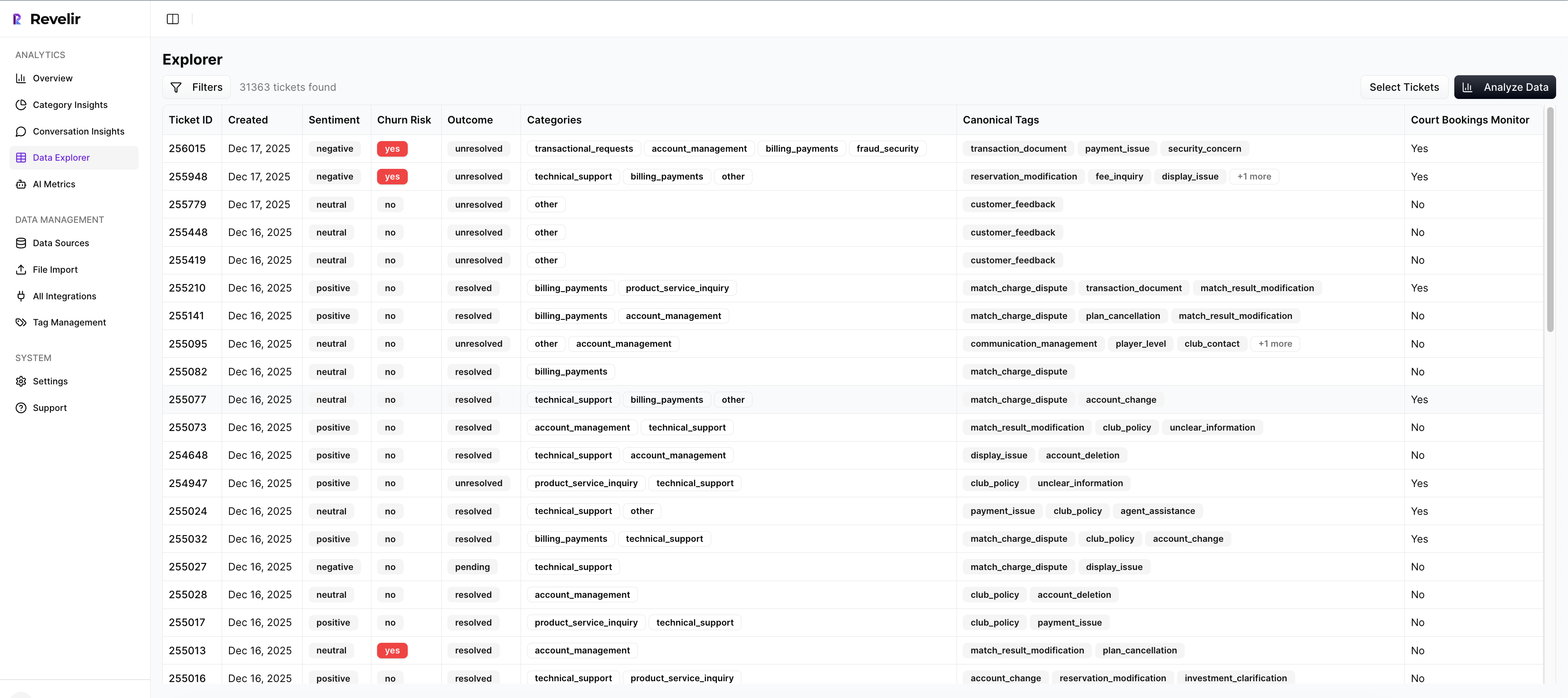
With Full-Coverage Processing, you can inspect the whole dataset instead of arguing about whether the sample was representative. Then the Hybrid Tagging System helps at the right layer: Raw Tags surface granular, emerging themes, while Canonical Tags give you a stable reporting layer aligned to how humans actually want to categorize issues. Same thing with Drivers. They let teams move from scattered issue labels to a cleaner explanation of why customers are contacting support.
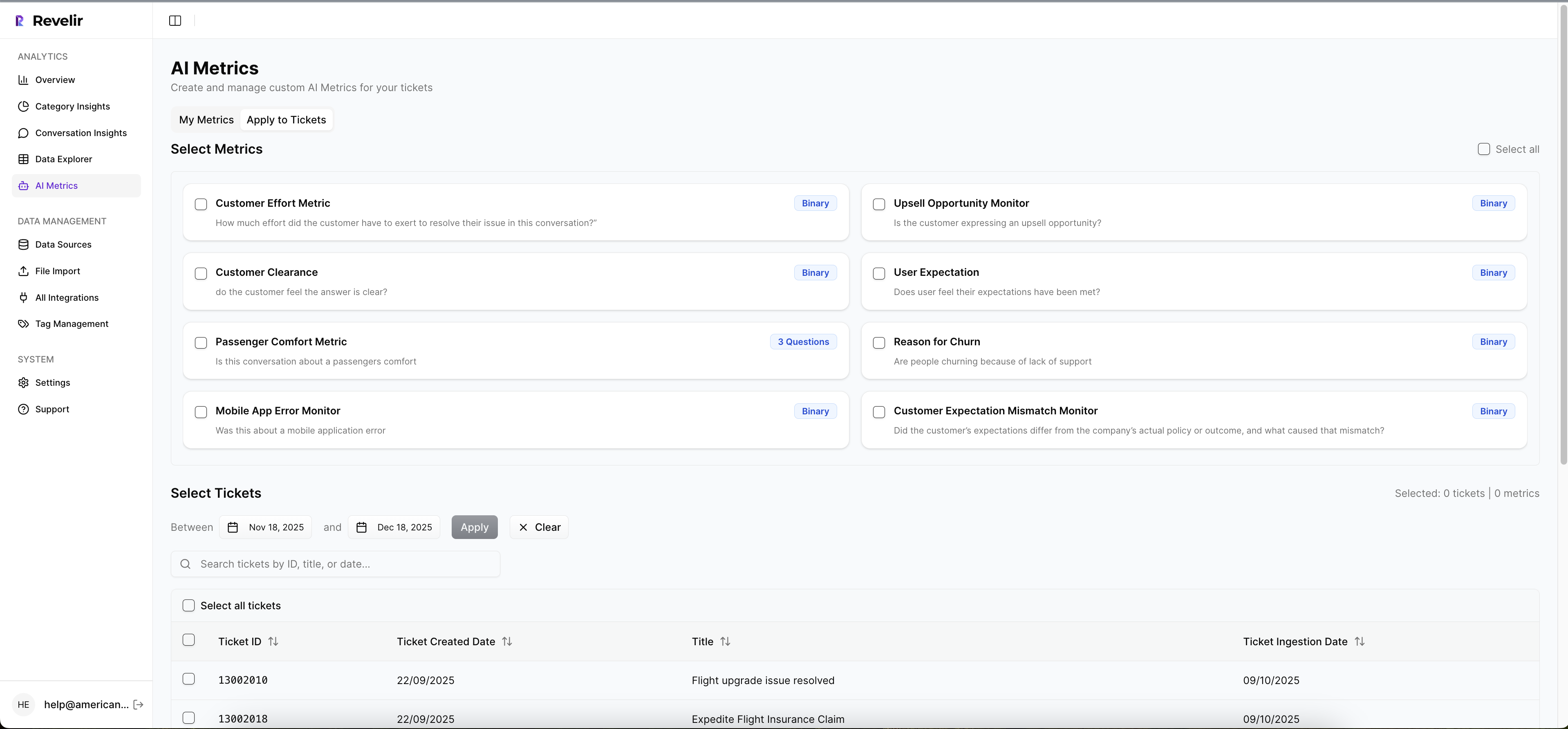
That combination is what makes ticket analysis usable for leadership. Not because it simplifies everything. Because it keeps nuance visible while still giving you a reporting structure that can hold up under scrutiny.
You can challenge the chart and still trust the system
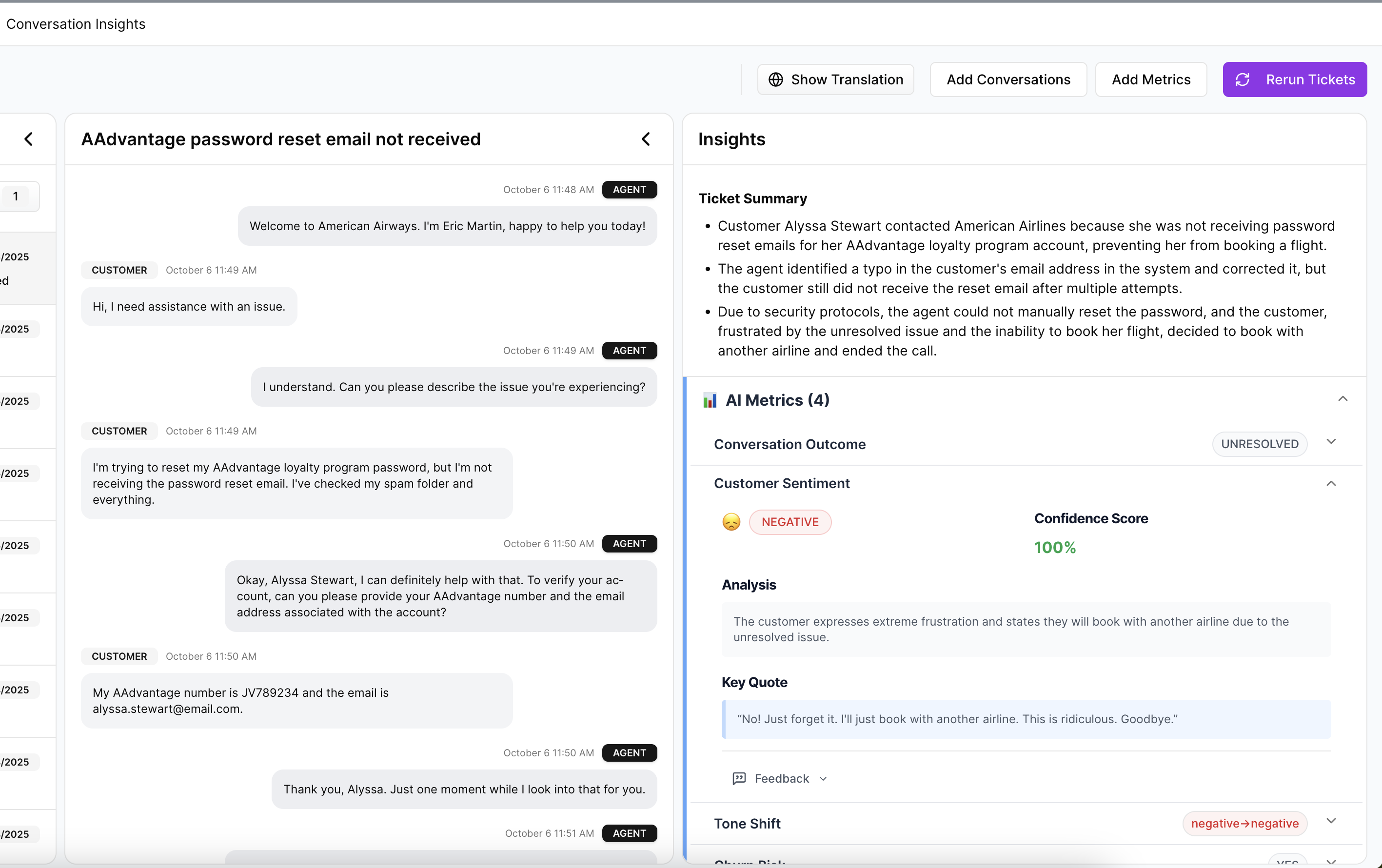
Revelir AI also gives you the audit path most teams are missing. Evidence-Backed Traceability links every aggregate number to the underlying conversations and quotes, and Conversation Insights lets you drill into ticket-level transcripts, summaries, tags, drivers, and AI metrics. If a lead says a churn-risk trend looks wrong, you can inspect the exact tickets behind it.
Data Explorer is where that becomes operational. You can filter, group, sort, and inspect tickets using columns for sentiment, churn risk, effort, tags, drivers, and Custom AI Metrics. Analyze Data adds grouped analysis so teams can summarize those signals by Driver, Canonical Tag, or Raw Tag and move quickly from summary to evidence. If you need business-specific definitions, Custom AI Metrics let you define domain-specific classifiers instead of forcing everything into generic sentiment buckets.
For teams trying to get ticket analysis under control without changing their helpdesk, that's the practical win. Revelir AI plugs in on top of existing support data, gives you a structured way to inspect 100% of conversations, and keeps the evidence attached. Learn More
The Teams That Trust Cross-Language Insights Build for Audit First
Multilingual ticket analysis gets useful when you optimize for auditability before elegance. Choose a pipeline you can validate, define canonical tags above the language layer, sample every language on purpose, and keep every metric tied to the original transcript. That's how you stop guessing and start seeing what is actually breaking across markets.
If you're trying to build a cross-language tagging pipeline that leaders will trust, the bar is simple: auditable alignment across three or more languages, with inter-language tag disagreement cut in half inside the first 90 days. Get started with Revelir AI (Webflow)
Frequently Asked Questions
How do I ensure consistent tagging across languages?
To ensure consistent tagging, start by defining clear canonical tags that represent business issues rather than local wording. Use Revelir AI's Hybrid Tagging System to map raw tags to these canonical tags. Regularly review overlap between tags and adjust as necessary to maintain alignment. Additionally, set a review cadence for each language to validate tag agreement and ensure that the same issues are classified consistently across languages.
What if I notice discrepancies in ticket tagging?
If you notice discrepancies in ticket tagging, first, check the mappings between raw and canonical tags in Revelir AI. Use the Evidence-Backed Traceability feature to trace back to the original transcripts and understand the context behind the tags. If discrepancies persist, consider implementing a governance loop: sample outputs by language, measure disagreement, and adjust mappings accordingly to improve accuracy.
Can I analyze low-volume language tickets effectively?
Yes, you can analyze low-volume language tickets effectively by implementing tighter sampling rules. Use Revelir AI's Data Explorer to set a review cadence for these tickets, ensuring you regularly check a fixed sample to spot any unusual tagging patterns. This proactive approach helps you catch drift early, even when the volume is low, and maintain the integrity of your multilingual ticket analysis.
When should I use the translate-first approach?
You should consider using the translate-first approach when you need a single downstream taxonomy workflow, faster setup across multiple languages, and fewer internal reviewer profiles. This method can simplify the analysis process, especially if your goal is operational consistency. However, remember to keep an audit trail to the original transcripts to ensure you're measuring actual customer conversations and not just translations.
Why does my multilingual ticket analysis seem unreliable?
Your multilingual ticket analysis might seem unreliable if there are inconsistencies in tagging across languages. This often happens when teams don't validate tag alignment by language. To improve reliability, use Revelir AI's Analyze Data feature to summarize metrics by dimensions like Driver or Canonical Tag, and ensure that every language gets checked on purpose. Regular validation and alignment checks can significantly enhance the trustworthiness of your analysis.