

42 minutes on hold feels bad. Two transfers in one ticket usually feel worse, and if you don't measure how transfers and holds pile up inside support conversations, you're probably coaching the wrong problem.
Most CX leaders still judge agent performance with handle time and CSAT. Same thing with product teams looking at a dashboard dip and trying to guess the cause. The real driver of high-effort support isn't always a slightly longer conversation. It's usually the customer getting bounced around the system while nobody's checking what that journey actually felt like. If you want to measure how transfers holds and reassignments shape effort, you need evidence from the transcript, not a score floating in a slide.
Key Takeaways:
- Transfers, holds, and reassignments are often stronger effort drivers than handle time alone
- If a ticket has 2 or more ownership changes, treat it as a high-risk effort event worth reviewing
- The best measurement model combines transcript events, metadata, and a 24-hour attribution window
- A useful dashboard shows agent actions, effort rate, affected segment, and direct ticket links in one view
- You need causal controls, not just correlations, if you want to change routing and coaching with confidence
- Proof matters in leadership reviews, so every chart should trace back to real tickets and quotes
If this is the kind of support signal you're trying to pin down, Learn More.
Why Transfers and Holds Usually Matter More Than Handle Time
Transfers and holds matter more than handle time when they create friction the customer can feel and remember. A 14-minute conversation that gets resolved by one person can feel easier than a 7-minute conversation that includes one hold, one handoff, and a repeated explanation.

The metric most teams use is too blunt
Handle time is easy to grab, which is exactly why it gets overused. It's clean. It fits in a dashboard. You can trend it by week and compare teams. But if you're trying to measure how transfers holds and reassignments affect effort, handle time is a weak proxy because it treats all minutes like they're the same.
They aren't. Five minutes of active problem solving doesn't feel like five minutes of dead air while the agent says they'll need to move the customer to another queue. That's the hidden cost. Time by itself misses journey quality.
I've seen this over and over in support orgs. Leaders say they want to reduce effort, then they optimize the timer because that's what the system already reports. Fair point. The status quo has a real benefit: it's simple to manage. But simple isn't the same as useful, especially when the wrong metric drives the wrong coaching.
What high-effort tickets actually look like in the wild
Picture a support manager opening Zendesk at 4:30 on a Thursday. CSAT is flat. Average handle time is actually down 6%. On paper, that looks fine. Then they read five tickets from enterprise accounts and see the same pattern: first agent asks clarifying questions, places the customer on hold, transfers to billing, billing punts to technical support, technical support asks the customer to restate the issue. Three teams touched the ticket. Nobody owns the pain.
That's the day-in-the-life version of the problem. Not dramatic. Just expensive.
Call this the Bounce Burden model. If the customer has to restate context after a transfer, count that handoff as 2 effort points, not 1. If the ticket includes a hold over 90 seconds, add another point. Once a conversation hits 3 points, it belongs in your high-effort review set even if handle time looks normal. That threshold isn't perfect, but it's far more useful than pretending all interactions are interchangeable.
Why score-only dashboards create false certainty
Scores tell you that something changed. They rarely tell you why. CSAT can drop because of wait time, product bugs, billing confusion, poor routing, or all four at once. Basic sentiment labels help a little, but same thing with sentiment: negative doesn't tell you what created the frustration.
That's why score-watching creates false certainty. You start arguing from outputs instead of mechanisms. And leadership reviews get weird fast, because someone asks for proof and the team pulls together a few cherry-picked anecdotes that may or may not represent the larger pattern.
That tension is avoidable. The real question isn't whether effort is up. It's what agent actions consistently show up before high-effort outcomes, and whether those actions are necessary or just normal because no one has measured them properly. The next section gets into that.
The Real Measurement Problem Is Event Extraction, Not Reporting
Measuring transfer and hold impact breaks down long before the dashboard. The real problem is event extraction: getting reliable, normalized signals out of messy transcripts and ticket metadata so you can tell what actually happened inside the interaction.
You can't fix what you haven't defined
Most teams talk about transfers like they're a single thing. They're not. A queue reassignment, a warm handoff, a cold transfer, a specialist escalation, and a mid-thread ownership change all create different customer experiences. If you lump them together, your analysis gets noisy fast.
So start with a simple event taxonomy. I prefer a 4-event model:
- Transfer event: customer moved from one owner or queue to another
- Hold event: explicit waiting period or implied pause with no active progress
- Reassignment event: internal ownership change after work already started
- Repeat-context event: customer has to restate the issue after a handoff
That fourth one matters more than most teams realize. Honestly, it's usually the clearest signal that your system failed the customer, not just the agent.
Normalize first, analyze second
Let's pretend you're pulling data from transcripts, timestamps, assignee history, and status changes. Raw data will be messy. Agents use different phrases. Some holds are explicit. Some are buried in language like "give me a few minutes while I check." Some reassignments happen in metadata even when the transcript sounds smooth.
That's why you need the NORM filter before you try to measure anything: Name the event, Observe where it appears, Resolve duplicates, Map it to a standard label. If an event appears in transcript and metadata within the same 10-minute window, count it once. If the ticket changes owner 3 times but the customer only experiences 1 real handoff, distinguish internal routing from customer-visible transfer. Without that normalization pass, your transfer counts will look precise but behave like fiction.
A real concession here: manual review still has value. Humans catch nuance. They're good at spotting the difference between a useful specialist escalation and a pointless bounce. But manual review doesn't scale well enough to be your system of record. It should train the measurement logic, not replace it.
The reporting layer comes later
This is where a lot of teams burn weeks. They build charts first. Then they realize every chart is built on shaky event definitions. So they keep tweaking visuals while the underlying data stays muddy.
Better order:
- define event rules
- validate on a 50 to 100 ticket sample
- measure agreement between transcript and metadata
- set customer-visible thresholds
- then build reporting
If transcript and metadata disagree more than 15% of the time on transfer detection, don't publish the dashboard yet. Tighten your rules first. That's one of those boring thresholds that saves months of bad decisions.
You can get pretty far with simple logic here. But if you want to change routing or coaching budgets, simple logic won't be enough. You'll need a cleaner way to estimate cause, not just correlation.
How to Measure Transfer and Hold Impact Without Fooling Yourself
You measure transfer and hold impact by combining event counts, effort labels, and causal controls inside a defined time window. Put differently, don't just ask whether high-effort tickets include transfers. Ask whether transfers and holds increase the odds of high effort after controlling for issue type, customer segment, and ticket complexity.
Start with an attribution window you can defend
Attribution is where sloppy measurement sneaks in. If you count every transfer that ever touched a ticket, you'll overstate impact. If you only count the final action, you'll miss the chain that created the pain.
Use a 24-hour attribution window for most support teams. If a hold, transfer, or reassignment happens within 24 hours before a high-effort classification or negative outcome, include it in the candidate driver set. If your support motion is mostly live chat or same-day resolution, tighten that to 4 hours. If you're working long enterprise queues, extend to 72 hours. That's the rule.
I call this the Window of Friction. Short enough to stay defensible. Long enough to catch the real sequence. Most teams never set one, which means every debate becomes subjective.
Use the control stack, not raw correlation
A correlation like "tickets with transfers have 2.3x more high-effort labels" is useful, but it isn't enough. Some tickets get transferred because they're genuinely harder. That doesn't automatically mean the transfer caused the effort.
Use this control stack before you make a policy call:
- issue type or driver
- customer segment or account tier
- channel
- ticket age
- prior customer contact count
- product area or queue type
If the transfer effect still holds after those controls, now you're getting somewhere. If it fades, the transfer may be a symptom of complexity, not the core cause. Fair point. That's exactly why teams need better analysis and not just louder opinions.
For larger teams, a simple propensity-matched comparison works well. Match transferred tickets to similar non-transferred tickets on the control stack above. Then compare high-effort rates. If transferred tickets still show a 15% to 30% higher effort rate after matching, you've got a strong case for intervention.
Build one diagnostic view before you build ten dashboards
What you're looking for is analyst-ready evidence, not dashboard sprawl. Start with one table that answers a leadership question in under two minutes. Mine would be:
- agent action type
- ticket volume
- high-effort rate
- relative lift vs baseline
- top affected driver
- top affected segment
- sample ticket links
That's enough. If an action type shows up with at least 100 tickets in 30 days and a 20% higher effort rate than baseline, flag it. If the sample size is under 30, don't escalate it to leadership yet. Review it qualitatively first.
You might be thinking this sounds more like product analytics than support reporting. It kind of is. That's the point. Once you decide to measure how transfers holds and reassignments shape customer effort, you stop managing support as a queue and start managing it as an experience system.
If you want to see how that analysis can work on real ticket data instead of spreadsheet gymnastics, See how Revelir AI works.
The Better Playbook Is Routing Plus Coaching Plus Proof
The better playbook isn't "tell agents to transfer less." It's routing changes, escalation design, and coaching rules tied to traceable evidence. That's how you reduce high-effort tickets in 60 to 90 days instead of just talking about them.
Fix routing before you blame the front line
When transfer rates spike, the instinct is to coach harder. Sometimes that's valid. But often the system is setting agents up to fail. Wrong queue entry. Thin macro guidance. Unclear specialist thresholds. No visibility into which conversations actually require handoff.
So start with routing. If one queue shows a transfer rate above 25% and a high-effort rate at least 10 points above team average, review that queue first. Not the individual agent. The queue. That's your system-level red flag.
The first remediation sprint usually includes:
- narrower intake rules for top pain categories
- clearer specialist routing paths
- fewer optional handoff choices
- tighter rules for mid-ticket reassignment
None of that is glamorous. It works anyway.
Coach specific moments, not vague behaviors
Generic coaching dies on impact. "Own the customer issue better" sounds nice and changes nothing. You need event-based coaching tied to observable patterns.
Use the LAST framework:
- Locate the exact moment effort increased
- Assess whether the transfer or hold was necessary
- Study the wording around the handoff
- Test a better script or alternative path
For example, if agents use holds as a default while they search internally, test a script that sets expectations and summarizes next steps before the pause. If repeat-context events spike after billing transfers, standardize a warm handoff summary. If mid-thread reassignments are high in onboarding issues, change ownership rules instead of retraining ten people separately.
In my experience, this is where teams finally get momentum. Not because the data got prettier. Because the coaching got concrete.
Prove the fix with a validation loop
You need a validation checklist or you'll end up celebrating noise. Use a 30-60-90 review loop.
At 30 days:
- check whether targeted actions declined
- confirm sample ticket quality improved
At 60 days:
- compare high-effort rate for targeted queues vs baseline
- review whether top drivers shifted
At 90 days:
- confirm the reduction holds across segments
- bring evidence to leadership with example tickets and quotes
The threshold I like: don't call the remediation successful unless the targeted workflow shows at least a 15% reduction in high-effort conversations or a statistically meaningful lift relative to matched baseline. And keep the transcript links handy. Because once leadership asks "how do we know," you need to show, not narrate.
That's the gap most support analytics stacks never close. They summarize. They don't prove. So if you want this playbook to stick, you need a system built around evidence, not just charts.
How Revelir AI Makes This Analysis Defensible
Revelir AI makes this analysis defensible by turning messy support conversations into structured, traceable metrics you can inspect ticket by ticket. Instead of staring at a score and arguing about the cause, you can analyze drivers, effort, sentiment, and custom metrics, then jump straight into the exact conversations behind the pattern.
Why Revelir AI works for this kind of support analysis
Revelir AI starts with the thing most teams never get right: coverage and traceability. Full-Coverage Processing means Revelir AI processes 100% of ingested tickets, so you're not trying to draw conclusions from a sample that may miss the pattern entirely. Evidence-Backed Traceability links every aggregate number back to the source conversations and quotes, which matters a lot when you're in a product review or a leadership meeting and someone asks for proof.
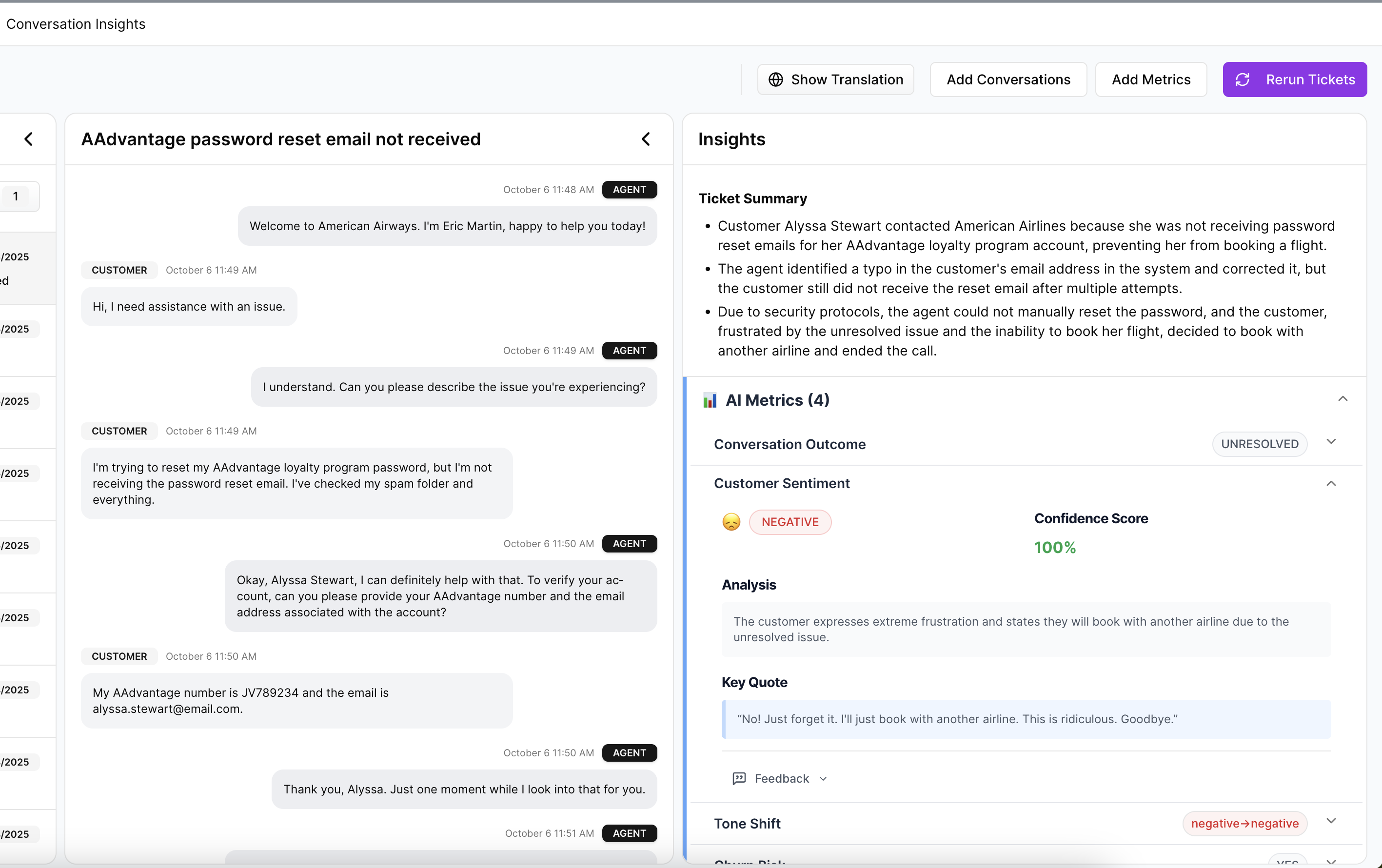
Then there's Data Explorer. It's a pivot-table-like workspace where you can filter, group, sort, and inspect every ticket using columns for sentiment, churn risk, effort, tags, drivers, and Custom AI Metrics. So if you want to isolate a driver like Billing, compare high-effort conversations by tag pattern, or drill into the tickets behind a pattern, you can do that without flattening everything into a separate spreadsheet. That's a big shift.
From raw ticket text to action you can stand behind
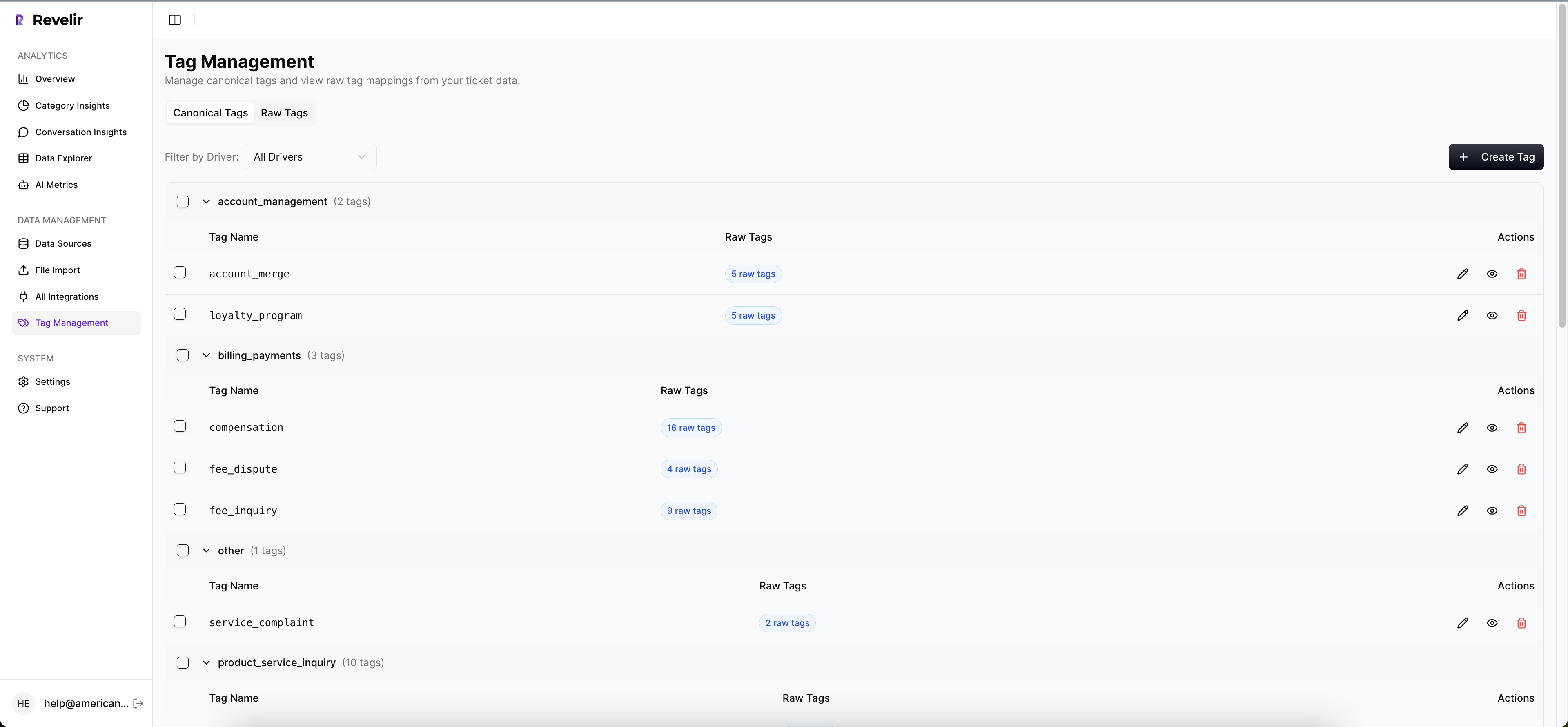
Revelir AI also gives teams a better way to move from "what happened" to "why." The Hybrid Tagging System combines AI-generated Raw Tags with Canonical Tags your team can refine, so patterns stay discoverable without becoming messy in reporting. Drivers create higher-level thematic groupings for leadership-friendly analysis. And the AI Metrics Engine structures signals like Sentiment, Churn Risk, Customer Effort, and Outcome as fields you can filter and analyze directly.
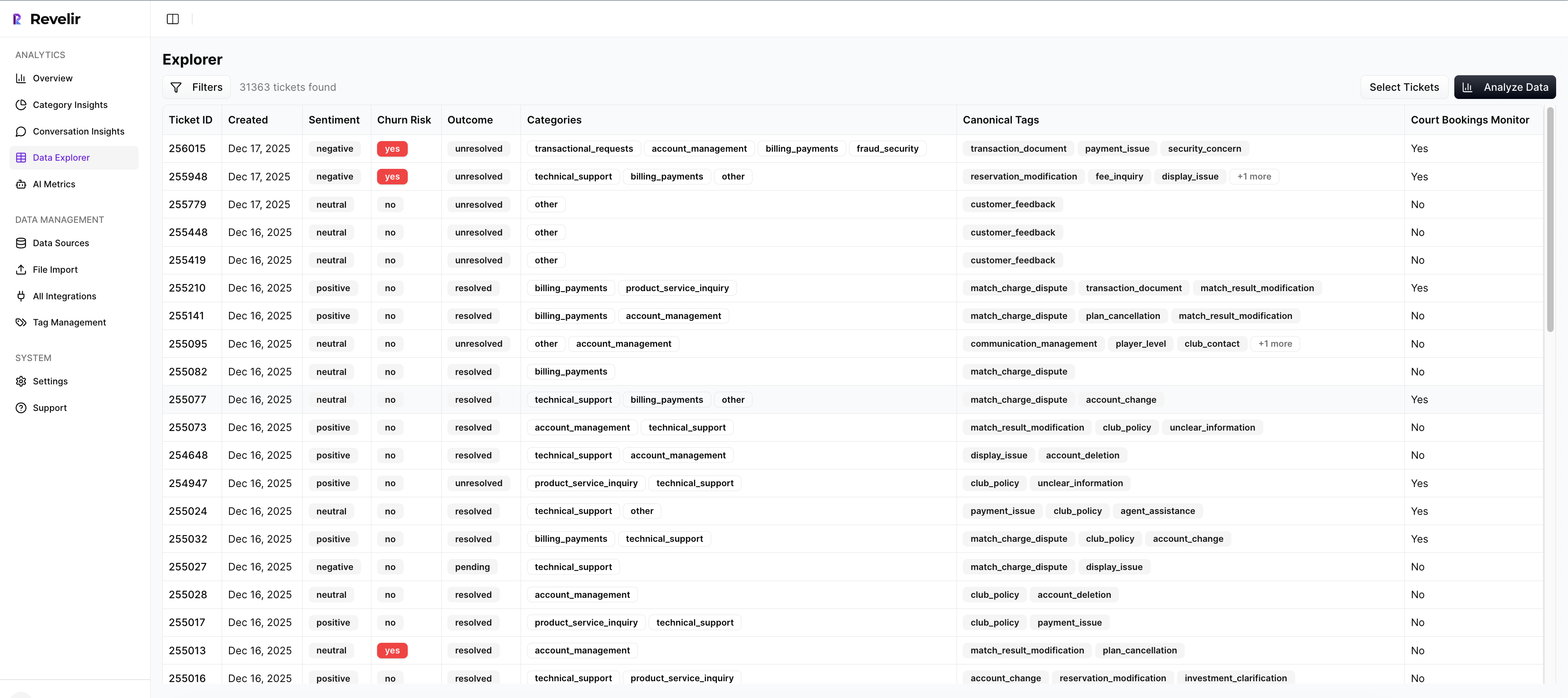
If your business needs a more specific lens, Custom AI Metrics let you define metrics in your own language. Conversation Insights adds ticket-level drill-down with transcripts, summaries, assigned tags, drivers, and AI metrics, so the evidence is always close at hand. Revelir AI can ingest tickets through Zendesk Integration or CSV Ingestion, and API Export lets teams bring structured outputs into existing reporting workflows after the analysis is done.
What this changes is simple: your team's hypotheses become traceable, reviewable findings backed by real tickets. If you want to put that kind of evidence in front of your team, Get started with Revelir AI (Webflow).
Where to Start if You Want Fewer High-Effort Tickets
You don't need a giant transformation to start. Pick one queue. Define transfer, hold, reassignment, and repeat-context events. Validate the rules on a small sample. Then measure which agent actions show up most often before high-effort outcomes.
Same thing with remediation. Don't boil the ocean. Change one routing rule, one escalation path, or one coaching script. Track it for 30, 60, and 90 days. If the effort rate drops, keep going. If it doesn't, you learned something real instead of trusting a vague score.
The target is practical: identify the top 3 agent-action drivers of high-effort tickets and reduce the share of high-effort conversations by 15% to 30% within 60 to 90 days. That's a real operating goal. And when every chart links back to actual tickets and quotes, the conversation changes. You're not defending a dashboard anymore. You're showing the work.
For deeper reading on customer effort as a loyalty signal, the Customer Contact Council research in Harvard Business Review is still worth your time. For a broader view on support metrics and operational tradeoffs, Zendesk's customer service benchmark research gives useful context on how teams track performance, even though it won't tell you the why on its own.
Frequently Asked Questions
How do I analyze high-effort tickets with Revelir AI?
To analyze high-effort tickets using Revelir AI, start by accessing the Data Explorer. Here, you can filter tickets based on specific criteria like transfer events or hold times. Look for tickets that have multiple ownership changes or long hold times, as these typically indicate higher customer effort. Use the Analyze Data feature to summarize key metrics such as sentiment and churn risk, which can help you understand the underlying issues causing high effort.
What if I need to track specific customer issues over time?
If you want to track specific customer issues, you can use the Custom AI Metrics feature in Revelir AI. This allows you to define your own metrics based on the issues that matter most to your team. Once set up, you can analyze these metrics over time to see trends and patterns, helping you identify recurring problems and address them proactively.
Can I integrate Revelir AI with my existing support tools?
Yes, Revelir AI can be integrated with existing support tools like Zendesk. This integration allows you to automatically ingest support tickets, including all relevant metadata and conversation transcripts. Once integrated, you can continuously analyze incoming tickets without manual exports, ensuring you have up-to-date insights into customer interactions.
When should I consider a manual review of tickets?
You should consider a manual review of tickets when you notice unusual patterns or spikes in high-effort tickets that automated analysis doesn’t clarify. Manual reviews can help catch nuances that automated systems might miss, especially in complex cases. Use the insights from Revelir AI to guide your review, focusing on tickets with high churn risk or negative sentiment to understand the root causes better.