

Most teams trying to design churn reduction experiments using support data aren't really running experiments. They're running follow-up campaigns on hunches. Same thing with "retention plays" built from a few scary tickets and a dashboard screenshot. If you can't tie the intervention to a clear hypothesis, a clean cohort, and a real retention outcome, nobody's checking whether the work actually reduced churn.
Key Takeaways:
- Turn each ticket pattern into a falsifiable churn hypothesis before you launch outreach
- Use cohort rules and simple power checks so your test isn't underbuilt from day one
- Align conversation signals and retention metrics in the same experiment design
- Read uplift, confidence intervals, and retention curves together, not in isolation
- Scale only the interventions that show signal, then roll back the ones that don't
- If you want to design churn reduction experiments using support conversations well, you need evidence, not anecdotes
Why Most Churn Experiments Start With the Wrong Input
Designing churn reduction experiments using support signals starts with one basic truth: a ticket trend is not a retention strategy. A support conversation can show you where friction lives, but it can't prove that your planned fix will reduce churn unless you test it cleanly against an outcome that matters.
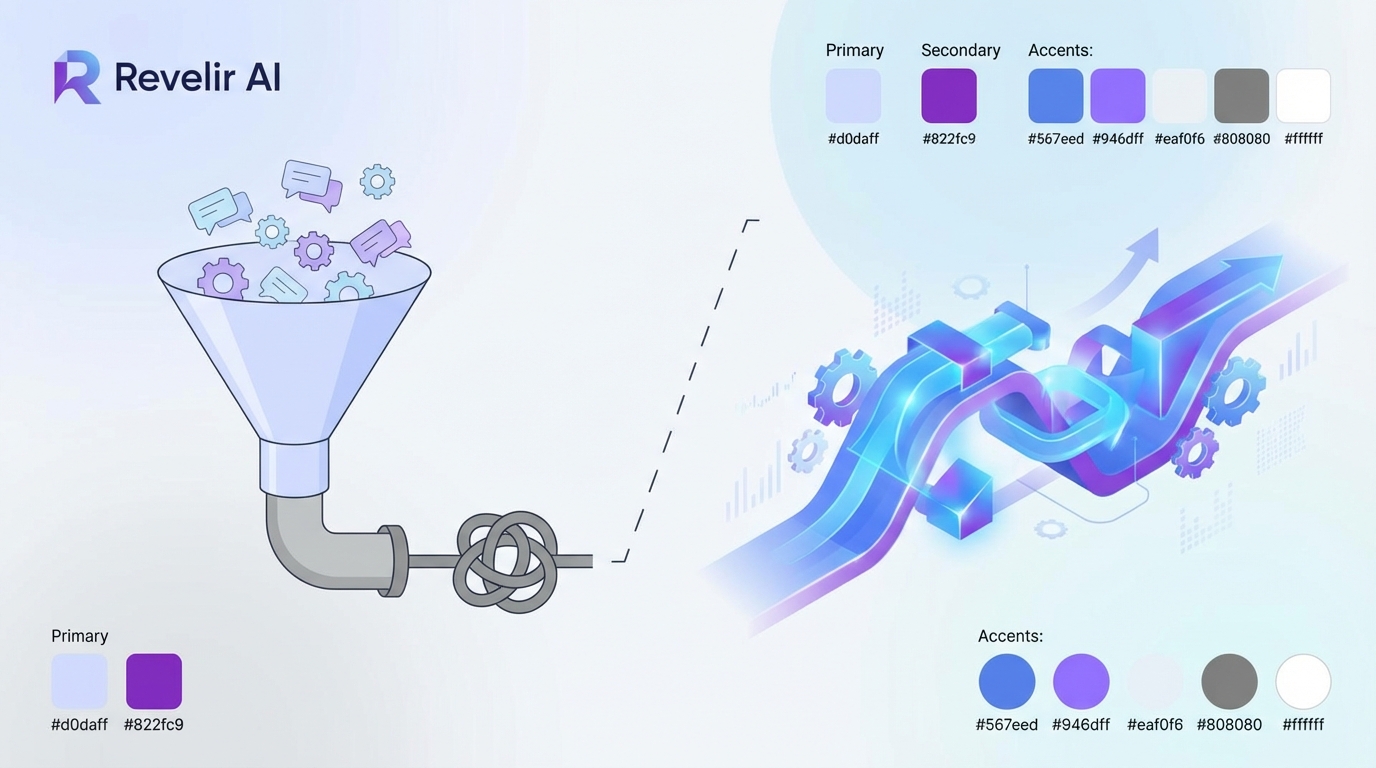
Most teams start with reactive ticket lists. A PM sees a spike in billing complaints. A support lead pulls 30 ugly conversations. Then everyone agrees to send some emails, maybe change a flow, maybe escalate accounts faster. That feels responsible. It even feels data-driven. But it usually breaks in the same place: nobody defined what should happen, for whom, by when, and compared to what.
Ticket volume feels concrete, but it hides the real problem
Ticket counts, angry quotes, and churn mentions create urgency. They should. But they also pull teams toward activity instead of proof. If 200 customers complain about onboarding friction, your instinct might be to launch concierge outreach to all of them. The hidden mistake is assuming the complaint cluster itself tells you which intervention will work.
In my experience, this is where retention work quietly goes wrong. Support data is excellent at surfacing drivers. It's much weaker as a standalone decision engine for action. You still need a hypothesis. You still need a test cell and a control cell. You still need to decide whether success means improved 30-day retention, reduced downgrade rate, lower effort, or some other measurable outcome.
Sampling makes bad experiment design even worse
Sampling is a liability when you're trying to design churn reduction experiments using support conversations. You end up building interventions off a partial view, then pretending the partial view represents the whole risk pool. That's shaky before the test even starts.
The bigger issue is bias. The loudest tickets get attention first. Enterprise accounts get escalated faster. Recent complaints feel more important than slow-burn friction that shows up across hundreds of smaller accounts. Let's pretend you sample 50 tickets and see lots of refund frustration. That might be a real pattern. Or it might be what happened to get reviewed that week. If your input is biased, your experiment is biased.
And yeah, that gets frustrating fast. You do the work, pull the list, launch the intervention, then six weeks later you're staring at murky results and arguing about whether the cohort was ever right in the first place.
The old workflow confuses signal detection with decision quality
A support signal tells you where to look. It does not tell you what will change retention. That's the reframe most teams miss. Conversation data is necessary, but it's insufficient without an experiment layer on top.
That means your process needs to separate four things:
- pattern detection
- hypothesis creation
- intervention assignment
- retention measurement
When those get blended together, you get fake certainty. You also get wasted cycles. Learn More
The Real Work Is Turning Drivers Into Testable Retention Hypotheses
To design churn reduction experiments using support data well, you need to translate messy conversations into something falsifiable. That's the whole game. Not more anecdotes. Not prettier dashboards. A statement you can test and reject if it's wrong.
A good hypothesis has four parts: a defined cohort, a specific intervention, a measurable time window, and a retention outcome. Without all four, you don't have an experiment. You have a project.
Start with one driver, not a vague churn story
A driver is the bridge between conversation noise and experiment design. If the recurring issue is onboarding confusion, billing friction, account access failures, or repeated performance complaints, that's useful because it gives you a stable starting point. What you want to avoid is broad language like "at-risk users seem unhappy."
A tighter approach looks more like this: users who contacted support twice in 14 days about onboarding setup and showed high effort are more likely to churn in 30 days than similar new accounts without that pattern. If proactive setup outreach is delivered within 48 hours of the second ticket, 30-day churn should fall by 10% to 15% for that cohort.
See the difference? One is a narrative. The other is testable.
A practical hypothesis template helps:
- Cohort: Who exactly qualifies?
- Signal: Which ticket-derived pattern puts them in the test?
- Intervention: What action will change their path? This is particularly relevant for design churn-reduction experiments using.
- Outcome: What churn or retention metric are you tracking?
- Window: Over what time period will you judge impact?
Build cohorts that are strict enough to learn something
Most failed tests are too loose. Teams create giant segments with mixed causes, mixed customer types, and mixed levels of risk. Then the result comes back flat and everyone concludes the idea didn't work. Maybe. Or maybe the cohort was mush.
Cohorting works better when you define entry rules that reflect actual behavior. You might include customers with:
- at least 2 support conversations in 21 days
- a specific driver such as Billing or Onboarding
- negative sentiment or high effort in at least one conversation
- no prior save intervention in the last 30 days
That's much better than "all unhappy customers." Few things waste more time than running a churn test on a segment that was never coherent. We were surprised to find how often teams skip this and go straight to campaign copy.
Do a power check before you get excited
You don't need a PhD here. You do need to know whether your sample size is remotely capable of detecting the uplift you care about. If your cohort has 180 accounts and your baseline 30-day churn is already low, a tiny effect won't be detectable in one short test. That doesn't mean the intervention is wrong. It means your design is too weak to call the result.
A simple pre-test checklist helps:
- estimate baseline churn for the target cohort
- define the minimum uplift worth acting on
- estimate how many accounts you can randomize in 6 to 8 weeks
- decide whether the test needs equal split, weighted rollout, or staged waves
- set the point where you will call the test inconclusive
Honestly, this is the part people resist because it feels slower. It's not. It's cheaper than shipping three weak experiments and learning nothing.
Instrument the experiment before launch, not after
You need your support signals and retention metrics aligned in the same test design. That means every account in the experiment should have a clear cohort flag, assignment flag, intervention timestamp, and outcome window. If you've tried this before, you know the pain: the team launches the outreach, then two weeks later someone asks how to join ticket tags to retention status.
Don't do that to yourself.
The clean version is simple:
- define the ticket-derived eligibility rules first
- freeze those rules for the experiment period
- assign test and control consistently
- track intervention exposure at the account or user level
- measure churn, retention, downgrade, or renewal within a pre-set window
Pre-register your stopping rules so politics doesn't creep in
This part matters more than most teams think. Without stopping rules, every experiment becomes a negotiation. One leader wants to stop early because results look promising. Another wants more time because the segment feels strategic. A third wants to change the cohort halfway through because "support is seeing something new."
That kills trust.
Set the rules upfront:
- minimum runtime
- minimum sample
- primary success metric
- acceptable confidence threshold
- reasons to stop early, if any
- conditions that make the result inconclusive
Not everyone agrees with this level of discipline. Fair point, especially at smaller companies. But once multiple teams are involved, pre-registration keeps experiment logic from drifting midstream.
Use three channels, not one blanket save play
Most retention teams default to email because it's easy to launch. But if you're trying to design churn reduction experiments using support signals, channel choice is part of the experiment. Some cohorts respond to proactive CSM outreach. Some respond to in-product guidance. Some only respond when the support handoff itself changes.
A 6 to 8 week test plan can cover three interventions without getting messy:
- proactive email tied to the driver
- human follow-up for high-risk accounts
- in-product or lifecycle prompt for the same friction point
Run them as separate tests or as clearly segmented arms. Just don't combine everything and hope for magic. When multiple actions fire at once, you lose the ability to explain what actually reduced churn.
How to Read Experiment Results Without Fooling Yourself for Design churn-reduction experiments using
Churn experiment analysis works when the readout is boring. That's usually a good sign. Clean inputs. Clear cohorts. Defined windows. A result you can explain in two minutes without hand-waving. If you need twelve caveats and a vibes-based defense, the design probably slipped somewhere.
What you're looking for is not just movement. You're looking for believable movement, especially when evaluating design churn-reduction experiments using.
Read retention curves before you celebrate uplift
A single uplift number can hide a lot. If treatment looks better overall but only because one weird week skewed the result, you don't have much. Retention curves tell you when separation happens and whether it holds. That's useful because many churn interventions create a short-lived bump, not a durable change.
If the treatment group stays above control across the 30-day window, that's stronger than a late spike in one snapshot metric. Same thing with a save campaign that delays churn by two weeks but doesn't change eventual loss. It may still matter operationally, but it's not the same as real retention improvement.
Confidence intervals matter because uncertainty is part of the answer
A lot of teams still read experiment results like a scoreboard. Up means good. Down means bad. That's not enough. You need the interval around the estimate so you know how much uncertainty you're carrying.
Let's pretend your test shows a 12% reduction in 30-day churn for the targeted cohort. Good. If the confidence interval is tight and mostly positive, you can move. If it's wide and crosses zero, you're in a different situation. The intervention may still work, but the test didn't prove it well enough.
That doesn't mean failure. Sometimes the right call is "keep testing with a cleaner cohort" or "run the same play only on high-effort billing tickets." Mature teams don't force certainty where it doesn't exist.
Segment readouts often explain why averages look flat
This one catches people off guard. You run a decent test, the top-line result looks weak, and everyone wants to kill it. Then you cut by driver, account size, or effort level and find the intervention worked really well for one targeted group and not at all for another.
That's not noise. That's the point.
Support-derived cohorts are rarely uniform. A billing intervention may help self-serve customers and do nothing for enterprise accounts. A setup follow-up might reduce churn for first-month customers and miss later-stage users completely. If you've instrumented the experiment properly, these reads become obvious instead of political.
Keep a simple analysis recipe so every test is comparable
Most teams benefit from a standard review pack. Nothing fancy. Just the same recipe every time:
- baseline churn by cohort
- treatment vs control retention curve
- absolute and relative uplift
- confidence interval
- segment cuts defined before launch
- operational cost of the intervention
- recommendation: scale, rerun, or stop
In my experience, consistency here matters almost as much as the math. If every experiment gets judged with different logic, the org starts trusting the loudest presenter instead of the cleanest evidence.
Where Revelir AI Fits When You Want Evidence, Not Guesswork
Revelir AI helps teams design churn reduction experiments using support conversations by making the input side credible. It doesn't replace experiment design. It gives you a cleaner signal layer to build experiments on top of, so you're not guessing from sampled tickets, inconsistent tags, or score-only dashboards.
Use full coverage and traceability to define better test cohorts
Revelir AI processes 100% of ingested tickets through Zendesk Integration or CSV Ingestion, which matters because sampled reviews create blind spots before the experiment even starts. If you're trying to identify a churn-risk cohort from support behavior, partial coverage is a real problem. Revelir AI also gives you Evidence-Backed Traceability, so every aggregate read can be linked back to the original tickets and quotes.
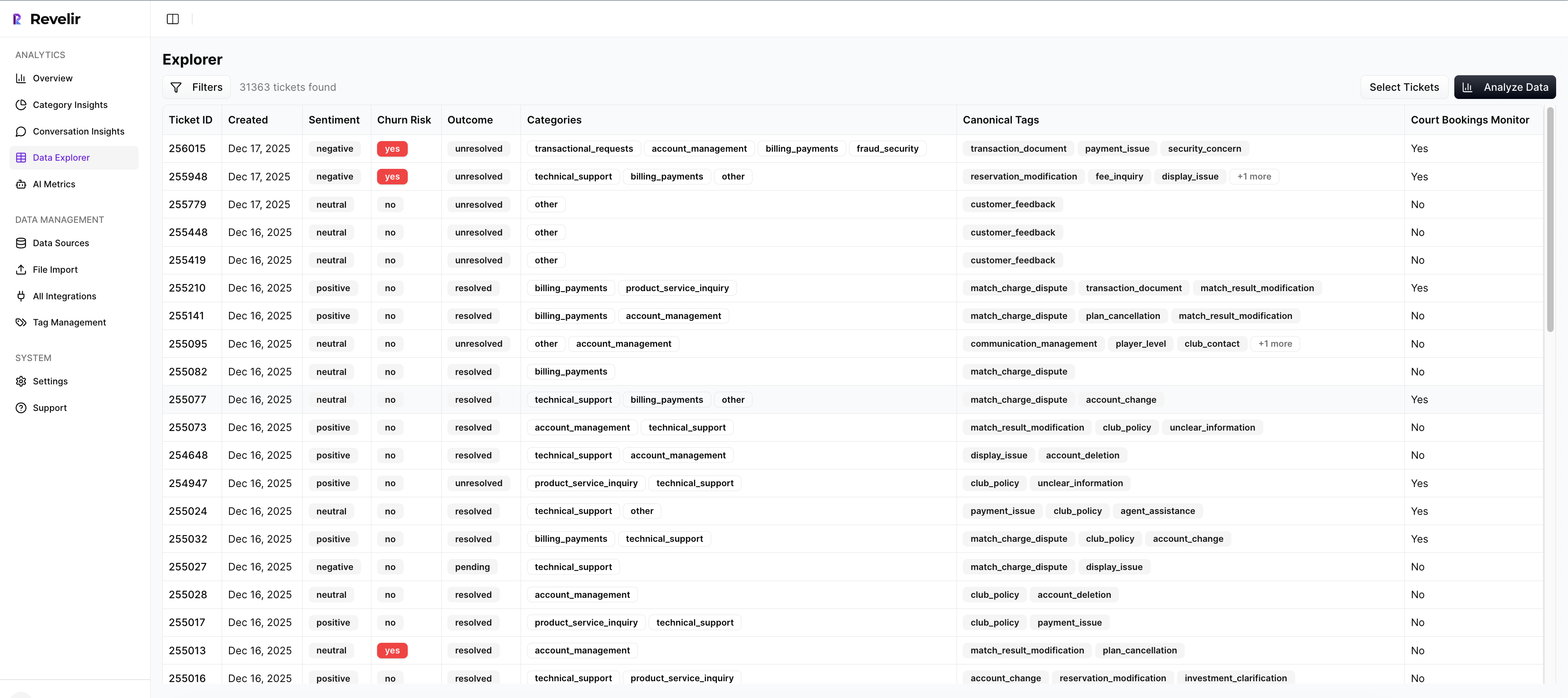
That changes the working session. You're not saying, "we think billing confusion is rising." You're saying, "this cohort is tied to these conversations, these quotes, and this measured pattern." That's a much stronger starting point for hypothesis design and leadership buy-in.
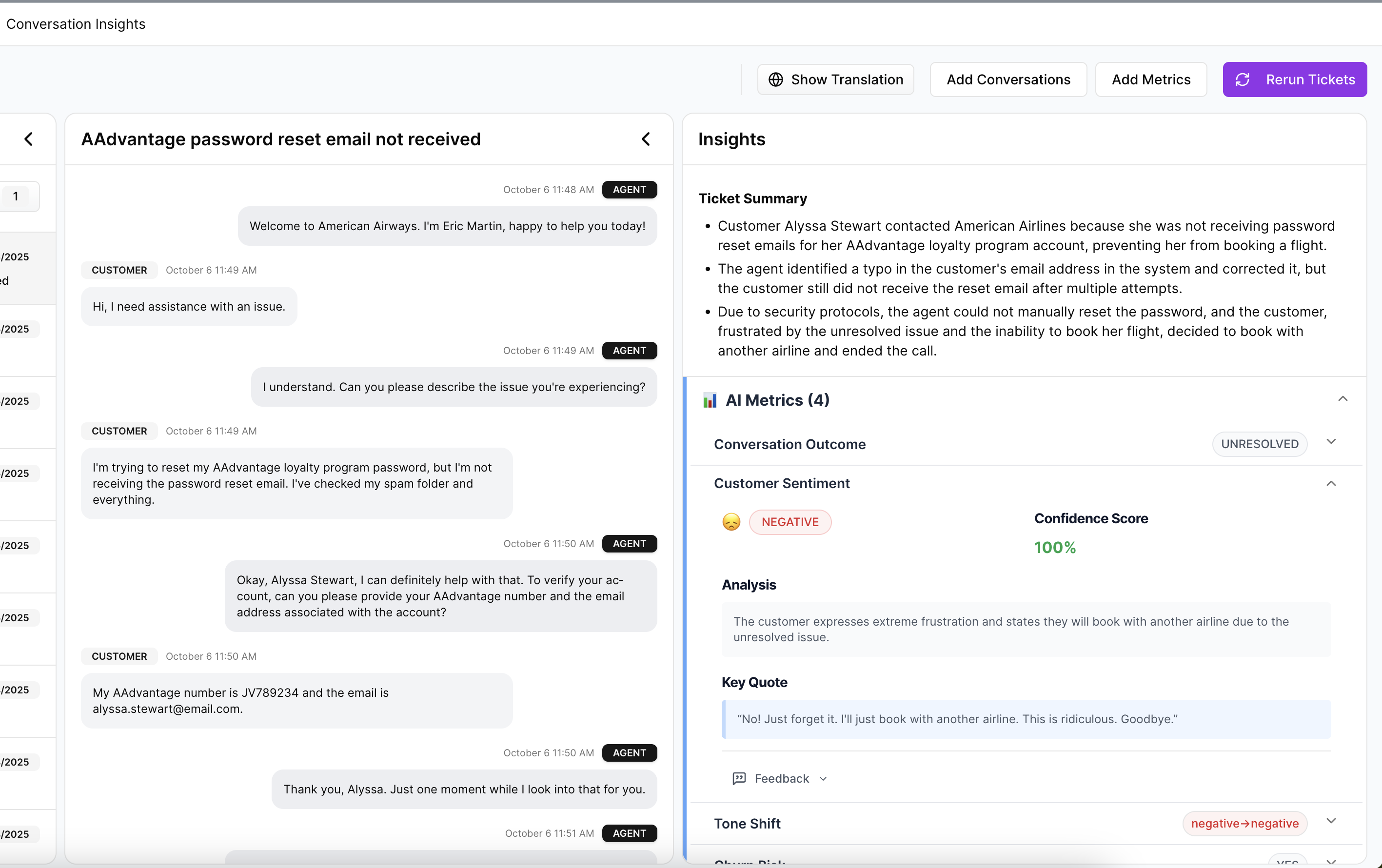
Use drivers, tags, and custom metrics to turn messy tickets into test inputs
Revelir AI's Hybrid Tagging System combines AI-generated Raw Tags with Canonical Tags you can shape around your business language. On top of that, Drivers group related issues into higher-level themes for reporting. That makes it easier to move from loose complaint clusters to a defined signal like onboarding friction, billing confusion, or account access issues.
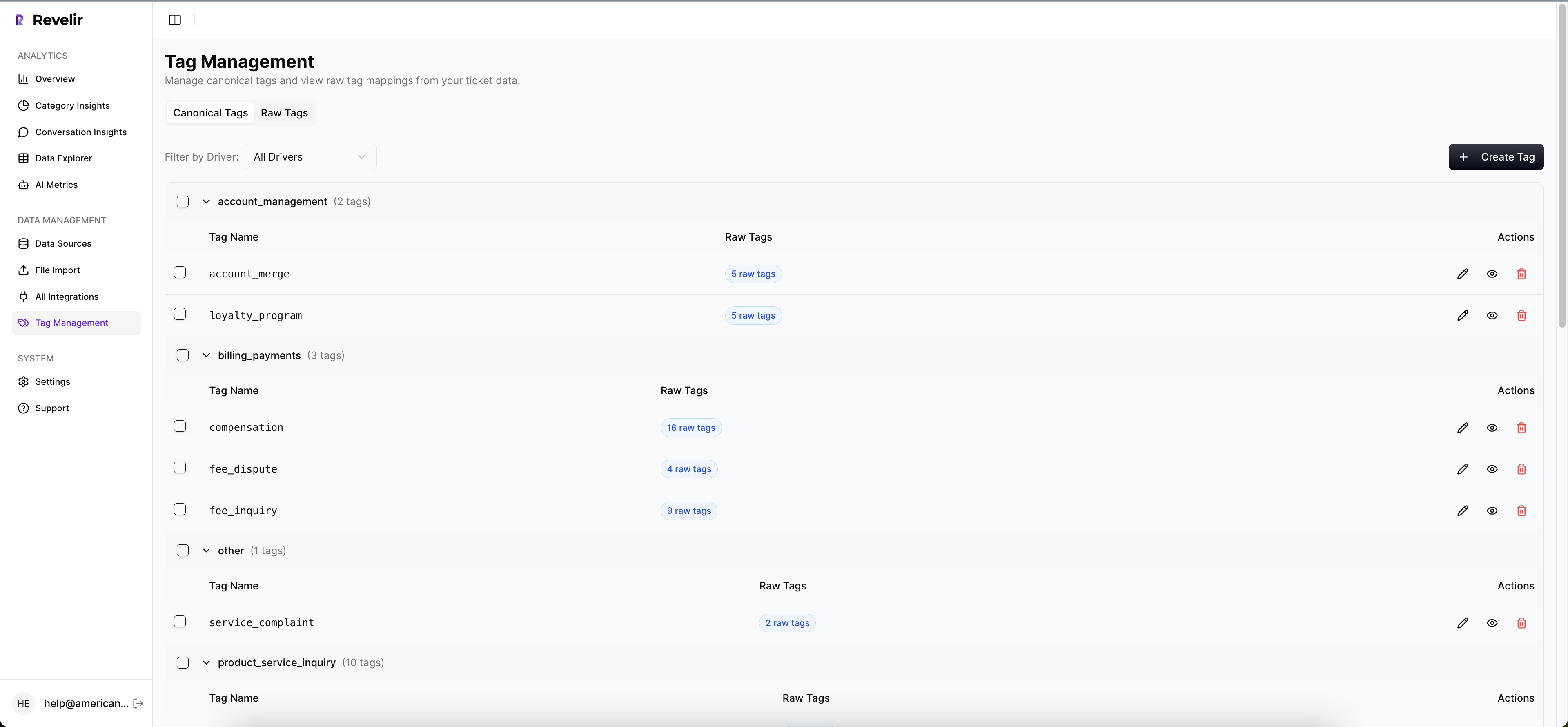
The AI Metrics Engine adds structured fields like Sentiment, Churn Risk, Customer Effort, and Outcome. If your team needs a more specific classifier, Custom AI Metrics let you define domain-specific measures and use them like columns in analysis. Then Data Explorer gives you a pivot-table-like workspace to filter, group, sort, and inspect every ticket, while Analyze Data summarizes those metrics by dimensions like Driver or Canonical Tag. When you need to validate the pattern, Conversation Insights lets you drill into full transcripts, summaries, tags, drivers, and metrics.
For teams already using existing reporting stacks, API Export can send structured metrics into broader BI workflows after analysis. Get started with Revelir AI (Webflow)
Run Smaller, Cleaner Tests and Let the Results Decide
Design churn reduction experiments using support data by treating conversations as a signal source, not a verdict. That's usually the shift. Once you turn drivers into clear hypotheses, build disciplined cohorts, and read the results without forcing certainty, retention work gets a lot less noisy.
The target is practical: run 3 channel experiments in 6 to 8 weeks and validate at least one intervention that reduces 30-day churn by 10% to 25% for the right cohort. And if none of them work, that's useful too. You rule out weak ideas early, reallocate effort, and stop mistaking motion for learning.
Frequently Asked Questions
How do I ensure my cohorts are well-defined?
To create effective cohorts, start by clearly identifying the specific behaviors or patterns that qualify users for your test. For instance, you might focus on customers who have contacted support multiple times about a specific issue, like onboarding confusion. Use Revelir AI's Drivers and Hybrid Tagging System to categorize these issues accurately. This way, you can ensure your cohorts reflect actual customer experiences, leading to more reliable test results.
What if my initial tests don’t show significant results?
If your tests don’t yield clear results, consider revisiting your hypothesis and cohort definitions. Ensure you're using Revelir AI's Data Explorer to analyze the underlying ticket data for more insights. Look for patterns that may not have been evident initially, and adjust your cohorts or interventions accordingly. It’s also helpful to run additional tests with different interventions to see if you can identify more effective strategies.
Can I track the impact of my interventions over time?
Yes, you can track the impact of your interventions using Revelir AI's Analyze Data feature. This tool allows you to summarize metrics like retention and churn risk over time, helping you understand how your changes affect customer behavior. Make sure to set clear time windows for your analysis to measure the effectiveness of your interventions accurately.
When should I consider changing my intervention strategy?
Consider changing your intervention strategy if your tests show inconclusive results or if the retention metrics are not improving as expected. Use Revelir AI's Evidence-Backed Traceability to link your results back to specific conversations and patterns. If certain strategies consistently underperform, it may be time to pivot and try new approaches based on the insights you've gathered.
Why does my team struggle with interpreting experiment results?
Interpreting experiment results can be challenging if the data isn’t organized clearly. To improve this, ensure you’re using structured metrics from Revelir AI, such as sentiment and churn risk, to provide context for your findings. Additionally, focus on reading retention curves and confidence intervals rather than just looking at raw uplift numbers. This approach helps clarify whether your interventions are genuinely effective.