

Most “enterprise CX analytics” buying cycles go sideways for one reason: you end up debating anecdotes because nobody can show the ticket evidence behind the metric. It’s usually not a data problem. It’s a trust problem, plus the very real cost of sampling when you’re sitting on tens of thousands of support conversations.
Best Software for Enterprise: How to Choose for CX and Support Analytics
Enterprise CX and support analytics software is worth buying when it turns messy conversations into metrics you can defend in a prioritization meeting, with a clear path back to the underlying tickets. That means full coverage (or at least clear coverage rules), traceability to quotes, and a time to value that doesn’t require a six month taxonomy project. A Zendesk ops dashboard can be perfect for queue health, but it won’t answer “why churn risk spiked.”

[Table: Product] — See "Table Embed Codes" in Oleno to copy the HTML for this table.
Starting prices and packaging are often quote-based; verify with vendors during evaluation.
Key Takeaways:
- Revelir AI fits enterprise teams who need 100% ticket coverage plus drill-down traceability to quotes for exec-ready, defensible decisions.
- SupportLogic is a fit when agent assist, AutoQA, and predictive escalation are as important as analytics (SupportLogic Data Cloud overview).
- SentiSum is compelling for teams that want automated tagging plus anomaly and churn signals, and are fine with a sales-led rollout (SentiSum AI-native VoC positioning).
- Chattermill tends to show well when you’re unifying many feedback channels into one VoC program, not just support tickets (Chattermill product updates).
What Enterprises Should Evaluate Before Buying
Enterprises should evaluate coverage, traceability, and operational cost before they get excited about dashboards or “AI summaries.” If you can’t answer “show me the tickets” inside two clicks, the insight won’t survive an exec review. Same thing with sampling: it looks efficient until you miss the one issue driving churn risk.
Market fragmentation and platform overlap
The market is fragmented because “CX analytics” can mean three totally different jobs: VoC aggregation, support ops monitoring, or support experience tooling that lives with agents. That overlap creates weird evaluations where an ops dashboard is compared to a VoC platform, then everyone’s surprised the outputs don’t match. You end up buying for the wrong job.
A decent gut check is to ask, “Where will this live day-to-day?” If the answer is “in the support operations war room,” you’ll care about real-time volume and queue health. If the answer is “in the product prioritization meeting,” you’ll care about drivers, cohorts, and evidence.
To make the categories concrete:
- Operational monitoring focuses on queues, volume spikes, and incident detection (think Zendesk-first setups).
- VoC intelligence aggregates themes across channels and tries to tell a broad customer story (support plus reviews, surveys, and more).
- Support experience platforms blend analytics with agent tooling like coaching, QA, and in-workflow assist.
Data coverage, traceability, and time-to-value
Coverage matters because sampling creates “false certainty,” and it’s rarely obvious when it’s lying to you. You can sample 10% and still miss the one enterprise account that’s threatening to churn, because that signal sits in a couple of tickets nobody read. That mistake is expensive.
Traceability matters because leaders don’t fund roadmap work off vibes. They ask, “Where did this number come from?” If your tool can’t tie metrics back to ticket text and quotes, you’ll end up assembling evidence by hand. Nobody enjoys that part.
Time-to-value matters because enterprises have a habit of turning “tool rollout” into a tax. Let’s pretend you need to build a taxonomy before you can learn anything. That’s months where the team is busy, but the business still doesn’t know what’s breaking.
Here are the evaluation questions I’d actually put in the buying doc:
- Can we analyze 100% of conversations we ingest, or are we sampling by default?
- Can a VP click from a dashboard metric to the exact tickets and quotes?
- Can we segment by plan tier, region, product area, or customer cohort without a data project?
- Do we need this to do agent assist and QA, or just insights for CX and product?
- What’s the “first week” experience: value from day one, or wait for configuration?
Best Software for Enterprise: Evidence-Ready CX and Support Analytics (2026)
Enterprise buyers usually end up choosing between five shapes of tooling: Zendesk-first ops analytics, support analytics hubs, support experience platforms, ecommerce automation agents, and broad VoC intelligence. Each category solves a real problem. Each category also leaves a gap, and that gap shows up in the meeting where someone asks for proof.
qvasa: Zendesk-First Operational Analytics
qvasa is a solid choice when you want Zendesk-centric, real-time operational visibility like queue health, trending issues, and spike detection. It’s aimed at support operations teams who live inside Zendesk and need alerts and dashboards more than deep thematic analysis. If your main pain is “we didn’t notice the incident fast enough,” this category makes sense (qvasa homepage).
Key strengths
qvasa’s strengths are about speed and focus. You’re not trying to build an enterprise VoC program. You’re trying to keep the support engine from overheating, and Zendesk-first tools tend to get you there with less friction.
A few strengths that show up in how it’s positioned:
- Deep Zendesk orientation and operational monitoring focus (729 Solutions blog)
- Real-time visibility into volume and trending issue patterns (as positioned in their Zendesk-focused narrative) (qvasa homepage)
- “Alerting mindset,” meaning you treat spikes as incidents, not insights you revisit next month (729 Solutions blog)
Honestly, I like having something like this in the stack when you’re running a big support org. It’s just not the same purchase as “tell product what to fix.”
Key limitations
qvasa’s limitations mostly come from that same focus. If you only optimize for operational dashboards, you don’t automatically get root-cause drivers, reusable taxonomy, or evidence-backed reporting that a product leader can take into roadmap planning.
What to watch:
- Zendesk-first scope can be a constraint if you want platform-agnostic, cross-channel insight (qvasa homepage)
- Public documentation and pricing transparency look limited from what’s easy to find as of writing, which can make enterprise procurement harder (qvasa homepage)
- Sparse third-party validation is a consideration if you need “proven at scale” proof in your buying committee (their positioning is visible, but public proof is harder to verify) (qvasa homepage)
How Revelir AI is Different: qvasa is built for “what’s happening in the queue right now,” while Revelir AI focuses on “why this is happening and who’s affected,” with direct access to the exact tickets and quotes. Data Explorer lets you group by drivers or canonical tags and drill into Conversation Insights, so the narrative stays tied to evidence instead of screenshots.
SentiSum: Support Analytics and VoC Hub
SentiSum is a strong option when you want automated tagging and support analytics that can roll up into a broader VoC program. It’s positioned around AI-native VoC workflows, with emphasis on automating categorization and surfacing churn and anomaly signals across ingested sources. In practice, it’s a fit for teams that want more than sentiment scores and are ready for a sales-led rollout (SentiSum AI-native VoC positioning).
Key strengths
SentiSum is consistently framed as a way to reduce manual effort in tagging and to make support conversations queryable at scale. That’s the whole point. Nobody wants a weekly “read 200 tickets” ritual that still misses the real driver.
Strengths worth calling out:
- Automated ticket tagging and sentiment-style analysis as part of its VoC approach (SentiSum vs Medallia (capability positioning))
- Positioned as a hub across multiple feedback sources, not just one inbox (Voice of Customer tools landscape)
- Product messaging around AI-native workflows and scaling analysis without manual tagging upfront (SentiSum AI-native VoC positioning)
If you’re trying to stand up a VoC practice and you already have multiple channels, that “hub” angle can be real value.
Key limitations
SentiSum’s trade-offs are the common ones for sales-led, enterprise-leaning VoC tooling. You might love the outcomes, but you’ll want to be clear-eyed about cost, setup, and how quickly you’ll get to a trustworthy taxonomy.
Known constraints from its public positioning and broader landscape coverage:
- Pricing is sales-led and can be a barrier for smaller teams evaluating on budget first (SentiSum alternatives (pricing/context))
- Setup complexity can show up around configuration and ongoing tuning, especially if you want alerts and nuanced categories (SentiSum alternatives (pricing/context))
- Public review volume is harder to lean on compared to some other enterprise categories, so internal pilots matter more (SentiSum alternatives (pricing/context))
How Revelir AI is Different: SentiSum is often evaluated as a VoC hub, while Revelir AI is focused squarely on support conversations as an evidence layer for CX and product decisions. Its hybrid tagging approach (raw discovery plus canonical tags and drivers) keeps exploration and exec reporting in the same place, and drill-down to ticket quotes is built-in.
SupportLogic: Support Experience Platform
SupportLogic is built for enterprises that want analytics plus support-operations tooling like AutoQA, coaching, and agent assist. It’s positioned around a “support data cloud” concept and support experience use cases, which usually means bigger orgs, more stakeholders, and more implementation work. If you’re trying to operationalize QA and proactive risk detection, it’s an established option to evaluate (SupportLogic Data Cloud overview).

Key strengths
SupportLogic’s strengths show up when support is treated like a production system with SLAs, QA programs, and exec reporting. You’re not just trying to find themes. You’re trying to run a discipline.
Strengths you can validate from their own materials:
- Central “data cloud” framing for consolidating support data and keeping it refreshed (SupportLogic Data Cloud overview)
- Knowledge ops and AI approaches discussed in their events and resources, which signals a broader operational ambition than simple analytics (SupportLogic Precision RAG and knowledge ops)
- Strong ecosystem storytelling with enterprise support contexts (How NICE is reinventing knowledge access with AI (SupportLogic))
If you need agent-facing tooling, this is where pure analytics platforms usually come up short.
Key limitations
The limitations are mostly about enterprise gravity. You’ll probably need more internal alignment. You’ll also need to accept that time-to-value is going to include configuration and change management.
Common constraints based on how it’s sold and the nature of the platform:
- Sales-led pricing and enterprise contracts, which can push evaluation cycles longer (SupportLogic Data Cloud overview)
- Implementation complexity that can require ops and IT participation, especially if you’re integrating across systems (SupportLogic Data Cloud overview)
- If your goal is “analytics for product prioritization,” you may end up paying for agent tooling you don’t plan to adopt right away (SupportLogic Precision RAG and knowledge ops)
How Revelir AI is Different: SupportLogic is built for support experience programs that blend analytics with QA and agent workflows. Revelir AI emphasizes making insights defensible fast by turning every ingested ticket into filterable metrics (Sentiment, Churn Risk, Effort) and letting you pivot in Data Explorer, then click into Conversation Insights to validate evidence quickly.
Siena (Idiomatic): Ecommerce AI Agent Platform
Siena (Idiomatic) is the right evaluation when your priority is autonomous support for ecommerce, not a research-grade analytics layer. It’s positioned as an AI agent experience, with emphasis on tone, automation, and prebuilt workflows for commerce cases. If your exec sponsor is asking about deflection rates and handling returns automatically, this is the category (Siena AI reviews (G2)).
Key strengths
Siena’s strengths are about containment and on-brand automation. This is where a lot of “analytics tools” just aren’t trying to compete, because the day-to-day job is different.
Strengths supported by public sources:
- Strong positioning around ecommerce automation and containment-style outcomes in comparisons and reviews (Yuma vs Siena (automation context))
- Emphasis on rollout timing and operational adoption, which usually means they’ve seen real deployments and the messy parts that come with them (Siena on timing AI rollout in customer service)
- Review presence that can help buyers sanity-check experience claims (Siena AI reviews (G2))
If you’ve got a high-volume DTC support workload, automation-first can be a legitimate strategy, not just a shiny object.
Key limitations
Automation platforms tend to be less satisfying when your core requirement is “tell me the drivers behind negative sentiment among enterprise customers,” with evidence attached. You can add analytics on top, but it’s not the center of gravity.
Constraints to consider based on positioning and comparisons:
- Optimized for automation and agent behavior, not deep analytics and thematic exploration (Yuma vs Siena (automation context))
- Sales-led packaging can make it harder for smaller teams to trial cheaply, even if they’re a good functional fit (Siena on timing AI rollout in customer service)
- If you need audit-ready traceability across all tickets, verify how far the analytics layer goes beyond operational reporting (Siena AI reviews (G2))
How Revelir AI is Different: Siena is built to handle conversations, while Revelir AI is built to measure them across 100% of ingested tickets with drivers and traceability to quotes. When a product leader asks “show me examples,” Conversation Insights keeps the transcript, tags, and metrics tied together so you’re not exporting and hand-curating proof.
Chattermill: Enterprise CX Intelligence
Chattermill is a strong pick when you’re building a broad VoC program and need to unify feedback from many sources, not just support tickets. It’s positioned around AI-driven theming, dashboards, segmentation, and enterprise workflows, and it shows up often in “CX intelligence” conversations. If your charter is cross-channel CX measurement, it’s a serious evaluation (Chattermill platform overview (video)).
Key strengths
Chattermill’s strength is breadth. It’s trying to be the home for a lot of customer signal, and the product messaging reflects that.
Public sources support:
- Active product evolution and release communication, which matters for enterprise buyers who want to see momentum (Chattermill product updates (capabilities and releases))
- CX program framing that fits large enterprises thinking about competitive context and multi-team adoption (Chattermill CX strategy context in fintech)
- Platform overview materials that highlight dashboards and VoC workflows (Chattermill platform overview (video))
If you’re unifying surveys, reviews, support, and more, the “single place” idea has real appeal.
Key limitations
Chattermill’s limitations are the usual ones for enterprise VoC platforms: dependence on integrations for inputs, sales-led pricing, and potential lag between an issue appearing and your dashboards reflecting it.
Things to verify in evaluation:
- No native survey collection, which means you’ll rely on integrations for that piece of the data (Chattermill blog: comparing customer feedback tools)
- Quote-based enterprise pricing, which can be a mismatch for smaller teams or teams that only need support conversation analytics (Chattermill platform overview (video))
- If you need near-real-time support issue detection, confirm dashboard latency and refresh behavior for your sources during a pilot (Chattermill product updates (capabilities and releases))
How Revelir AI is Different: Chattermill is built to unify many channels into a VoC program. Revelir AI is built to turn support tickets into evidence-backed metrics you can defend, with drill-down traceability from drivers to specific quotes. If your buying committee keeps asking “but which tickets is that based on,” the thread stays intact without rebuilding the story in slides.
Conclusion: Decision Grid and Next Steps
The right enterprise CX and support analytics choice depends on whether you’re solving ops monitoring, VoC aggregation, agent assist, or evidence-ready support insight. Most teams buy the broadest platform they can afford, then only use 20% of it, because they never aligned on the job-to-be-done. A simple decision grid forces that alignment fast.
[Table: Capability] — See "Table Embed Codes" in Oleno to copy the HTML for this table.
Capabilities often vary by plan, connectors, and implementation. Confirm specifics during a pilot.
If you’re at the “we need to decide” stage, pick one of these paths and stop mixing categories:
- If you need Zendesk operational monitoring, qvasa is the focused evaluation.
- If you need agent assist, QA, and support experience operations, SupportLogic belongs in the final round.
- If you need broad VoC across channels, Chattermill and SentiSum are the two different flavors to compare.
- If you need ecommerce automation and containment, Siena (Idiomatic) is the right category.
Why Revelir AI for Enterprise Support Insights
Revelir AI is a strong fit when your enterprise team needs evidence-ready support insights, not just charts and not just automation. It processes 100% of ingested conversations, applies a hybrid tagging system (raw discovery plus canonical tags and drivers), and keeps every metric tied to the original ticket and quote so you can defend the “why” in the room where priorities get set.
Core differentiators
Revelir AI’s core differentiators are about turning unstructured tickets into a measurement layer you can actually use. That sounds abstract until you live the alternative. You’ve got a dashboard that says sentiment is down, everyone argues about why, and then you burn a week pulling examples by hand. Been there.
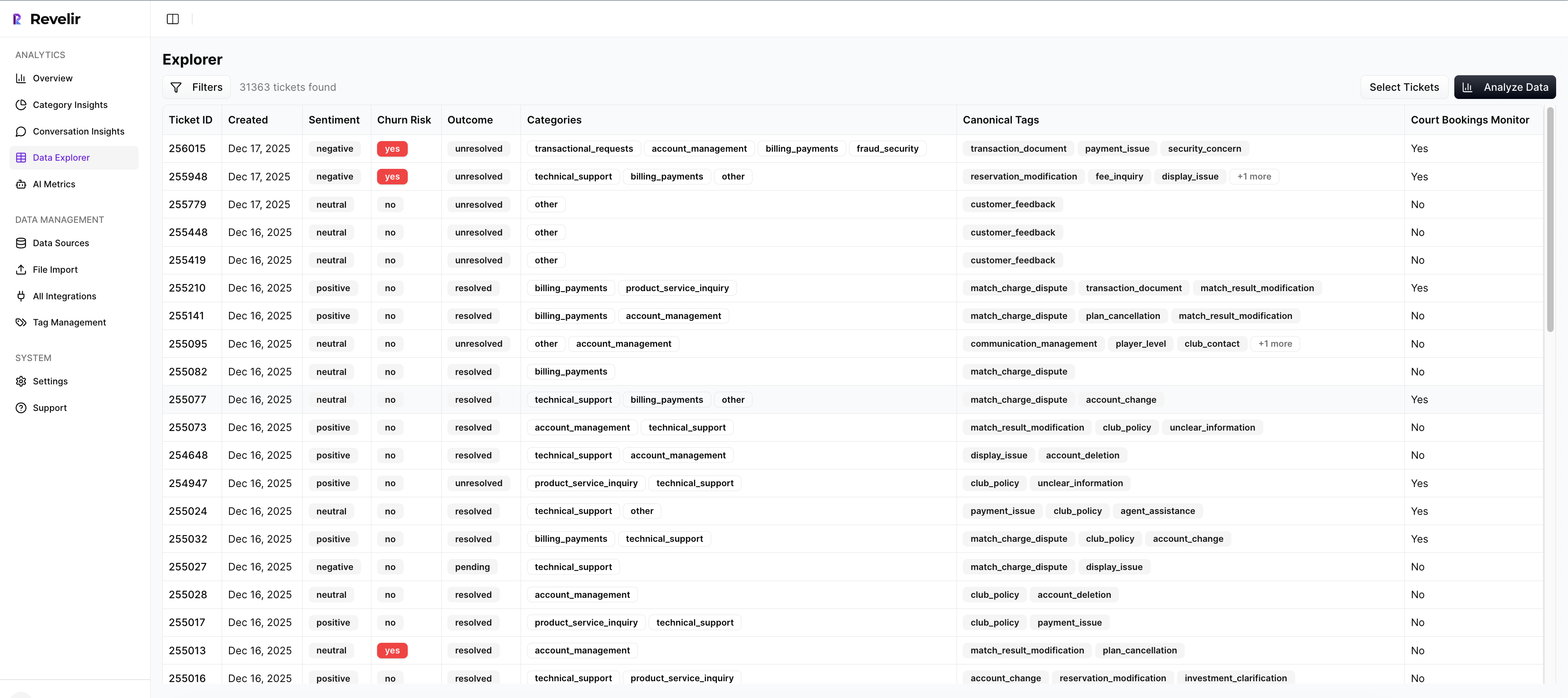
What changes is that the metric and the evidence ship together:
- Full coverage processing: every ingested conversation gets analyzed, so you’re not guessing whether sampling missed the real driver.
- Evidence-backed traceability: you can click from an aggregate to the exact tickets and quotes that produced it, which makes exec reviews less political.
- Hybrid tagging with drivers: raw tags help you discover what’s new, canonical tags and drivers help you roll it up into leadership-ready reporting.
- Data Explorer and Analyze Data: you can run pivot-style grouped analysis (for example, negative sentiment grouped by driver), then drill into Conversation Insights to validate.
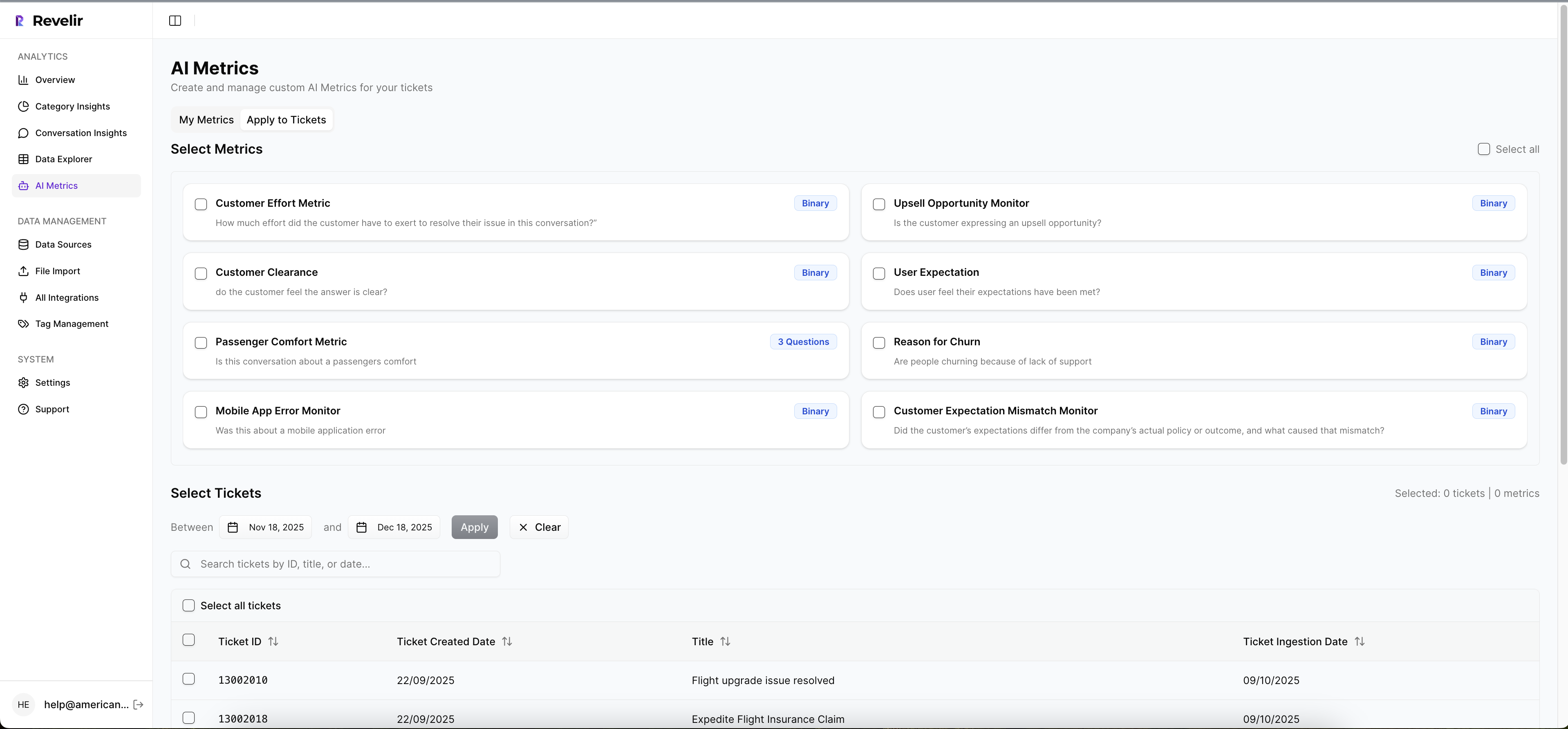
If you want a concrete example, the platform supports workflows like filtering to negative sentiment, grouping by driver or canonical tag, and then clicking into the underlying conversations to check accuracy and pull representative quotes. Same thing for high-value segments: filter to Enterprise plan, add churn risk or negative sentiment, then group by driver to see what’s actually hurting that cohort.
Mid-article is usually where I tell you to “book a demo.” I won’t do that. If you want to see whether the evidence thread holds up for your own tickets, just See how it works.
Getting started and rollout plan
A sane rollout is a pilot that proves three things: coverage, trust, and usefulness. Don’t overthink it. Most teams do.
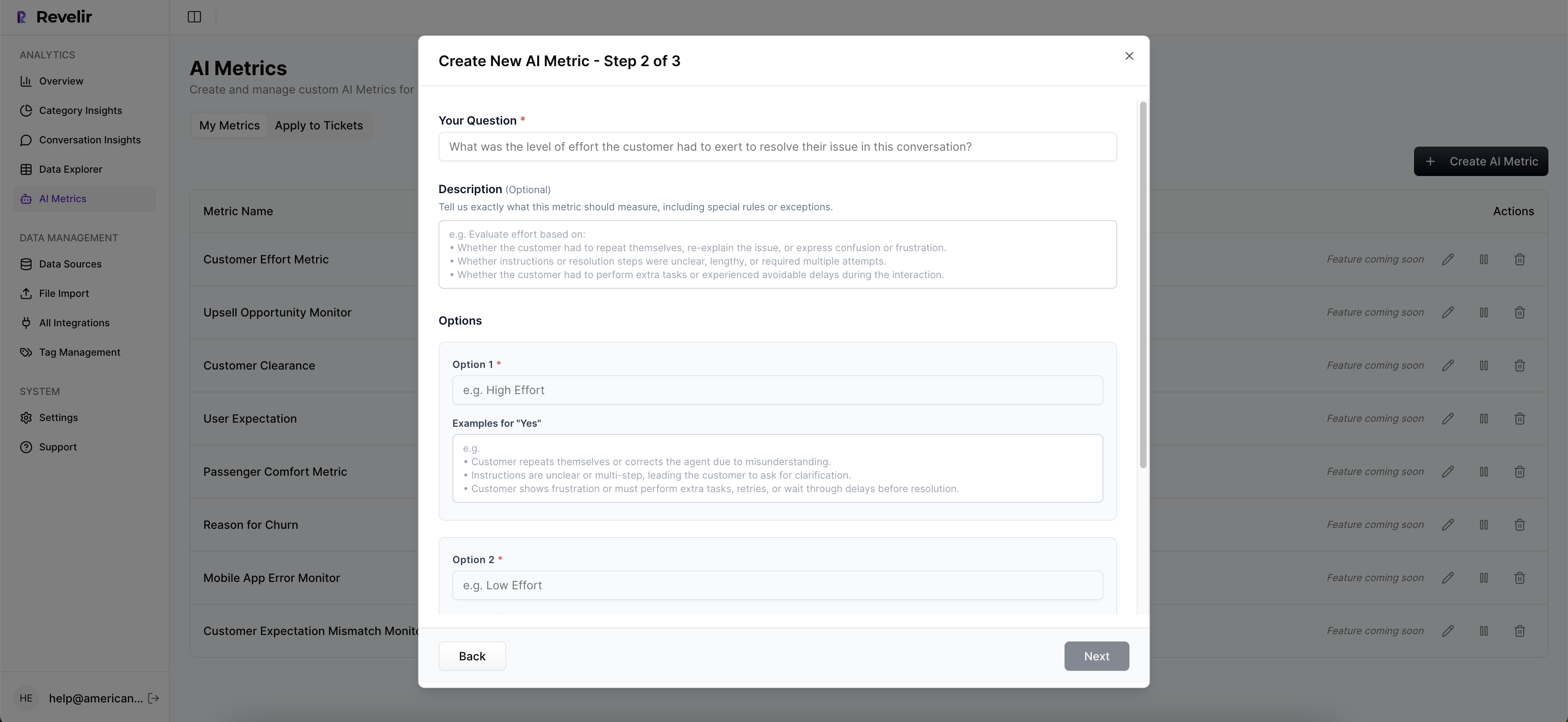
Here’s a rollout pattern that stays honest:
- Start with a backfill via ticket import so you can test coverage and taxonomy against known incidents.
- Run a few executive questions in Data Explorer, like “what’s driving negative sentiment right now” and “which issues hit enterprise customers,” then validate in Conversation Insights.
- Decide your canonical taxonomy and drivers based on what leadership actually needs to see repeatedly, not what feels theoretically tidy.
- Export structured metrics via API into your BI layer if you need centralized reporting, while keeping traceability inside the platform for audit questions.
That’s it. If the pilot doesn’t survive skeptical stakeholders asking for proof, you learned something early. Good.
Conclusion: Decision Grid and Next Steps
The “best software for enterprise” is the one that matches your job-to-be-done and doesn’t collapse under scrutiny when someone asks for ticket evidence. Dashboards are fine. Automation is fine. But if your org keeps losing weeks to debate because the insight can’t be traced back to real conversations, you’ll want an evidence-backed metrics layer in the stack.
If you want to pressure-test this on your own data, Learn More. If you’re already convinced the real work is proving the why, not just visualizing the what, Get started with Revelir AI (Webflow).
Pick a lane, run a pilot, demand traceability. That’s the whole game.
Frequently Asked Questions
How do I analyze customer sentiment trends over time?
You can use Revelir AI's Data Explorer to analyze customer sentiment trends. Start by filtering your dataset to the specific time period you want to examine. Then, utilize the sentiment column to group the data by positive, neutral, and negative categories. This will help you visualize how sentiment has changed over time. Finally, drill down into specific tickets to understand the context behind any significant shifts in sentiment.
What if I need to track churn risk for specific customer segments?
Revelir AI allows you to segment your data by various dimensions. To track churn risk for specific customer segments, filter your dataset by customer type or plan tier in the Data Explorer. You can then apply the churn risk metric to see which segments are at higher risk. This targeted analysis can help you prioritize your retention efforts effectively.
Can I customize the metrics I track in Revelir AI?
Yes, you can customize the metrics you track in Revelir AI using the Custom AI Metrics feature. This allows you to define specific classifiers relevant to your business needs, such as 'Upsell Opportunity' or 'Reason for Churn.' Once set up, these custom metrics can be used across filters and analyses, giving you tailored insights that align with your strategic goals.
When should I use the Analyze Data feature?
You should use the Analyze Data feature when you want to run grouped analyses on your support tickets. This tool is especially useful for summarizing metrics like sentiment, churn risk, and customer effort by various dimensions, such as drivers or canonical tags. It helps you quickly identify patterns and insights without having to manually sift through individual tickets.
Why does Revelir AI emphasize full coverage processing?
Revelir AI emphasizes full coverage processing because it eliminates the biases and blind spots associated with sampling. By processing 100% of ingested tickets, you can trust that your insights are based on all relevant data, not just a small subset. This approach ensures that you capture critical signals, like churn risk or customer frustration, that might otherwise go unnoticed.