

98% of support teams already have the data they need. They just can’t trace that data through an auditable pipeline fast enough to defend a decision in the room.
That’s the trap with an auditable pipeline. Most teams think the hard part is collecting tickets. It’s not. The hard part is proving that the number on the slide maps back to real customer conversations, without dragging your team into another export-and-spreadsheet mess.
Key Takeaways:
- An auditable pipeline starts with full conversation coverage, not samples
- If you can’t click from a metric to the exact ticket or quote, the metric won’t hold up in leadership review
- Manual tagging breaks once volume passes a few hundred tickets a week
- Scores tell you something changed, but drivers and evidence tell you what to fix
- You don’t need a new helpdesk to build this system
- Zendesk plus a customer intelligence layer is enough for most teams to start
- The fastest path is usually plug in your ticket source, structure 100% of conversations, then validate patterns against real transcripts
Why Most Support Metrics Break Under Pressure
An auditable pipeline breaks when the team can’t explain where a metric came from, what conversations shaped it, or whether the sample was even representative. That’s why dashboards look clean right up until someone important asks one follow-up question.

The number looks solid until someone asks for proof
Monday, 8:14 AM. Your support lead is in the weekly product review with a chart that says billing frustration jumped 18% over the last 30 days. Product asks which customers. Ops asks whether that includes duplicates. The CEO asks for examples. Nobody’s checking the underlying ticket trail in real time, because the chart came from a mix of sampled reviews, old tags, and a last-minute spreadsheet pull from Zendesk.
That scene happens all the time. And it’s usually not because the team is sloppy. It’s because the metric stack was built for reporting volume, not explaining customer reality. CSAT can tell you sentiment dipped. A Zendesk dashboard can tell you ticket count rose. Neither can reliably answer why that happened across the full conversation set.
Same thing with manual audits. At 50 tickets a week, a manager can skim enough conversations to feel close to the truth. At 1,000 tickets a week, a 10% sample already means 900 conversations are invisible. Review each sampled ticket for 3 minutes and you still burn 5 hours for a partial answer. Partial answers are where leadership debates begin.
Sampling feels responsible right until it hides the pattern
A sample can be useful. That’s a fair read. If you’re a small team handling fewer than 100 tickets a month, reading conversations manually can still work because the founder or head of support usually retains direct context. Once volume climbs past that, the same habit starts producing false confidence.
Cross roughly 300 to 500 tickets a week and sampling stops being a shortcut. It becomes a blindfold. Rare issues disappear. Quiet churn signals get missed. A few dramatic tickets start shaping the whole narrative. You end up managing by anecdote, which is just guessing in business casual.
There’s also a trust cost people rarely price in. When one team brings a sampled story and another team brings dashboard totals, the room spends 20 minutes arguing about method instead of deciding what to fix. Exhausting. Everyone sounds certain. Nobody feels certain.
The real problem isn’t ticket volume
What breaks first is not volume. It’s chain of custody.
Let’s pretend your team says churn risk is rising among enterprise accounts. If that claim can’t be traced to exact conversations, quotes, and patterns across the full dataset, it’s not really a metric. It’s a claim wearing a dashboard costume.
That’s the reframe that matters. An auditable pipeline is less about analytics polish and more about chain of custody. In a support operation, the metric should work like a signed package handoff: you should know where it started, who transformed it, and how to inspect it at any point along the route. No custody trail, no trust. Want a closer look at what that trust gap does inside a team? Learn More
What an Auditable Pipeline Actually Requires
An auditable pipeline requires four things: full coverage, stable classification rules, traceability to source conversations, and clear ownership of what each metric means. Miss one, and the system drifts much faster than most teams realize.
Start with coverage, or you’re calibrating fiction
If you only analyze a slice of conversations, everything downstream gets weaker. Trend lines wobble. Priority calls get noisier. Your top-issues list changes based on who sampled what and when.
That’s why the first diagnostic is simple. Ask these four questions:
- Are we analyzing 100% of support conversations or only a subset?
- Can we explain why a ticket was classified a certain way?
- Can a leader click from a chart to the original ticket text?
- Do the people in the room agree on what each category actually means?
If you answer “no” to two or more, you do not have an auditable pipeline yet. You have reporting fragments.
Coverage changes behavior upstream. Once every conversation is being processed, the loud anecdote loses political power. Teams start looking for repeat drivers across segments, time windows, and customer types. That one shift changes how product and CX talk to each other.
Full coverage can sound like overkill for an early-stage team. Sometimes it is. If the founder still reads every ticket personally and volume stays under roughly 30 tickets a week, manual review may be enough for now. Once ticket review gets delegated or weekly volume clears that mark, full coverage stops being a nice-to-have and starts being basic infrastructure.
Stable categories beat clever dashboards
One unstable taxonomy can ruin six months of reporting.
A support manager uses “refund,” another uses “billing issue,” someone else uses “charge confusion,” and six weeks later you’re trying to explain a trend line built on three versions of the same problem. The dashboard isn’t broken. The category layer is.
An auditable pipeline needs a classification layer that can absorb messy language without wrecking reporting consistency. Keep the granular signals. Roll them up into business-friendly categories. Raw signals help you catch new themes early. Stable reporting categories let you compare month to month without rewriting the taxonomy every Friday.
Here’s a practical rule: if more than 15% of your weekly issue labels are effectively synonyms, stop publishing trend reports until the taxonomy is cleaned up. Harsh? A little. Necessary? Usually. Unstable categories create fake movement, and fake movement sends product teams chasing noise.
I’d push this further. Buying prettier reporting before fixing classification is like repainting a warehouse while the inventory bins are mislabeled. The walls look great. The pick errors keep happening. Same thing with sentiment: positive and negative labels help, but if they can’t be tied to drivers like onboarding, billing, account access, or performance, nobody knows what to fix next.
Traceability has to be built in, not added later
Can someone validate a metric against source tickets before the meeting ends? If not, the auditable pipeline is decorative.
This is where a lot of teams get burned. They present a chart, then scramble for proof after the meeting. That backward motion kills confidence. It also slows decisions because every claim turns into a mini investigation.
Set a hard rule: no metric goes into leadership review unless someone can validate it against source tickets in under 3 minutes. That threshold matters. If validation takes 20 minutes and three tools, nobody will do it consistently. If it takes under 3 minutes, trust becomes operational instead of aspirational.
There’s a hidden upside. Traceability improves classification quality over time because leaders and analysts can inspect the underlying tickets while the pattern is still fresh. Errors get spotted earlier. Definitions tighten. The auditable pipeline gets cleaner through use, not through a quarterly cleanup project.
Ownership beats consensus
Two owners create tension. Five owners create drift.
You can’t maintain an auditable pipeline if nobody owns metric definitions. Somebody has to decide what “high effort” means. Somebody has to approve how churn risk is interpreted. Somebody has to own the difference between a raw theme and a reporting category.
Teams usually spread that responsibility too widely because consensus feels safer. That instinct makes sense. Shared input does reduce the odds of one person imposing a bad definition. The tradeoff is slower cleanup and category drift. If more than three people can change category definitions without review, expect reporting inconsistency within 30 days.
The cleaner model is one owner for taxonomy, one owner for reporting quality, and one consumer group across support, product, and ops that pressure-tests outputs. That’s enough. Any more than that and you’re not running an auditable pipeline. You’re running a committee.
The Cost of Getting This Wrong Keeps Compounding
A weak auditable pipeline costs time, credibility, and bad prioritization. The money is real, but the trust loss is usually worse because it makes every future insight harder to act on.
False confidence is more dangerous than missing data
Missing data feels like a problem. False confidence feels like control.
That’s why sampled ticket reviews and score-only dashboards linger for so long. They produce enough output to look mature, even when the underlying logic is shaky.
Imagine a CX team flags onboarding frustration as the top issue because 12 sampled tickets mention setup friction. Product shifts sprint capacity. Two weeks later, a broader review shows billing confusion was actually affecting 4x as many customers, including higher-value accounts. Now you didn’t just miss the real issue. You burned engineering time fixing the wrong one.
That mistake is common because sampled insight inflates small patterns and hides broad ones. Once volume rises, coverage becomes a decision-quality issue, not a reporting preference.
Teams waste hours proving their own work
At a lot of companies, the analysis isn’t the slow part. The self-defense is.
Analysts pull screenshots. Support leads compile examples by hand. PMs ask for ticket IDs. Then someone starts a side spreadsheet to reconcile counts between tools.
It’s usually 2 to 4 hours per major review cycle, and that’s conservative. Run weekly cross-functional reviews and that becomes 8 to 16 hours a month spent just validating claims after the fact. Add rework, back-and-forth, and duplicate pulls, and the cost climbs fast.
We were surprised how often this gets called rigor. Sometimes it is. More often it’s a sign the auditable pipeline doesn’t exist yet, so humans are acting as the chain of custody.
Bad evidence slows product fixes
Support data should shorten the distance between customer pain and product action. Weak evidence does the opposite.
Product teams hesitate because they don’t trust the scale. Leadership hesitates because they can’t verify the claim. Support hesitates because they know the story might get challenged.
The issue sits. Another month of tickets comes in. Escalations rise. CSAT dips. The original signal gets louder and slower at the same time.
That delay matters. If a recurring issue touches onboarding, billing, or account access, a 30-day lag can turn a fixable irritation into churn risk. Once the room stops trusting the evidence path, every future insight has to clear a higher bar. Trust is expensive to rebuild; that’s why the build sequence matters.
A Better Way to Build Evidence From Support Conversations
A better way to build an auditable pipeline is straightforward on paper: ingest all conversations, structure them consistently, group them into usable drivers, and keep the ticket trail attached the whole time. The sequence matters because each step protects the next one.
Ingest first, without changing the frontline workflow
You don’t need a new helpdesk.
That’s the part a lot of teams overcomplicate. If your support team already works in Zendesk, keep it there. If you’re early and running exports, start with a CSV. The point is to build the intelligence layer on top, not force a rip-and-replace project nobody asked for.
That low-friction start matters because pipeline projects usually die in implementation drag. If setup requires retraining agents, redesigning workflows, and migrating systems before anyone sees value, adoption stalls. If the first step is just connecting the existing conversation source, you get to signal faster.
Use this rule: if the new analysis process requires frontline reps to change daily behavior before leaders see insight, the rollout is too heavy. Start with passive ingestion. Add workflow changes only after the auditable pipeline is already proving value.
Structure the messy middle with both detail and roll-up
Detail and consistency sound like opposites. In a good auditable pipeline, they support each other.
Once tickets are in, you need two layers of understanding. The first catches granular themes emerging in natural language. The second rolls those themes into categories people can compare month after month.
That raw-plus-rollup approach works because it preserves discovery without sacrificing consistency. The detailed layer helps you spot patterns like billing fee confusion or refund request before they spread. The reporting layer lets leadership see those issues under a cleaner umbrella like Billing. Only detail becomes chaos. Only roll-up becomes oversimplification.
A practical checkpoint: if your weekly review can’t answer both “what specifically happened?” and “what broader issue does this belong to?” your classification system is either too shallow or too messy.
Make every metric answerable with one follow-up click
One click is the difference between evidence and theater.
Every number should be explorable. If a chart says high-effort conversations rose 22% for enterprise customers, the next move should not be a separate export request. It should be a drill-down into the exact tickets behind that shift.
That one behavior changes the operating model. Analysts stop building presentation theater. Leaders stop treating support data as soft evidence. Product managers stop asking support to bring a few examples next time, because the examples are already attached to the signal.
And yes, there’s a real tradeoff here. Auditable systems can feel slower to set up than throwing tags into a dashboard and calling it done. That criticism is valid. Definitions do require a more deliberate setup. Once the auditable pipeline is live, though, the team gets speed back in every review cycle after that.
Tune to action, not just description
Scores are useful. Drivers are useful. Neither matters much unless they change what gets fixed next.
A mature auditable pipeline should help you answer questions like:
- Which driver is pushing the most negative sentiment this month?
- Which issue shows the highest churn risk by segment?
- Which themes create high customer effort but low ticket volume?
- Which problems persist week over week after a product change?
Those are decision questions. Much better than “How many tickets did we get?”
This is where support stops being a reactive function and starts becoming a signal source for product and ops. Not prettier dashboards. Better decisions with less debate. The only remaining question is how to make that practical without rebuilding your stack.
How Revelir AI Makes This Practical
Revelir AI makes an auditable pipeline practical by sitting on top of your current support data, processing 100% of conversations, and keeping every metric tied to the original evidence. You’re not replacing Zendesk. You’re bringing structure and traceability to the support data you already have.
Start with your current ticket source, not a migration project
Revelir AI connects directly through its Zendesk Integration, so historical and ongoing tickets can flow in with transcripts, metadata, tags, requesters, agents, and timestamps. If you’re not ready to connect live data yet, CSV Ingestion gives you a low-friction way to upload exports from Zendesk, Intercom, Freshdesk, or similar tools for a pilot or backfill.
That matters because most teams don’t need another operational system. They need an easier start. Same thing with executive buy-in. It’s much easier to approve a lighter path than a full workflow rebuild.
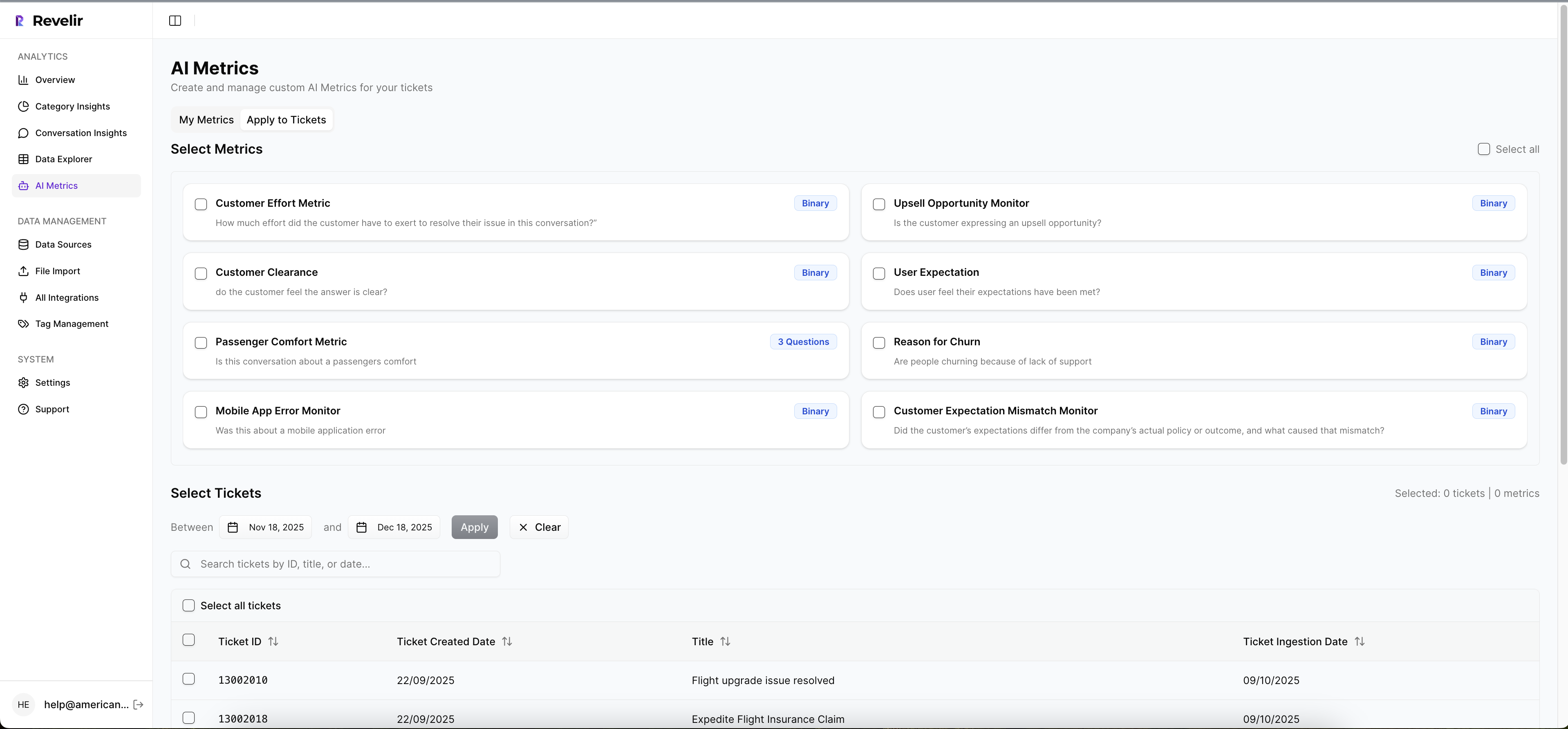
Once data is in, Full-Coverage Processing means Revelir AI analyzes 100% of ingested tickets with no manual upfront tagging required. That closes the visibility gap that sampling creates and gives you a stronger base for trend analysis from day one.
Structure the data without losing the evidence trail
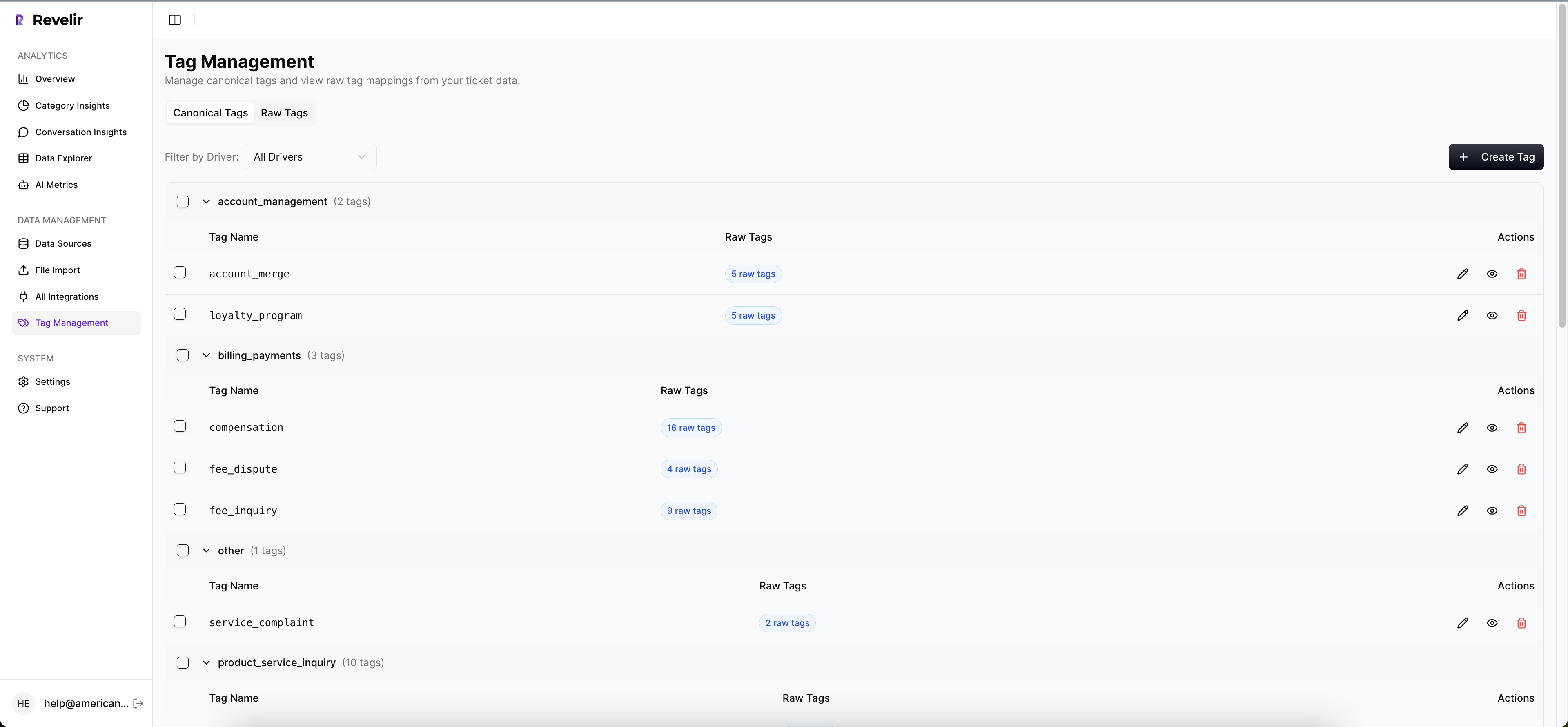
Revelir AI uses its AI Metrics Engine to compute structured fields like Sentiment, Churn Risk, Customer Effort, and Conversation Outcome. On top of that, the Hybrid Tagging System captures granular Raw Tags and rolls them into Canonical Tags that match how your team actually talks about issues. Drivers add the broader layer, so you can move from a specific pattern to a leadership-friendly explanation of why it matters.
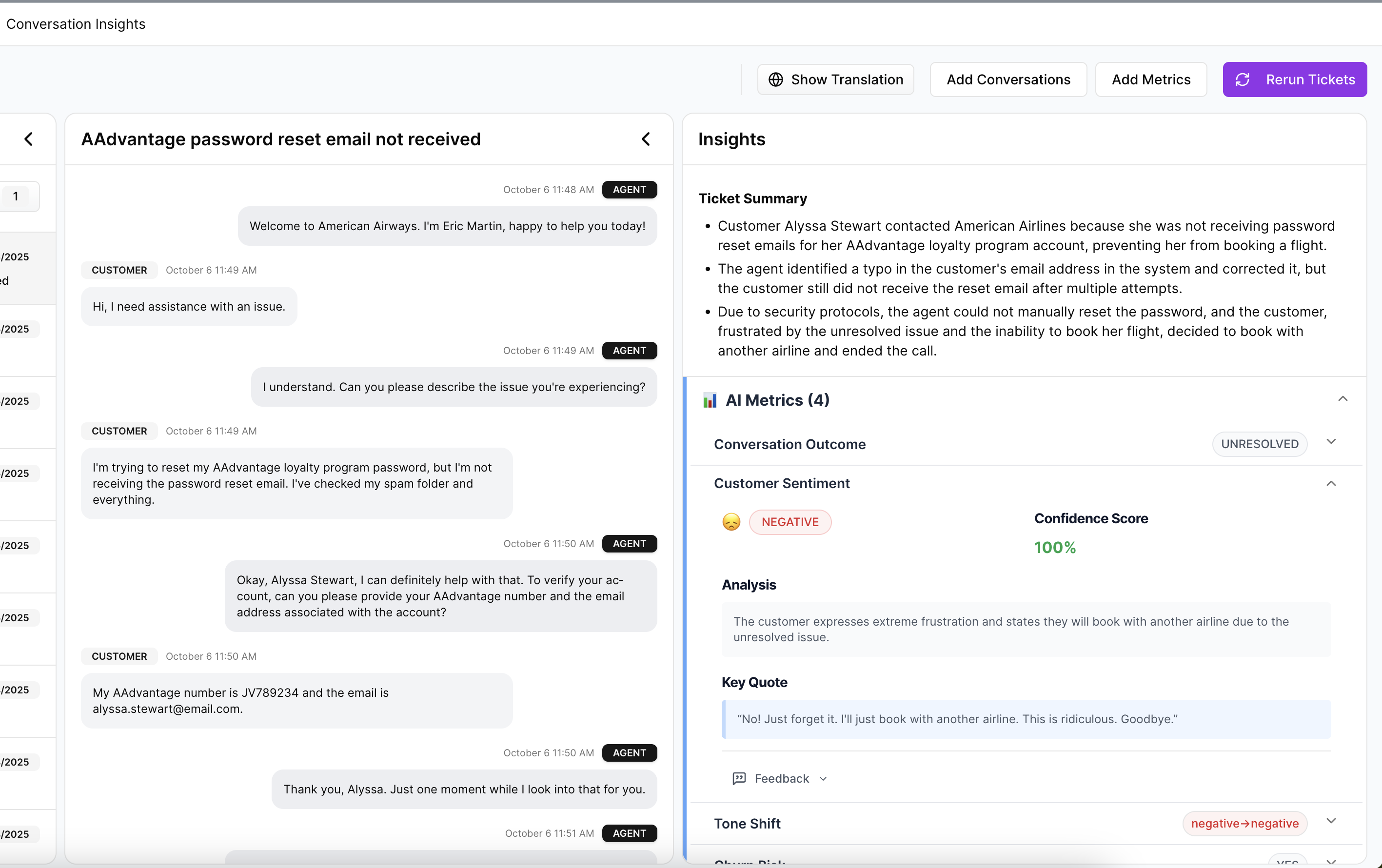
The important part is trust. Evidence-Backed Traceability links every aggregate number to the source conversations and quotes behind it. In Data Explorer, teams can filter, group, sort, and inspect tickets across those fields. With Analyze Data, they can summarize metrics by Driver, Canonical Tag, or Raw Tag, then move straight into the underlying records. Conversation Insights adds the ticket-level drill-down with full transcripts, AI-generated summaries, assigned tags, drivers, and AI metrics so validation doesn’t become a separate project.
That’s how the time cost flips. Instead of spending 8 to 16 hours a month defending sampled insights, teams can validate patterns in the same workspace where they analyze them. And because Revelir AI can sit on top of Zendesk or start from a CSV, the path to an auditable pipeline is much lighter than most teams expect. If you want to test that approach without changing frontline workflows, Get started with Revelir AI (Webflow)
Build the Pipeline People Will Actually Trust
An auditable pipeline isn’t about sounding more data-driven. It’s about making support evidence sturdy enough that product, CX, and leadership can act on it without a 20-minute argument over where the number came from.
Most teams don’t need a new helpdesk. They need full coverage, clearer structure, and traceability back to the ticket. Get those three right, and support stops being a pile of anecdotes and starts becoming a real decision system.
That’s the whole point of an auditable pipeline: not more reporting, more believable reporting.
Frequently Asked Questions
How do I ensure full coverage of support conversations?
To ensure full coverage, start by integrating Revelir AI with your existing helpdesk, like Zendesk. This connection allows Revelir to ingest all support tickets automatically, processing 100% of conversations without manual tagging. If you're not ready for integration, you can upload historical data using CSV ingestion. This way, you can analyze every conversation and avoid the pitfalls of sampling, which often leads to missed insights.
What if my team struggles with inconsistent tagging?
If your team faces issues with inconsistent tagging, consider using Revelir AI's Hybrid Tagging System. This system automatically generates Raw Tags for specific issues while allowing you to create and manage Canonical Tags for reporting. By mapping raw tags to canonical ones, you can maintain a clear and stable taxonomy, ensuring consistent categorization and reducing confusion in reporting.
Can I track customer sentiment over time?
Yes, you can track customer sentiment over time using Revelir AI's AI Metrics Engine. This feature automatically computes sentiment scores for every conversation, categorizing them as positive, neutral, or negative. You can then use the Data Explorer to filter and analyze sentiment trends across different time periods, helping you understand how customer feelings evolve and identify areas needing attention.
When should I validate metrics against source tickets?
You should validate metrics against source tickets before presenting them in leadership reviews. With Revelir AI, you can do this quickly, as every aggregate number links directly to the source conversations. Set a rule that no metric goes into a meeting unless it can be validated in under three minutes. This practice builds trust and ensures that your insights are backed by solid evidence.
Why does my team need a structured approach to support data?
A structured approach to support data is crucial because it transforms unstructured conversations into actionable insights. Revelir AI helps you achieve this by organizing data into structured fields like sentiment, churn risk, and effort. Without this structure, your team may rely on anecdotal evidence or sampling, which can lead to misinformed decisions. A clear structure allows for better analysis and informed prioritization of issues.