

5 platforms usually make the shortlist in support analytics software, but they solve very different problems. If you spent time this week trying to explain a sentiment drop with three screenshots and two cherry-picked tickets, you already felt why buying the wrong platform gets expensive fast.
Support analytics software sounds like one category. It isn't. Some tools are built for broad voice of customer programs, some for support ops coaching, some for ecommerce automation, and some for Zendesk queue visibility. That's why a clean buyer's guide matters more than a feature pile.
What the Best Support Analytics Software Actually Helps You Prove
The best support analytics software helps you prove what is breaking, who is affected, and what deserves action first. Good platforms don't just count tickets, they turn messy support conversations into patterns leaders can defend in a meeting. That difference shows up fast when product, CX, and ops all ask for evidence from the same dataset.
A support leader opens Monday's dashboard after a rough weekend. Ticket volume is up 18%, CSAT dipped, and Slack is full of guesses. One manager says billing is the issue, another blames onboarding, and product wants examples before committing sprint time. That's the moment the category splits in two: score tools show the dip, real support conversation analytics shows the driver.
What buyers should evaluate before comparing platforms
Most teams buy support analytics software as if they're buying a prettier dashboard. That's usually the first mistake. The real buying question is whether the platform helps you move from vague signal to defensible action.
I use a simple test for this: the 3-Proof Filter. Before you buy, ask whether the tool can prove pattern, cause, and evidence. Pattern means it shows the trend across a meaningful share of conversations. Cause means it can surface the driver, not just a sentiment label. Evidence means you can click back to the ticket or quote that supports the claim.
If a platform only gives you one of those three, expect debate later. If it gives you all three, product and CX can stop arguing over anecdotes and start ranking fixes.
Buyers should check five things before anything else:
- Coverage model, whether it analyzes all conversations or relies on sampling
- Traceability, whether metrics link back to ticket-level evidence
- Analytics depth, whether you can group by driver, tag, segment, or account type
- Workflow fit, whether it's built for coaching, VoC, automation, or support insights
- Pricing friction, whether you can understand cost before a long sales process
Quick-reference comparison table
This quick table gives you the fast read. It won't replace a demo, but it will stop you from comparing unlike-for-like tools.
[Table: Platform] — See "Table Embed Codes" in Oleno to copy the HTML for this table.
Key Takeaways:
- Best for large support ops teams: SupportLogic fits organizations that already run formal QA, coaching, and escalation workflows.
- Best for support-first AI analysis: SentiSum is strong when you want automated tagging, churn surfacing, and conversational querying.
- Best for broad VoC programs: Chattermill makes more sense when surveys, reviews, and app feedback matter as much as tickets.
- Best for ecommerce automation: Siena is for containment and customer interaction workflows, not deep support conversation analytics.
- Best for evidence-backed support insights: Teams that need ticket-level proof, custom metrics, and 100% conversation coverage should keep Revelir AI on the shortlist.
The shortlist gets clearer once you stop asking which product looks smartest and start asking which one can withstand follow-up questions.
Why Choosing the Best Software Is Harder Than It Looks
Choosing the best support analytics software is hard because most demos flatten very different products into the same story. Everybody shows dashboards, AI labels, and a few polished charts. The real gap shows up later, when your team asks one hard question and the platform can't trace the answer back to the ticket.

A director of support exports 500 Zendesk tickets into a spreadsheet on Friday. By Tuesday, the team has manually tagged 70 of them and decided onboarding confusion is the top issue. Then product asks whether enterprise customers are affected more than SMB accounts, and nobody knows because the sample wasn't built for that question. Sound familiar?
That sampling trap matters more than buyers admit. Same thing with score watching. A negative sentiment trend feels informative until someone asks, "negative because of what?" If the tool can't connect drivers, segments, and ticket evidence, you're still doing detective work with better charts.
Where support analytics tools differ most
Three differences separate the field: coverage, purpose, and proof. Most buying mistakes come from ignoring one of those.
Coverage sounds boring, but it's the first threshold I'd use. If your team handles more than 1,000 tickets a month, sampled review workflows start to break. At three minutes per ticket, 10% sampling on 1,000 tickets still costs five hours for partial visibility. Reviewing 100% manually would take about 50 hours. That's why support analytics software exists in the first place.
Purpose is the second split. Some platforms are trying to help managers coach agents. Some are trying to unify every feedback channel. Some are trying to automate support itself. If you want ticket analytics software that helps product teams understand root cause, an agent automation tool is the wrong category, even if the demo looks slick.
Proof is the third split, and honestly, it's the one buyers underweight. Black-box outputs create trust debt. The minute finance, product, or the COO asks for source evidence, you need a path from the chart to the conversation. No path, no trust.
A useful way to diagnose your fit is the Coverage-Purpose-Proof matrix:
- If you need queue health today, start with operational monitoring
- If you need coaching and QA across a large support org, choose SX tooling
- If you need feedback across many channels, choose VoC aggregation
- If you need to prove why support patterns are happening, choose support conversation analytics with traceability
How pricing models change the buying decision
Pricing changes the buying decision because it quietly determines implementation appetite, stakeholder expectations, and how much risk you can tolerate. A $49 entry point invites testing. A $3,000-plus monthly commitment usually means procurement, security review, and a stronger need for internal consensus.
Some teams underestimate this. Let's pretend two tools look similar in a demo. One is freemium and deploys inside an existing Zendesk workflow. The other is enterprise-priced and asks for cross-functional rollout. Those are not equal buying decisions, even if both promise better support analytics.
Sales-led pricing isn't bad by itself. Fair point, some enterprise buyers want that because it usually comes with deeper onboarding and governance. But if your team is still proving the use case, opaque pricing can slow learning before the project even starts.
My rule is simple: if you don't have a named support ops owner and a six-month implementation window, be cautious with tools designed around enterprise process maturity. If you do have that maturity, you can justify more depth and more complexity.
The harder question, then, is not which platform looks strongest in a demo. It's which one is actually built for the job your team needs done.
How the Leading Support Analytics Platforms Compare
The leading support analytics platforms split into five distinct categories: support-first AI analysis, enterprise support operations, broad VoC intelligence, ecommerce automation, and Zendesk monitoring. Comparing them fairly means matching each product to the decision it was built to support. Buyers usually get stuck when they compare a coaching platform to an analytics platform, or a VoC suite to a queue tool.
This is where a category map helps. Not because categories are neat. They aren't. But because they stop you from buying a platform that solves the wrong problem elegantly.
SentiSum
SentiSum is one of the stronger support analytics software options for teams that want AI-native tagging, churn signals, and conversational exploration across support data. Its positioning leans toward subscription businesses that need support intelligence without building everything from scratch. That makes it relevant for CX and support leaders who want more than basic sentiment.
SentiSum strengths
A mid-market subscription business with Zendesk, Intercom, and Salesforce in the stack will probably find SentiSum easy to understand conceptually. The platform emphasizes automated ticket tagging, sentiment analysis, and churn-related signals, and it also markets a natural-language assistant for analysis (SentiSum alternatives).
That matters because it reduces the gap between raw ticket volume and usable analysis. Rather than forcing teams to build a taxonomy manually on day one, the product leans on AI to structure the mess. For leaders who want support conversation analytics but don't want to assemble a separate reporting layer, that's attractive.
Its buyer fit is pretty clear:
- Mid-market and enterprise subscription businesses
- Teams wanting conversational querying over support data
- Organizations comfortable with sales-led analytics software
SentiSum limitations and pricing context
SentiSum looks less attractive if your team needs transparent entry pricing or especially lightweight setup. Public positioning and comparison content suggest a premium, sales-led motion, with pricing often discussed in enterprise terms rather than self-serve ones. That's a different buying motion from a low-friction pilot.
There's also a trust question some buyers will care about more than others. If your internal audience routinely asks to see the exact tickets behind a finding, you should push hard on traceability during the demo. Nobody's checking that closely in the first meeting, but they will in the second or third.
How Revelir AI is Different: Revelir AI is built around full-ticket processing and evidence-backed traceability, so teams can move from aggregate findings to the underlying conversations and quotes. It also uses a raw-plus-canonical tagging model, which helps teams discover new themes while still keeping reporting clean.
SupportLogic
SupportLogic is built for large support organizations that need predictive escalation visibility, QA structure, and agent coaching inside a formal support operations program. It is less a lightweight ticket analytics software layer and more a support experience system. That distinction matters a lot once you look past the homepage.
SupportLogic strengths
SupportLogic goes deep on enterprise workflow depth. Its Data Cloud material highlights unified support data ingestion and structured data preparation for downstream use cases (SupportLogic Data Cloud). Other company materials emphasize assist and knowledge workflows, along with broader support experience programs (SupportLogic event page).
If you run a large support org with formal QA, escalations, and coaching motions, that depth is a feature, not a burden. AutoQA, predictive signals, and in-workflow assistance can create a tighter loop between insight and frontline execution. That's a very different use case from simply understanding why billing frustration spiked.
This is usually the right fit for:
- Large enterprise support organizations
- Teams with formal QA and coaching programs
- Companies with ops resources for implementation
SupportLogic limitations and pricing context
SupportLogic is a harder fit for lean teams, especially ones that just want fast time-to-value from historical ticket analysis. The platform's strength is its operational depth, but that same depth can create implementation drag if you don't already have the muscle to use it.
There's a valid counterpoint here. Deep enterprise systems often produce more value once they're fully adopted. True. But if your real need is exploratory analysis across support conversations, buying a coaching-heavy platform can mean paying for process you're not ready to run.
How Revelir AI is Different: Revelir AI is centered on analysis and exploration, not agent coaching. Teams can use Data Explorer and Analyze Data to group support conversations by drivers, canonical tags, raw tags, churn risk, effort, and sentiment, then validate those patterns by opening the underlying tickets.
Chattermill
Chattermill is a voice of customer software platform aimed at enterprises that want to unify feedback across surveys, reviews, support, social, and other channels. It is broader than most customer support analytics tools, and that breadth is the main reason buyers choose it. The tradeoff is focus.
Chattermill strengths
If your company already runs a large VoC program, Chattermill makes intuitive sense. The company talks openly about voice of customer programs and competitive feedback analysis, and product materials highlight ongoing platform updates and broad analytics capabilities (Chattermill VoC program, Chattermill product updates).
That broad ingestion model is useful when support tickets are only one input among many. A central insights team may want surveys, reviews, NPS comments, social mentions, and app feedback in one place. Chattermill is built for that kind of enterprise data unification.
Best fit usually looks like this:
- Large CX and insights teams
- Enterprises with multi-source VoC programs
- Organizations prioritizing broad feedback unification
Chattermill limitations and pricing context
The narrower your use case is around helpdesk conversation analysis, the more you should question whether you need a broad VoC layer. Support leaders often don't need five channels unified before they can answer one basic question: what's driving avoidable friction in tickets right now?
That's where a broad platform can create distance from the frontline. Not always. But often enough that it's worth saying out loud.
How Revelir AI is Different: Revelir AI stays tightly focused on support conversations, then lets teams drill from metrics into ticket-level evidence and AI-generated summaries. It also supports drivers, raw tags, and canonical tags, which helps frontline issues show up in a format leaders can actually use.
Siena
Siena is not really trying to be classic support analytics software. It is an AI customer service platform centered on automation, containment, and brand-aligned customer interactions, especially for ecommerce workflows. That's why buyers comparing Siena to support conversation analytics tools need to slow down a bit.
Siena strengths
An ecommerce brand dealing with order status, returns, exchanges, and repetitive service questions will see the appeal immediately. Siena positions around AI customer service timing, automation, and operational guardrails (Siena). Review platforms also give some market validation that the product is landing with real users (G2 Reviews).
The strength here is containment and execution. Siena is for teams trying to automate support interactions at scale while preserving tone and handoff controls. If you're measured on deflection and repetitive workflow handling, that's useful.
Its sweet spot is usually:
- Mid-market and enterprise ecommerce brands
- Teams prioritizing automation over analysis depth
- Operations leaders focused on repetitive commerce workflows
Siena limitations and pricing context
If you're a B2B SaaS support or product team trying to understand root cause, Siena is probably the wrong first purchase. The category mismatch matters. Automation tools answer customer questions. Analytics tools explain why the questions keep happening.
That's not a knock on Siena. It's just a different job.
How Revelir AI is Different: Revelir AI is an analytics platform, not an autonomous support agent. It computes structured metrics like sentiment, churn risk, effort, and conversation outcome across every ingested conversation, which makes it a stronger fit when the first job is understanding patterns before automating responses.
qvasa
qvasa is a Zendesk-centric monitoring tool for teams that want quick visibility into queue conditions, issue spikes, and lightweight operational alerting. It looks most relevant for managers who need live awareness, not deep customer experience analytics software. That narrower scope is both the appeal and the limit.
qvasa strengths
A team living inside Zendesk may appreciate how focused qvasa appears to be. The company's site and surrounding ecosystem references point to operational visibility, alerting, and fast deployment for Zendesk-heavy environments (qvasa, 729 Solutions). That's a useful niche.
Low-friction tools matter. Honestly, they matter more than analysts admit. If your immediate problem is queue health, a broad support intelligence platform can feel like overkill.
qvasa limitations and pricing context
But the moment you need deeper root-cause analysis, the limits show. Live dashboards and alerts can tell you something is spiking. They rarely explain the full why without a stronger tagging model, custom metrics, or exploratory analysis layer.
And public documentation depth appears thin compared with larger platforms. That doesn't make the product bad. It just means buyers should validate carefully.
How Revelir AI is Different: Revelir AI goes beyond live queue monitoring by supporting historical and exploratory analysis of ticket content, custom AI metrics, and configurable tagging. It also links aggregate findings back to individual conversations, which is useful when you need audit-ready reporting instead of just operational visibility.
The pattern across these vendors is pretty consistent: each can be the best software for a specific job, but only if you judge it against the right job description.
How Revelir AI Fits Teams That Need Evidence-Backed Support Insights
Revelir AI fits teams that need support analytics software to produce evidence, not just dashboards. It analyzes 100% of ingested support conversations, computes structured metrics in the language your business cares about, and lets you drill back to the tickets behind the numbers. That's a different buying case from coaching software, omnichannel VoC suites, or AI agents.
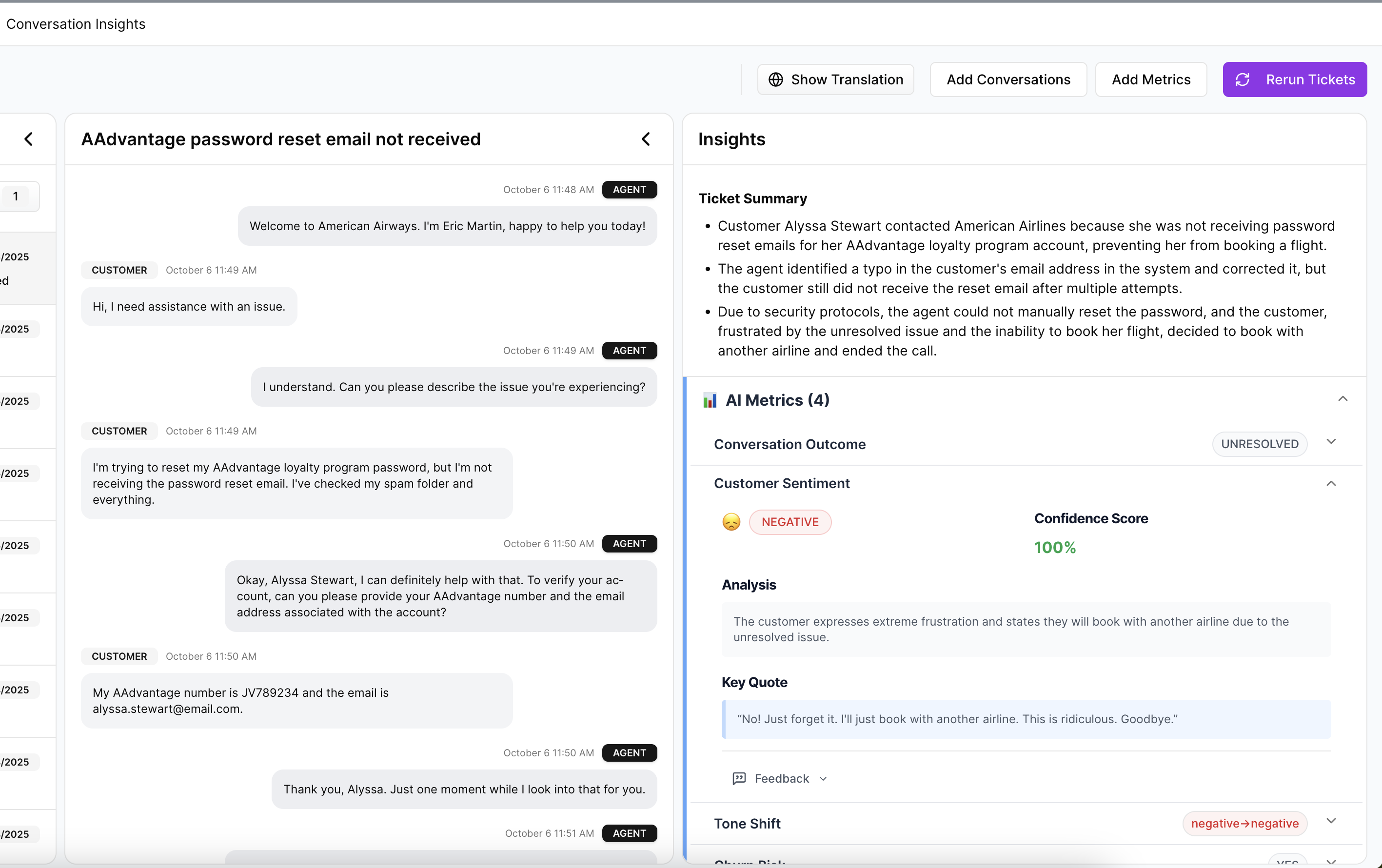
A support leader filters for negative sentiment in Data Explorer, groups by category driver, and sees billing and technical support rise to the top. Then they click into the underlying conversations in Conversation Insights to validate the pattern before sharing it with product. That's the workflow. Top-down pattern, bottom-up proof.
Why the fit is strongest for support, CX, and product teams
This is usually a strong fit when your organization needs to answer questions like:
- What's driving negative sentiment right now?
- Which issues are affecting high-value customers?
- Where are high-effort conversations happening?
- Which friction points are increasing churn risk?
- What support patterns deserve product attention first?
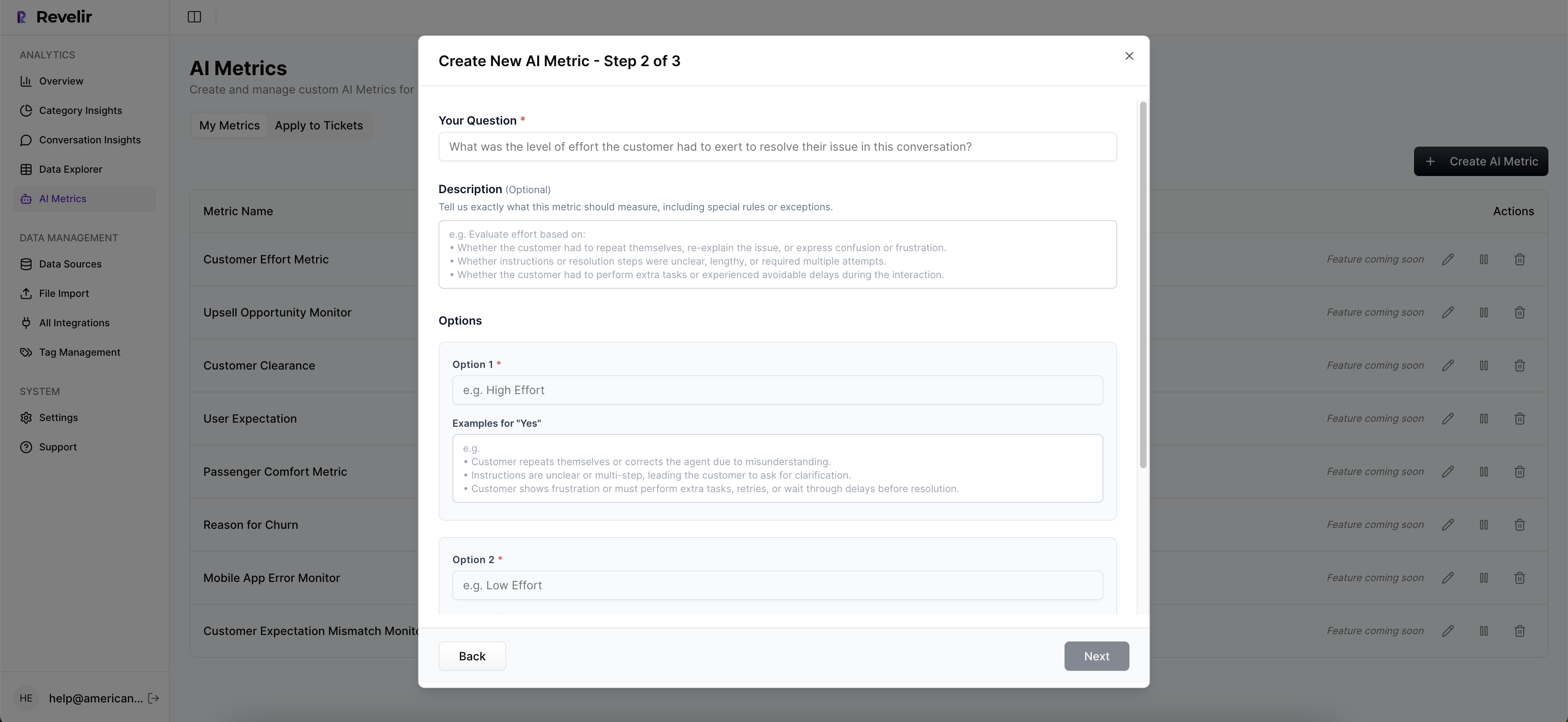
The mechanism matters. Revelir AI processes full ticket sets instead of relying on sampled review workflows. It then applies AI tagging and metrics across sentiment, churn risk, frustration signals, product feedback, effort, and custom business metrics. In practice, that gives you a structured dataset you can pivot across by segment, driver, canonical tag, or raw tag.
There's a concession worth making here. If you mainly want agent automation, this isn't that product. If you need broad omnichannel VoC coverage before anything else, this isn't that first purchase either. But if your problem is unstructured support data and low-confidence insights, the fit is much tighter.
What makes the approach different in day-to-day use
The feature set is less about flash and more about decision quality. Data Explorer works like a pivot table for support conversations, which means teams can filter, group, and analyze without rebuilding the question every time. Analyze Data lets teams summarize by driver, canonical tag, or raw tag. Conversation Insights gives the validation layer by linking patterns back to specific conversations and quotes.
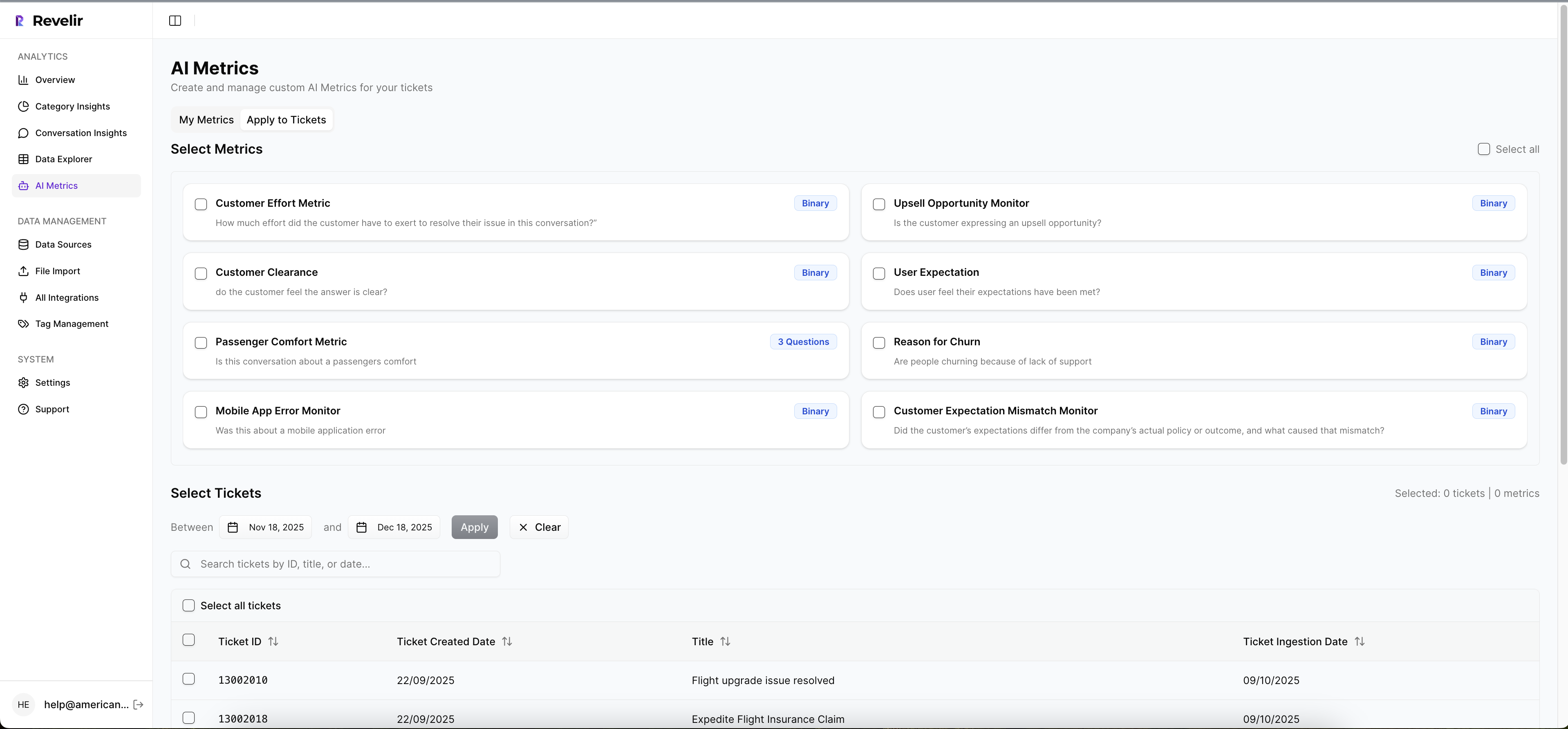
That hybrid tagging model is a big deal. Raw tags help you discover emerging issues. Canonical tags keep reporting stable enough for leadership reviews. I call this the Split-Taxonomy Rule: if your team only has fixed categories, you miss what is new; if you only have open-ended AI labels, reporting turns messy. You need both.
Custom AI metrics also matter more than generic sentiment. A fintech support team may care about failed verification. A SaaS team may care about onboarding friction. A marketplace may care about payout delays. Revelir AI lets teams define what matters in their own business language, then apply it consistently without building classifiers from scratch.
If you want to see how that works with your own ticket history, Learn More.
The real question after that is simple: once you've identified the right category, which product earns a place on the shortlist?
Final Comparison Grid and Shortlist Guidance
The right shortlist depends on the question your team needs answered first. Choose support analytics software based on the decision it must support, not the polish of the dashboard. If you map the tool to the job, the field gets much easier to read.
Before the full grid, one simple rule. If your team cannot click from a metric to the underlying ticket in under 30 seconds, trust will break later. That's my 30-Second Proof Rule. Harsh maybe. Still true.
[Table: Platform] — See "Table Embed Codes" in Oleno to copy the HTML for this table.
A few shortlist rules make this easier:
- Choose SentiSum if you want support-first AI analytics and can handle enterprise-style pricing and setup.
- Choose SupportLogic if you already run mature support ops programs with QA, coaching, and escalations.
- Choose Chattermill if support data is only one part of a much broader voice of customer program.
- Choose Siena if ecommerce automation and containment matter more than analytic depth.
- Choose qvasa if Zendesk monitoring is the immediate need and you want low-friction visibility.
- Choose Revelir AI if your team needs full-ticket analysis, custom metrics, and evidence-backed reporting tied to source conversations.
One last thing. Buyers often think support intelligence starts with a score. I'd argue it starts with an argument you can win. Can you show the pattern, isolate the driver, and pull the exact conversations behind it without a cleanup project? That's the standard that matters.
For teams that need that kind of proof, Revelir AI is a clean fit on this list. It gives support, CX, and product leaders a way to move from raw tickets to structured, traceable metrics without building the machinery themselves.
Frequently Asked Questions
How do I analyze support tickets for specific issues?
To analyze support tickets for specific issues, you can use Revelir AI's Data Explorer. Start by filtering your dataset based on the issue you're interested in, like billing or onboarding. You can group tickets by drivers or tags to see patterns. Then, drill down into individual tickets to validate your findings and gather quotes for reporting. This way, you can turn raw data into actionable insights.
What if I need to track customer sentiment over time?
If you want to track customer sentiment over time, Revelir AI can help. Use the AI Metrics Engine to compute sentiment scores for each ticket. You can then use the Analyze Data feature to summarize sentiment by time periods or specific drivers. This allows you to see trends and understand how customer feelings change, helping you address issues proactively.
Can I customize metrics in Revelir AI?
Yes, you can customize metrics in Revelir AI using the Custom AI Metrics feature. This allows you to define specific classifiers that are relevant to your business, such as tracking upsell opportunities or reasons for churn. Once set up, these metrics can be used across your analyses, giving you tailored insights that align with your team's goals.
When should I use the Conversation Insights feature?
You should use the Conversation Insights feature when you need to validate patterns identified in your data. After analyzing trends in the Data Explorer, you can click into Conversation Insights to access full transcripts, AI-generated summaries, and assigned tags. This feature helps you connect aggregate findings to specific conversations, ensuring your insights are backed by evidence.
Why does Revelir AI focus on full coverage processing?
Revelir AI focuses on full coverage processing because it eliminates the biases and blind spots associated with sampling. By analyzing 100% of ingested support conversations, you can gain a complete view of customer issues and sentiment. This approach ensures that you don't miss critical patterns, enabling more informed decision-making based on comprehensive data.