

Billing-driven churn doesn’t start as a pricing problem. It starts as confusion. A credit memo that didn’t hit the invoice. A proration that reads like legalese. A failed payment loop that never explained why. You feel it in the queue first. By the time a score dips, the renewal’s already wobbling.
We’ve seen the same pattern across segments. It’s usually not a product defect; it’s operational drag hiding inside conversations. The fix isn’t another CSAT dashboard. It’s a tiered reconciliation playbook built on evidence from 100% of tickets—so you can spot billing risk early, act by tier, and show leadership exactly why it’ll work.
Key Takeaways:
- Stop sampling: measure billing risk across 100% of tickets with traceable quotes
- Group billing issues under a driver and pivot by tier, renewal window, and MRR exposure
- Design tiered reconciliation rules that bias preservation upmarket and speed/self‑serve downmarket
- Quantify leakage by combining volume, effort, and churn risk density—then prioritize fixes
- Equip CSMs with pre‑approved remedy levers and evidence fast paths
- Track recovered MRR, time to reconciliation, and churn‑risk delta to prove ROI
Ready to skip the theory and see it on your data? See How Revelir AI Works.
Why Billing Confusion Quietly Drives Avoidable Churn
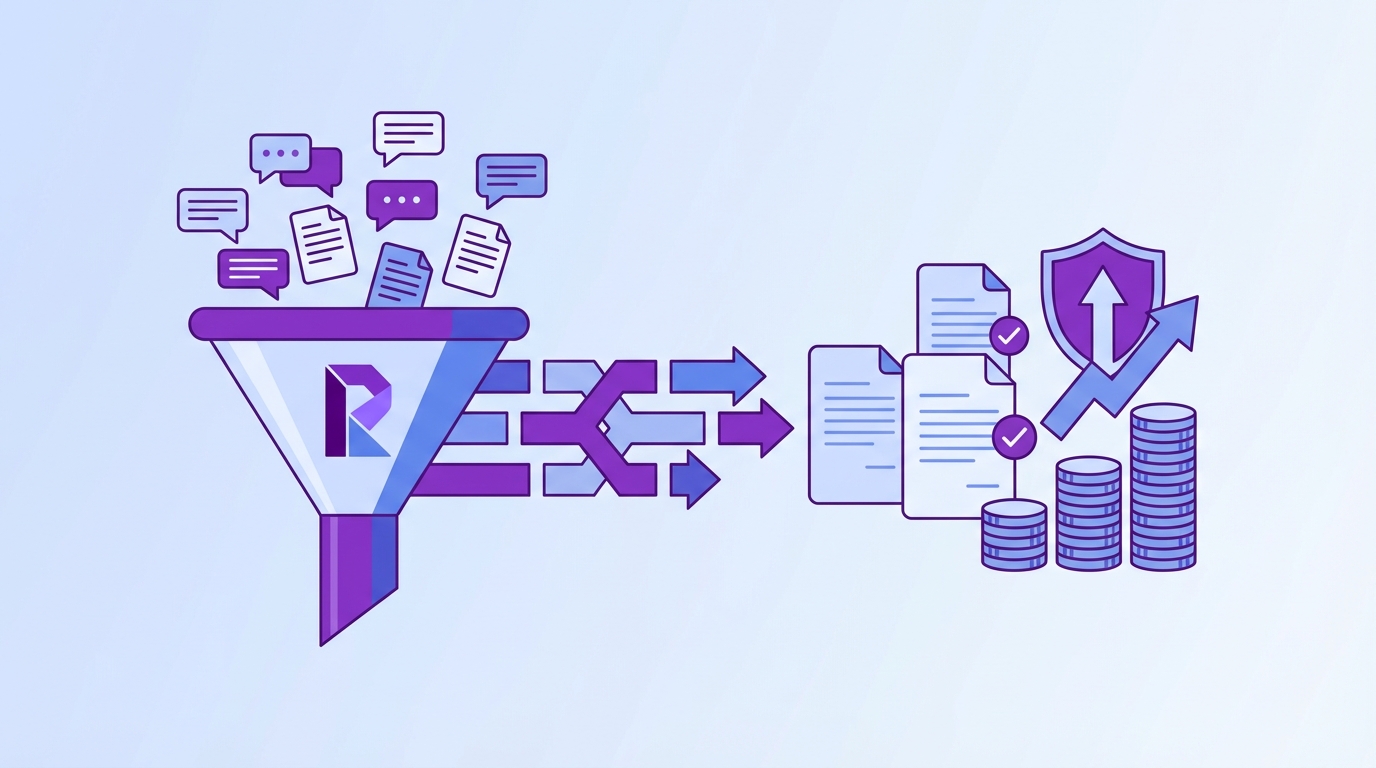
Billing confusion drives churn because the risk signals live in conversation text, not scores. Churn mentions, dispute language, and frustration cues show up days or weeks before a renewal decision. Early-warning approaches built on billing patterns catch trouble faster than surveys or dunning alone; think unexpected charges or invoice mismatches flagged at first mention. A sponsor asks about a proration, then goes quiet—there’s your moment.
Why score watching misses billing risk
Score watching misses billing risk because scores lag and compress nuance. A dip in CSAT tells you “something’s off,” but not whether enterprise renewals are confused by tax detail or mid-market is stuck in failed payment loops. When you only skim dashboards, you debate anecdotes and over-index on the last escalation.
What surfaces the real pattern is full-population analysis tied to evidence. If you process 100% of tickets and attach churn-risk and effort metrics to billing conversations, you can pivot by tier, renewal window, and driver—and show examples instantly. Research on billing-pattern early-warning systems points to the same idea: detect issues like invoice mismatches and charge confusion at first signal, not after a failed renewal. See the approach in this overview of billing-pattern early warning systems.
The punchline: you can’t manage what you don’t measure at the conversation level. Nobody’s checking the transcript when a chart looks “about right.” Do that, and you’ll keep missing quiet billing risk that compounds.
What is tiered reconciliation and why does it matter?
Tiered reconciliation resolves billing issues differently by segment to protect revenue and relationships. Enterprise gets proactive, bespoke explanations and flexible adjustments; SMB gets clear self-serve flows that resolve in minutes. The goal isn’t fairness by symmetry. It’s preservation by context.
This matters because billing friction is not one-size-fits-all. Contract wording, procurement rhythms, and payment methods vary by tier. If you treat everything like a generic dunning failure, you’ll recover fewer dollars and burn more trust. A simple model: top tiers get faster human outreach and broader remedy levers; lower tiers get productized self-serve and tight SLAs—everyone gets clarity, at different depths.
Most teams try to argue the policy. Don’t. Show the evidence behind the confusion, apply tiered rules, and confirm the fix in writing. Same thing with refund framing: upmarket, credits that preserve ARR; downmarket, instant clarity over small amounts.
The Real Root Cause Is Operational, Not Product
Billing-driven churn is usually an operational miss—taxonomy, routing, and evidence—not a product defect. Dunning recovers payments, but it doesn’t explain proration math or fix contract misalignment. Mid-market and enterprise expect reconciliations that mirror their paperwork. A generic “retry your card” email won’t do. An enterprise sponsor hitting a PO mismatch needs a one-pager tied to their MSA.

What traditional dunning misses for mid market and enterprise
Traditional dunning flows don’t address invoice confusion, tax mistakes, or contract language. They automate retries and reminders, which is fine for failed cards, but they ignore the “why” behind a dispute. Mid market wants a clean, defensible explanation; enterprise needs you to align with procurement terms and show the artifact trail.
Operationally, the fix looks simple: pair payment telemetry with conversation evidence, then route to the right owner with the right play. But if your workflows aren’t built for tiered reconciliation—clear owners, clear artifacts, clear thresholds—you’ll chase threads for weeks. You don’t need a new billing system to start; you need clarity on who acts, how fast, and which lever they can pull.
If you want a sense of the breadth enterprise billing teams expect—things like rating, invoicing, taxation, and dispute handling—look at how platforms frame their operations. Here’s a concise reference on enterprise billing ops from BillingPlatform’s overview.
The taxonomy you need to see billing risk by tier
Without clean structure, you can’t see patterns by tier. Map raw tags like billing_fee_confusion or payment_failed into canonical categories under a Billing driver. Add metadata: segment, MRR, contract type, payment method, and renewal window. Now simple questions become answerable: “Which billing sub-issues drive the most churn risk for enterprise up for renewal in 60 days?”
This taxonomy does two jobs. It keeps discovery rich—raw tags continue to surface emerging themes—while reporting stays leadership-ready via canonical tags and drivers. Then you layer in churn risk and effort metrics so finance and product can weigh revenue exposure against fix effort. The technical side can stay light; the discipline is in consistent mapping and saved views.
Why partial sampling breaks prioritization for finance and CX
Sampling invites debate nobody can win. Finance asks, “How many accounts is this, exactly?” Product asks, “Show me the quotes.” CX is stuck without either. Full-population analysis with traceable quotes ends the stalemate. You can say, “Billing is the top churn driver for high-value accounts this quarter,” and click into transcripts in two seconds.
Even a 10% sample at three minutes per ticket burns hours for a partial view, and the partial view still misses quiet churn signals. Leaders don’t fund fixes on “we think.” They fund evidence. When every metric has a path back to the conversation, you walk into the room with both the numbers and the story.
The Hidden Cost Of Fragmented Billing Workflows
Fragmented billing workflows bleed time and revenue because issues bounce between teams without a shared definition of “done.” You get more tickets, repeated explanations, and avoidable write-offs. The math compounds: effort goes up, sentiment goes down, churn risk concentrates in your highest-value cohorts. A simple framework—clarity on drivers, tiered rules, traceable evidence—closes these loops.
Time and revenue leakage from manual reconciliation
Manual back-and-forth on invoices looks harmless. It isn’t. Each misapplied credit or unclear tax line spawns a thread: customer → agent → finance → back to agent → CSM → legal. That’s not conversation. That’s leakage.
Quantify it. Take billing ticket volume, multiply by average handling time, then weight by effort and churn-risk density. The result is a revenue-per-hour hotspot map you can actually act on. Nor is this purely a revenue story; morale erodes when top agents spend afternoons reconciling pennies instead of preventing escalations. When you put drivers, effort, and churn risk on one page, the budget for fixes gets a lot easier to secure.
If you want a simple way to think through outcomes when payments fail or disputes emerge, the “contain, communicate, correct, and confirm” arc is useful. This framing aligns with the four outcomes mindset described in this concise guide.
Let’s pretend a failed renewal ripples across tiers
Let’s pretend an enterprise renewal fails due to a PO mismatch. Nobody connects the dots. Dunning fires, finance checks the box, the sponsor feels nickeled-and-dimed. Two weeks later it’s a legal thread. Meanwhile, a mid-market account hits a proration surprise, opens a dispute, pauses usage. Both started as small billing questions. Both were avoidable.
Early detection changes the slope. A Billing driver + churn risk flags “PO mismatch” and “proration confusion” as the first mention lands. Enterprise gets a tailored reconciliation note with the exact invoice correction. Mid-market gets a clear self-serve path and a one-click adjustment. Same issue family. Different tiered remedies. Less drama, more renewals.
For broader context on predictive signals that flag churn risk early—and why segments require different plays—this primer on churn prediction is a helpful backdrop.
Still reconciling billing issues by hand while guessing which ones threaten renewals? Take the guesswork out of it. Learn More.
When A Loyal Customer Feels Cheated By An Invoice
Billing mistakes feel personal to loyal customers because they question fairness. If you correct them late, trust costs more than any refund. Tiered reconciliation prevents late-night escalations by catching billing signals early and routing them to owners with clear remedy levers. A sponsor who hears from you first stays a sponsor.
The 3 am escalation you did not need
You wake up to a thread from an enterprise sponsor who feels overcharged. They’re right. A credit memo never posted. Now you’re negotiating trust, not money. This is exactly the moment a tiered, evidence-backed flow avoids.
The play is simple: detect the billing signal in the conversation, verify against payment and invoice data, route to a finance owner with enterprise authority, and respond with a one-page correction tied to the MSA. Confirm receipt and show the ledger adjustment. When the evidence is attached to the explanation, the air clears.
How it feels on the CSM side
Your CSM sounds calm, but they’re worried about renewal risk and relationship damage. Give them a runbook, not a scramble. Predefined remedy levers by tier. Clear thresholds. A direct path to the exact transcript and tags behind the issue so they can explain with confidence.
Confidence comes from clarity. Clarity comes from verified transcripts and metrics, not scattered screenshots. With that, the CSM can pivot the conversation from blame to fix. They stop worrying about whether finance will back them and start focusing on restoring momentum.
What if, instead of reacting, you reached them first? That’s where the next section goes.
A Practical Playbook For Tiered Billing Reconciliation Without Heavy Engineering
A tiered billing reconciliation playbook works by focusing attention where leakage hurts most, detecting billing churn signals across conversations, then executing a lightweight, agent-run checklist with clear escalations. You don’t need to rebuild billing. You need crisp data, pre-approved levers, and measurement that proves recovery.
Segment and prioritize accounts by tier, contract, and exposure
Start with the segmentation you already have. Define tiers—Enterprise, Mid Market, SMB—using MRR, renewal date, and contract complexity. Add fields like payment method and dunning status. In your analysis workspace, filter the Billing driver by tier and renewal window to decide where humans intervene and where automation resolves.
Document decision rules so agents know which levers apply by tier. It’s usually this straightforward: high exposure or near-renewal? Bias speed and generosity; you’re preserving ARR. Low exposure and far from renewal? Bias clarity and self-serve; you’re preserving margins. Keep it written, visible, and audit-friendly.
Then make the operational fields explicit:
- What to capture: revenue tier, contract type, renewal date, payment method, MSA clauses
- Prioritize sequence: high risk and high value first, then approaching renewals, then the rest
Detect billing churn signals across conversations and telemetry
Now combine conversation and billing data. Teach your system to recognize “unexpected charge,” “invoice mismatch,” “proration dispute,” “failed payment loop,” and “chargeback language.” Pair these with a churn-risk flag and customer effort read. Use a Billing driver to group patterns, then build saved views for upcoming renewals with high-risk signals.
Don’t stop at the rolled-up chart. Click into representative tickets to verify the pattern and pull quotes. Those quotes become outreach templates that explain exactly what confused customers last week—not last quarter. The tighter the loop between evidence and communication, the faster the recovery.
Operational trigger to watch:
- Signals to watch: unexpected charge, proration dispute, discount confusion, chargeback language
- Trigger rule: high churn risk in Billing + payment failure inside 30 days of renewal → human outreach
For a broader view on how churn prediction thinking supports tiered intervention, skim this overview from Braze on churn prediction approaches.
Run an automated reconciliation checklist agents can execute
Document a checklist that starts with self-serve fixes, then one-click refunds or credits, then invoice corrections—with approval thresholds by tier. Include templates for explaining proration and tax. Keep engineering out of the loop unless a true defect is found. Shorten time to clarity, then confirm in writing that the correction posted.
This is the boring, profitable part: repeatable steps that reduce variance. Enterprise gets a “white-glove” version with finance sign-off and MSA references; SMB gets a simplified flow embedded in support macros. Interject once: if a pattern repeats for two weeks, elevate the fix upstream. Otherwise, execute the play.
Orchestrate CSM escalation, pre dunning redesign, and measurement
Set CSM triggers by tier. Enterprise billing disputes trigger immediate CSM alerts with the transcript, tags, and a recommended remedy. Mid market gets planned outreach if payment fails within 30 days of renewal and churn risk is high. Redesign pre-dunning notices with plain language, artifacts, and alternatives. Then measure.
Track the business end, not just activity:
- Metrics to track: recovered MRR, time to reconciliation, churn risk before/after, dispute rate by driver
- Experiment ideas: subject lines, explanation order, refund vs credit framing, timing by tier
The loop closes when you can say, “We cut time-to-reconciliation by 38% for Enterprise renewals and reduced Billing-driven churn risk by 24%.” That’s the budget story leadership needs.
How Revelir AI Powers Evidence Backed Billing Recovery Programs
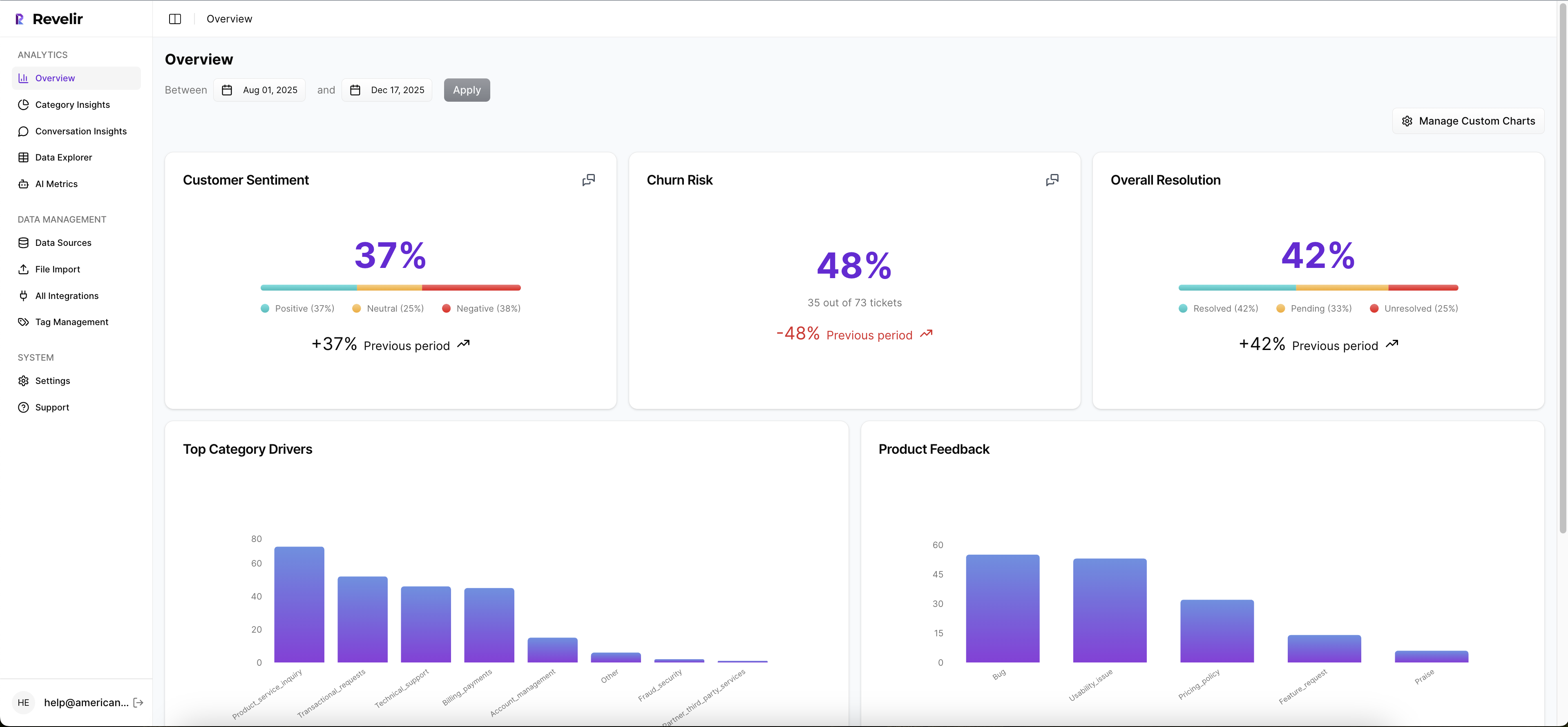
Revelir AI turns your support conversations into evidence-backed metrics with 100% coverage, so billing risk stops hiding in the queue. It applies Churn Risk and Customer Effort, groups billing tags under a Billing driver, and connects every metric to the exact transcript. Finance and product see the proof, not just the chart. And your tiered reconciliation rules get the data backbone they’ve been missing.
Full coverage detection of billing risk across 100 percent of conversations
Revelir processes every ticket automatically—no sampling—and applies AI metrics like Sentiment, Churn Risk, and (when detected) Effort, plus billing-specific tag patterns. You pivot by the Billing driver, segment by tier and renewal window, and drill into transcripts in two clicks. That traceability turns “we think” into “here’s the quote.”
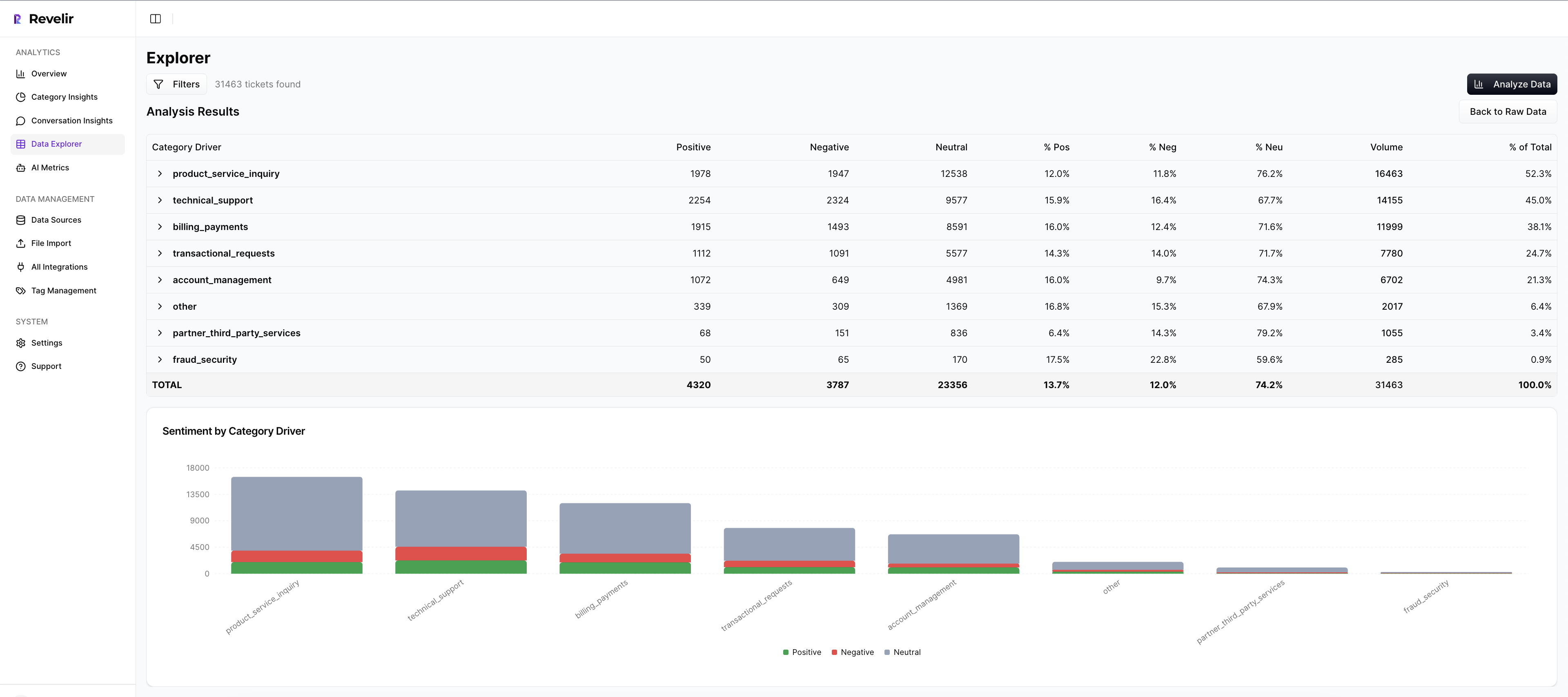
This matters when the stakes are renewals. Early detection across the full population means fewer missed signals and faster action on high-value accounts. It also means you can defend decisions—what you fixed, why you fixed it, and what it changed—without a week of manual review.
Drivers, canonical tags, and custom metrics aligned to your tiers
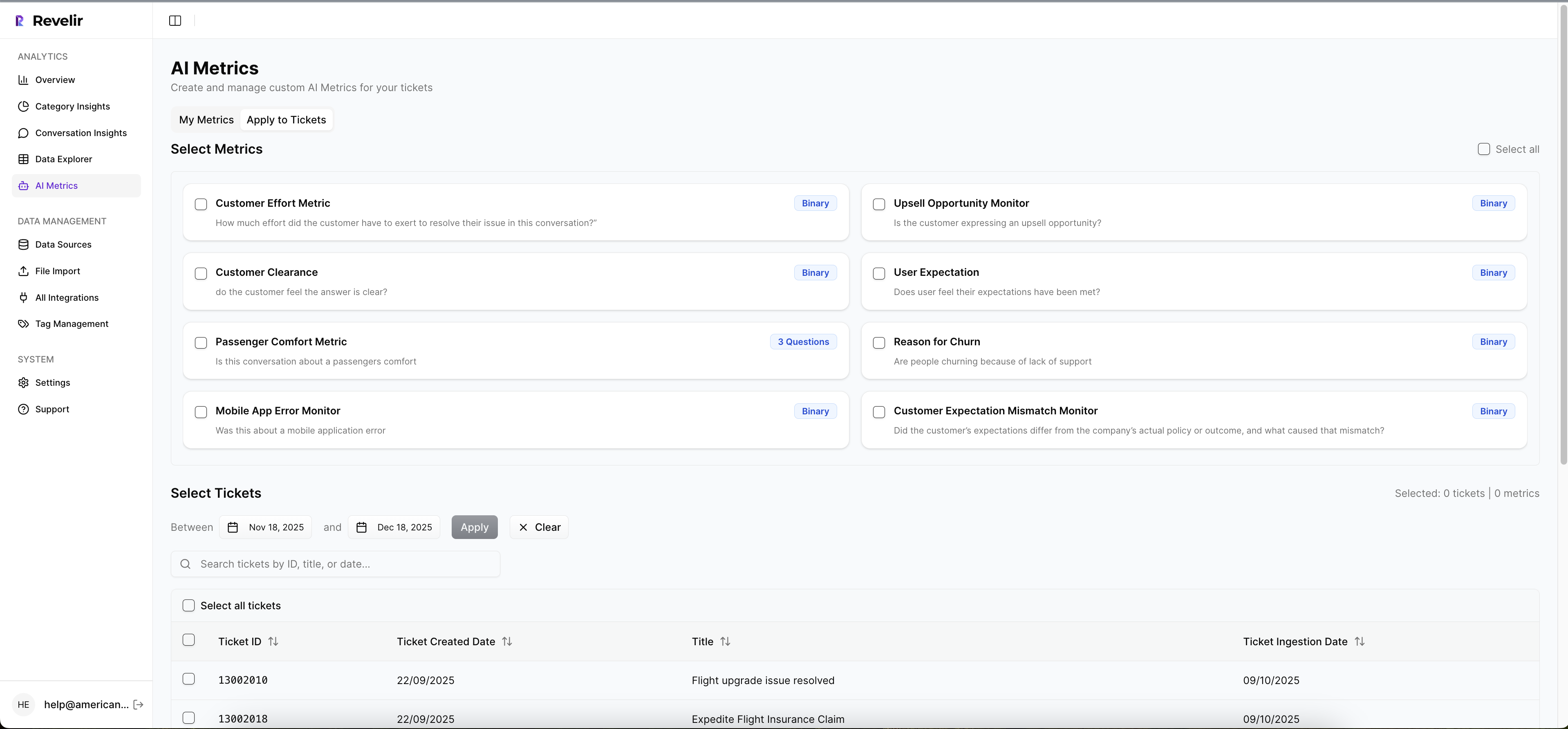
Revelir’s hybrid tagging normalizes noisy raw billing tags into canonical categories under Billing. Over time, mappings learn and stabilize, so you keep rich discovery without muddy reports. Add Custom AI Metrics when you need business-specific fields such as “Reason for Churn” or “Upsell Opportunity,” and apply them consistently across every conversation.
For tiered runbooks, that alignment is gold. Agents see the same categories that leadership sees. CSMs get consistent remedy thresholds by tier. Finance trusts the rollups because they can audit the examples behind them. You’re not rebuilding the billing stack; you’re giving it a clean measurement layer.
Data Explorer, Analyze Data, and fast onboarding that builds trust
Day to day, you work in Data Explorer: filter billing tickets by segment, effort, and churn risk; group by driver or canonical tag to see which sub-issues hit which tiers; click into examples; then export metrics to your reporting stack. Analyze Data runs grouped aggregations for quick “which drivers are trending?” reads. Conversation Insights keeps quotes one click away when you need to validate or persuade.
Onboarding is fast: connect Zendesk or upload a CSV, and Revelir starts producing evidence-backed insights in minutes. No classifiers to build from scratch. No manual QA passes required to get value. The combination—100% coverage, drivers, custom metrics, and drill-down traceability—lets you attribute recovered MRR, reduce reconciliation time, and cut Billing-driven churn risk with confidence.
Want to operationalize this across your tiers with evidence you can show the room? Get Started With Revelir AI.
Conclusion
Billing confusion will keep driving avoidable churn as long as signals stay buried in transcripts and workflows treat every dispute the same. The path out is practical: structure every conversation, see Billing risk by tier, and run a tiered reconciliation checklist with evidence attached. Measure recovered MRR and time to clarity. When you do, renewals feel predictable again, and your team stops waking up to 3 am billing escalations.
Frequently Asked Questions
How do I track billing issues effectively?
To track billing issues effectively, you can use Revelir AI to analyze 100% of your support tickets. Start by connecting your helpdesk API or uploading past tickets. Once your data is ingested, use the Data Explorer to filter for tickets related to billing. Look for patterns in sentiment and churn risk to identify the most pressing issues. This way, you can prioritize fixes based on real customer feedback and evidence, rather than relying on sampling or anecdotal reports.
What if I notice a spike in negative sentiment?
If you notice a spike in negative sentiment, first, use Revelir AI's Analyze Data feature to investigate the root causes. Filter for negative sentiment tickets and group by relevant drivers or canonical tags. This will help you pinpoint specific issues contributing to the sentiment dip. Then, drill down into individual conversations to gather context and specific examples. This evidence will be crucial for addressing the problems effectively and communicating with your team.
Can I customize metrics in Revelir AI?
Yes, you can customize metrics in Revelir AI. The platform allows you to define custom AI metrics that align with your business language and objectives. For example, you can create metrics like 'Reason for Churn' or 'Upsell Opportunity.' This customization helps tailor the insights to your specific needs, making it easier to track what matters most to your organization. Just ensure you set these metrics up during the initial configuration or when refining your tagging system.
When should I intervene with high churn-risk accounts?
You should intervene with high churn-risk accounts as soon as they are flagged in Revelir AI. Use the churn risk metric to identify these accounts and prioritize follow-ups. Typically, the sooner you reach out, the better chance you have to address their concerns and improve their experience. You can also use the Conversation Insights feature to review past interactions and understand their frustrations. This context will help you tailor your outreach and provide effective solutions.
Why does sampling tickets lead to missed insights?
Sampling tickets often leads to missed insights because it only provides a partial view of customer interactions. When you rely on a small subset of tickets, you risk overlooking critical signals, such as frustration cues or churn mentions that may be present in the broader dataset. Revelir AI addresses this issue by processing 100% of your support conversations, ensuring that you capture all relevant patterns and insights. This comprehensive approach allows you to make informed decisions based on complete data.