

Most teams try to “automate triage” by bolting rules onto incomplete data. It looks efficient on paper. Then the backlog spikes, escalations climb, and you’re stuck in a meeting explaining why churn‑risk tickets slipped through while easy ones sat in limbo. It’s usually not the rules. It’s the evidence behind them.
Here’s the blunt truth. If you don’t have full coverage on conversations and a clean way to trace every metric back to exact quotes, you’re guessing with better formatting. Nobody’s checking where a label came from, so trust erodes. Same thing with sampling. It feels disciplined. It quietly hides your riskiest signals.
Key Takeaways:
- Full conversation coverage plus traceability is the baseline for safe triage
- Hybrid tagging (raw → canonical → drivers) turns noise into explainable routing logic
- Don’t rely on sentiment alone; combine drivers, effort, churn risk, and metadata
- Measure review minutes, false positives, and escalation accuracy to prove time saved
- Put humans on the exception path with defined checkpoints and visible evidence
- Use a four‑step playbook to reach 100% triage without burning your team
Ready to skip the guesswork and see the workflow end‑to‑end? See how Revelir AI works.
Why Most Triage Automations Fail Without Full Coverage
Most triage automations fail because they operate on partial data, then amplify those gaps with rigid rules. Full coverage ensures your routing logic reflects real risk patterns rather than a noisy sample. For example, churn mentions in a small enterprise cohort get caught in time, not after an escalation.

The dangerous half‑measure of sampling
Sampling looks efficient until the exceptions define your quarter. You miss low‑volume but high‑impact patterns, churn signals in a key segment, subtle onboarding friction for new users, and over‑weight the loud anecdote from one account. It’s usually invisible until a renewal conversation goes sideways and everyone asks, “How did we miss this?”
With 100% coverage and traceability, you stop arguing about representativeness and start shipping fixes. You can pivot by cohort, product area, and time window with confidence because every aggregate is rooted in the full population, not a sliver. Leaders don’t debate the sample; they debate the plan.
Healthcare has taught this lesson for decades. Protocolized triage works because coverage reduces blind spots and standardizes decisions at scale, improving both speed and safety, as summarized in the Telephone Triage Protocols for Nurses (2021) reference.
What is conversation triage and why does 100 percent coverage matter?
Conversation triage prioritizes and routes every ticket based on content and risk, not gut checks or legacy tags. Coverage matters because automation is only as good as the information it sees, and blind spots become misroutes. Picture this: route Account Access issues with negative sentiment to Tier 2, and verify with real transcripts before launch.
When every ticket is analyzed, you can test routing rules across drivers, sentiment, effort, and plan tier before go‑live. You can also drill into edge cases quickly to refine thresholds. That’s how you avoid “rule‑whiplash” after rollout and stabilize faster.
The win isn’t just accuracy. It’s defensibility. When someone asks why a ticket was prioritized, you show the driver, the metric, and the evidence, without spinning up a separate analysis.
The trust gap created by black‑box labels
If your metrics can’t be traced to transcripts, trust collapses at the first “show me an example.” It’s not a philosophical problem, it’s operational. Black‑box scores force people back to anecdotes, which derails alignment and slows decisions. Transparent labels with drill‑downs keep the room focused.
You need to show the path: metric → driver → exact quotes. When reviewers can click from the number to the conversations behind it, you preserve context and enable tuning without defensiveness. You also reduce the “exception clause” requests that bog down triage.
That’s the baseline for safe automation: full coverage plus traceability, so rules are explainable and steadily improved rather than questioned every week.
The Real Bottleneck Is Structure And Evidence, Not More Data
The real bottleneck in triage isn’t getting more conversations; it’s turning messy text into structured, auditable signals. A hybrid tagging system creates clarity by pairing AI‑discovered raw tags with human‑aligned categories and drivers. For example, billing_fee_confusion rolls up cleanly into Billing & Payments.

What traditional tagging misses
Helpdesk tags are inconsistent, agent‑specific, and often outdated. They create brittle routing logic because they don’t map to how leadership thinks about the business. You get volume counts, not reasons. Then leaders ask “why,” and the analysis stalls.
A hybrid approach fixes this. Let AI generate granular raw tags for discovery, surface topics you didn’t think to name, then map them into canonical tags and drivers your teams actually use. You keep the detail where it helps discovery and present the clarity decision‑makers need. Discovery and clarity in one system.
It also de‑risks rule changes. When raw tags evolve, canonical tags stay stable, so rules tied to canonical categories don’t break. Your reporting remains clean even as language shifts.
Drivers and canonical tags convert noise into decisions
Drivers like Billing, Onboarding, and Account Access unify many tags under a clear reason code. Canonical tags provide stable reporting that doesn’t change every time a new phrase appears. Together, they enable explainable triage.
You can say, “Route any Account Access ticket with negative sentiment to Tier 2,” and then click into examples to confirm the behavior. That’s how you tune thresholds and roll out with confidence. It’s also how you justify priority when everyone has a pet theory about what’s “most important.”
If anyone challenges the category, you pop open the sample tickets attached to that driver. Debate shifts from “is this real?” to “what’s the right fix?”
The Hidden Costs Draining Your Review Queue
Hidden costs in triage show up as time you can’t defend. They stack quietly, review minutes, reassignments, escalations, and turn into operational drag. Quantify them once and you’ll never return to partial coverage.
Minutes that add up to lost weeks
Let’s pretend you receive 5,000 tickets a month. Reviewing 20% at two minutes each is 3,333 minutes, about 55 hours, for a partial picture. To reach 100% by hand would take roughly 167 hours. No team has that time. So you either miss risk or waste cycles on low‑impact work.
Full‑coverage AI flips the ratio. Machines pre‑score every conversation; humans review exceptions. Your analysts shift from high‑volume skimming to precise validation. The result is not fewer eyes, it’s better placement of human attention where it matters.
This is the pattern you want: structured inputs, targeted reviews, and measurable reduction in manual time per ticket. Otherwise, the “audit” becomes a permanent backlog.
The escalation tax and frustrating rework
Manual triage creates reassignments, repeat contacts, and higher customer effort. Every bounce adds minutes and frustration. High‑risk tickets arrive late to experts while easy tickets clog behind complex ones. The downstream effect is more escalations, more context switching, and more “can you take a quick look?” Slows everyone.
A rules‑based pipeline anchored in drivers and metrics lowers false starts. It gets the hard stuff to the right team fast and fast‑tracks the rest. That means fewer internal handoffs, cleaner coaching opportunities, and less “why was this sent to me?” pain.
When rework drops, you feel it immediately in backlog stability and agent morale. That’s not fluff; it’s operational sanity.
Still dealing with rework that shouldn’t exist? Shift the load to evidence‑backed routing. Learn More.
The Human Side: Confidence, Auditability, And Change Readiness
Triage succeeds when people trust it. Confidence comes from auditability, clear reasons, accessible examples, and fast ways to flag mismatches. With that in place, change management gets easier and reviews move faster.
When a leader asks for an example
You need to click from a chart to exact conversations in seconds. That ends debates about model behavior and keeps everyone aligned. If you can show five transcripts that match your claim, the meeting moves from argument to action. Fast.
This isn’t just a “show and tell.” It’s your control loop. When you can validate a trend with quotes, you can also spot edge cases, refine tags, and tune thresholds without losing trust. The conversation becomes: “Makes sense, what’s our next decision?”
And when trust holds, you get fewer ad‑hoc “can we review this?” detours.
Your agents want clarity, not guesswork
Agents don’t want a black box second‑guessing them. They want clear reasons a ticket was routed and simple ways to flag mismatches. Expose the driver, tags, and key metrics on each ticket. Make the route reason visible. Give them a lightweight feedback path tied to the same taxonomy.
When an agent says, “This should’ve gone to Tier 2,” they’re adding signal to the system, not yelling into the void. You review, adjust the mapping or rule, and close the loop. That’s how a ruleset matures without becoming brittle.
Clarity reduces coaching thrash, too. You can train to the system, not to exceptions remembered from last quarter.
The Four‑Step Playbook For 100 Percent Conversation Triage (4 Steps)
A four‑step playbook gets you to full‑coverage triage without heavy change management. Start with ingestion and a minimum field checklist, then build structure, rules, and smart human checkpoints. For example, connect Zendesk, enable sentiment and churn risk, map tags to drivers, and pilot rules on last month’s data.
Step 1: Ingest And Normalize Required Fields
Connect your helpdesk or upload CSVs. Confirm ticket counts, date ranges, and that each ticket includes ID, created date, requester, agent, status, and transcript. Enable base metrics like sentiment and churn risk. Document a minimum field checklist, then hold the line: if a field is missing, fix ingestion first.
Coverage without consistent fields undermines routing rules later. You can’t write safe logic against half‑populated columns or missing transcripts. Normalize now, so you aren’t debugging “empty” conditions mid‑pilot. Your future self will thank you.
One more thing: decide up front how often you’ll refresh data. Stale inputs create phantom trends that waste time.
Step 2: Define Canonical Tags And Drivers
Start with AI‑generated raw tags for discovery. Then group them into a small set of canonical tags leadership understands. Associate those tags to drivers like Billing, Account Access, or Onboarding. Aim for clarity over granularity. Merge refund_request, payment_failed, unexpected_charge into Billing & Payments and move on.
Publish a one‑page taxonomy and keep it versioned. The goal isn’t perfection; it’s consistency. As patterns evolve, adjust mappings while preserving the categories your reports depend on. That’s how your triage logic stays explainable as language changes.
If someone disputes a category, show the underlying tickets. Evidence ends wordsmithing debates quickly.
Step 3: Build Automated Triage Rules Using AI Metrics And Metadata
Combine AI metrics with drivers and ticket metadata to write deterministic rules. Examples: route to Tier 2 if driver is Account Access and sentiment is negative; escalate to Retention if churn risk is yes and plan tier is Enterprise; fast‑track to specialist if driver is Performance and effort is high. Always attach a route reason.
Keep rules readable, your future reviewers are busy. Start narrow on critical paths, then expand coverage. Pressure‑test against last month’s tickets before you go live. You’re looking for false positives you can explain and tune away, not a mythical zero‑error state.
If a rule increases reassignments, dig into the examples, adjust the driver mapping or threshold, and re‑run.
Step 4: Human‑In‑Loop Validation, Sampling, And Feedback Loops
Make reviewers the exception path, not the default. Sample 5–10% of high‑risk routes daily; increase sampling when rules are new or drift is suspected. Set thresholds: if more than 10% of sampled tickets are misrouted, pause that rule and investigate. Rotate reviewers to spread context and reduce bias.
Publish calibration notes so rules evolve with evidence. Capture agent feedback in a shared view tied to the same taxonomy. Close loops weekly: update mappings, tweak rules, and share examples. Over time, the manual burden shifts toward exceptions, which is where you want your humans anyway.
For additional context on protocolized triage and structured dispositions, see the Telephone Triage Protocols for Nurses (2021) analogy.
How Revelir AI Powers The Triage Pipeline End To End
Revelir AI enables full‑coverage, evidence‑backed triage by processing 100% of conversations, structuring them with hybrid tags and drivers, and making every aggregate drillable to exact quotes. You configure metrics and taxonomy to match your business, then monitor and iterate using purpose‑built analysis tools.
Full‑coverage processing and traceability for audit
Revelir AI processes 100% of uploaded or ingested tickets, no sampling, and assigns raw tags, canonical tags, and drivers while computing Sentiment, Churn Risk, and Customer Effort. Anywhere you see a count or chart, you can click straight into Conversation Insights to read transcripts and see the AI summary and metrics.
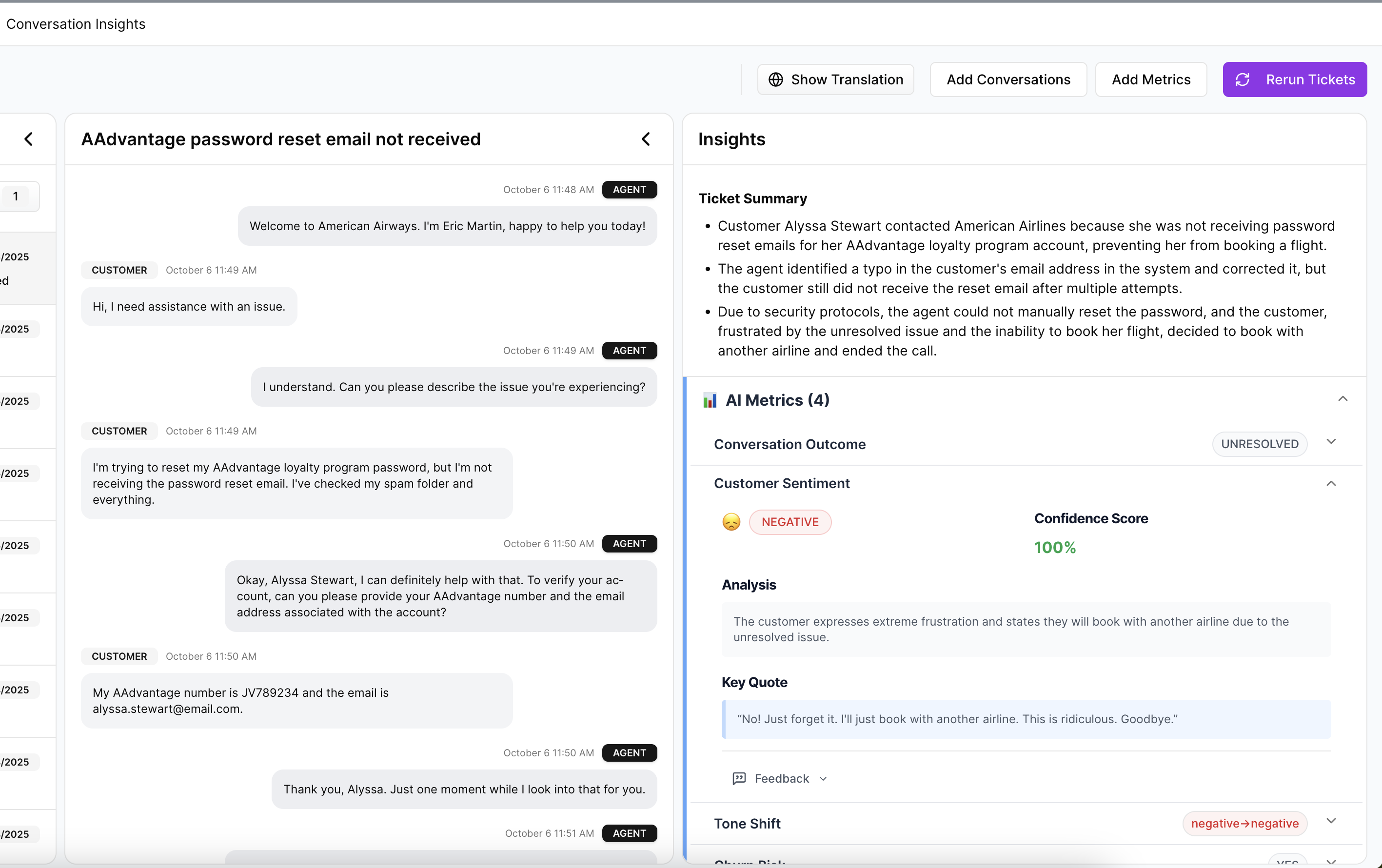
That traceability gives you defensible audit trails for route decisions and instant examples for leadership or QA. It also shortens the feedback loop when you need to validate a trend or tune a rule based on what real customers said, not projections.
If you need external reassurance on protocolized safety, there’s research indicating structured triage with auditing improves outcomes, as discussed in a university study on protocolized triage safety and consistency.
Monitor performance and iterate using Data Explorer and Analyze Data
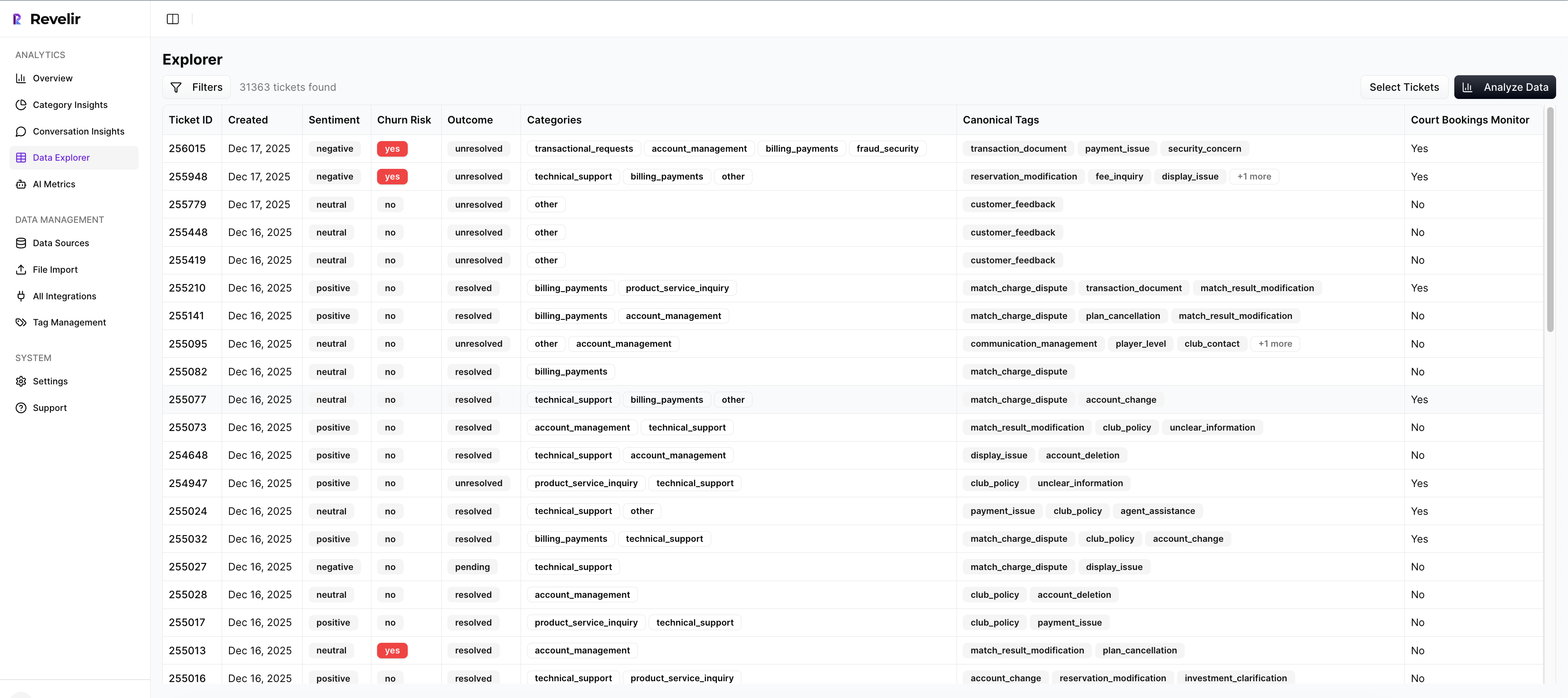
Day to day, you work in Data Explorer to filter by drivers, sentiment, churn risk, effort, and segments. Run grouped analyses in Analyze Data, like Sentiment by Driver or Churn Risk by Category, to spot where misroutes or false positives cluster. When something looks off, click into the exact tickets to validate and adjust confidently.
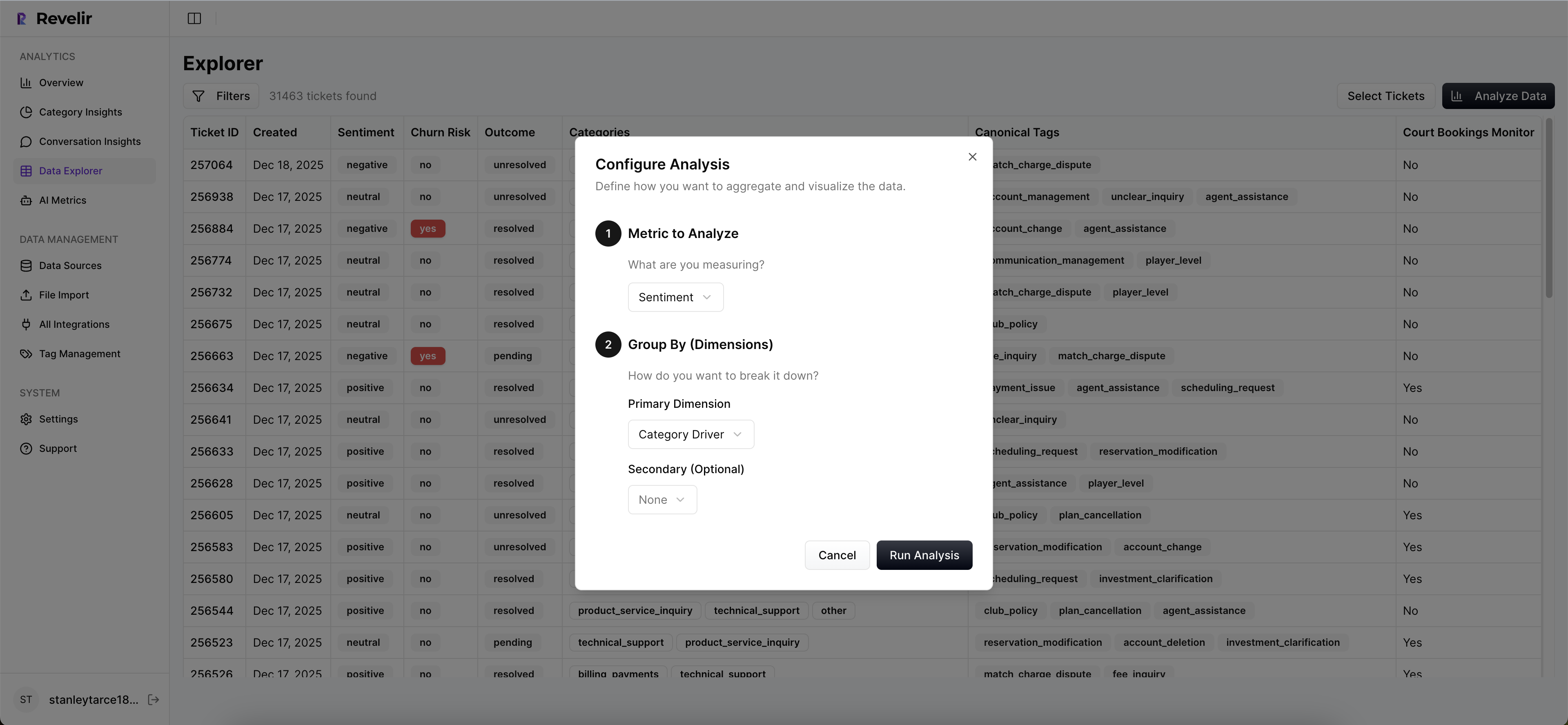
Save standard views for weekly reviews so your team can track route volumes, severity, and escalation accuracy consistently. As patterns stabilize, you’ll reduce rework and bring the manual review time down to the exceptions that warrant it.
Let’s make this concrete on your data, not just theory. See how Revelir AI works.
Conclusion
You don’t need more dashboards or more opinions. You need every conversation turned into structured, evidence‑backed signals, and a triage ruleset that anyone can audit in two clicks. Do that, and review time drops 70–80%, escalations fall, and the right work gets to the right people faster. It’s not perfect. It’s trustworthy, visible, and manageable. That’s the bar.
Frequently Asked Questions
How do I set up Revelir AI with my helpdesk?
To set up Revelir AI with your helpdesk, start by connecting your data source. You can integrate directly with platforms like Zendesk or upload a CSV file of recent tickets. Once connected, verify the basic fields and timelines to ensure ticket counts and date ranges are correct. After that, map your raw tags into meaningful canonical tags, and enable core AI Metrics like Sentiment and Churn Risk. This setup will help you start extracting actionable insights in no time.
What if I need to validate AI outputs in Revelir?
If you want to validate AI outputs in Revelir, use the Conversation Insights feature. This allows you to open specific tickets and review the full conversation transcript along with the AI-generated summary. Check the assigned raw tags and canonical tags to ensure they align with your expectations. This step is crucial for confirming that the metrics make sense and for identifying any edge cases where adjustments may be needed.
Can I customize the metrics in Revelir AI?
Yes, you can customize metrics in Revelir AI to align with your business needs. You can define custom AI Metrics that reflect your specific terminology, such as 'Upsell Opportunity' or 'Reason for Churn'. This customization allows you to track the metrics that matter most to your organization. Just ensure that these metrics are set up in the configuration settings, and they will be applied consistently across your dataset.
When should I use the Analyze Data feature?
You should use the Analyze Data feature when you want to gain insights from your ticket data quickly. This tool is perfect for answering questions like 'What’s driving negative sentiment?' or 'Which issues are affecting high-value customers?'. Start by selecting the metric you want to analyze, group it by a relevant dimension like Driver or Canonical Tag, and run the analysis. This will give you a grouped results table and visual insights to help prioritize your actions.
Why does Revelir AI emphasize full conversation coverage?
Revelir AI emphasizes full conversation coverage because it ensures that you capture all relevant signals from customer interactions. Relying on sampling can lead to missed patterns and biases, which can negatively impact decision-making. By processing 100% of conversations, Revelir AI provides a complete view of customer sentiment, churn risk, and other critical metrics, allowing teams to make informed decisions based on comprehensive data.